
Series: History of Kangra, Himachal Pradesh, India
Phase 2: Medieval Power — Part 8 of 30
This article forms part of a continuing series that follows the gradual emergence of organised power in the western Himalayas. As small communities gave way to clans, chieftainships, and hill states, patterns of rule, alliance, and conflict began to take shape. This phase examines how authority was negotiated through land, ritual, and warfare, laying the groundwork for regional kingdoms that would dominate the medieval landscape.
Dawn at the Mountain Crossroads
The morning mists still clung to the cedar slopes when the sound of distant horns echoed across the Kangra valley. On a rocky outcrop overlooking the Beas River, a line of watchful sentries scanned the horizon for movement—traders, pilgrims, or perhaps a rival chieftain’s men. In the centuries after the fall of the Gupta Empire, this region was not a tranquil mountain fastness but a contested crossroads. The patchwork of early hill states flourished, feuded, and forged new identities in a landscape as perilous as it was beautiful.
The Historical Ground: Kangra’s Place in the Hills
By the early medieval period (roughly 7th–12th centuries CE), Kangra had emerged as one of the principal powers in the Himalayan foothills. The region’s recorded history stretches back to the rule of the Katoch dynasty, whose claims—layered with both oral tradition and later chronicles—tie them to the ancient Trigarta kingdom mentioned in Sanskrit epics. While legend and genealogy color these accounts, what is clear from regional gazetteers is that Kangra’s fort (Nagarkot) and its surrounding fertile plains made it a coveted possession among neighboring hill states: Chamba, Mandi, Nurpur, and, at times, far-flung rivals from the plains.
Myth, Memory, and the Roots of Rivalry
Oral traditions remain alive in local ballads and stories, painting the hill rajas as both heroic defenders and ambitious aggressors. Some tales recall supernatural interventions—the goddess at Jwalamukhi temple favoring one side, or miraculous victories against impossible odds. Such stories provided moral justification and legitimacy for later rulers, but the historical record, thin as it is, suggests more prosaic motivations: control of trade routes, tribute from fertile valleys, and the desire for security in a region where alliances shifted with the seasons.
Early chronicles—such as the Persianized Tarikh-i-Kangra and fragments from Rajput genealogies—hint at a longstanding pattern: diplomacy interwoven with conflict. Tributes were extracted, marriages arranged, and, when talks failed, fortresses besieged. Each campaign left marks not just on stone walls, but on the collective memory of the hills.
Communities, Belief, and Emerging Power Centers
The Kangra valley was home to a mosaic of communities: Rajput clans, pastoralist Gaddis, Brahmin priestly lineages, and merchant families who moved goods between Punjab and Tibet. Religious sites, like the ancient temples of Kangra and Jwalamukhi, served as gathering points for both devotion and politics. Rulers sought legitimacy through patronage; temples became not only spiritual centers, but also symbols of dynastic authority and repositories of wealth—making them both the pride and the target in times of war.
It was in this context that Kangra’s kings and their neighbors—such as the rulers of Chamba, Jaswan, and Kullu—vied for preeminence. Strongholds rose on promontories, and the art of fortification advanced with each new threat. The rhythms of agricultural life continued, but the specter of raids and forced levies shaped daily existence, especially for those living near contested borders.
Documented Conflicts and Shifting Frontiers
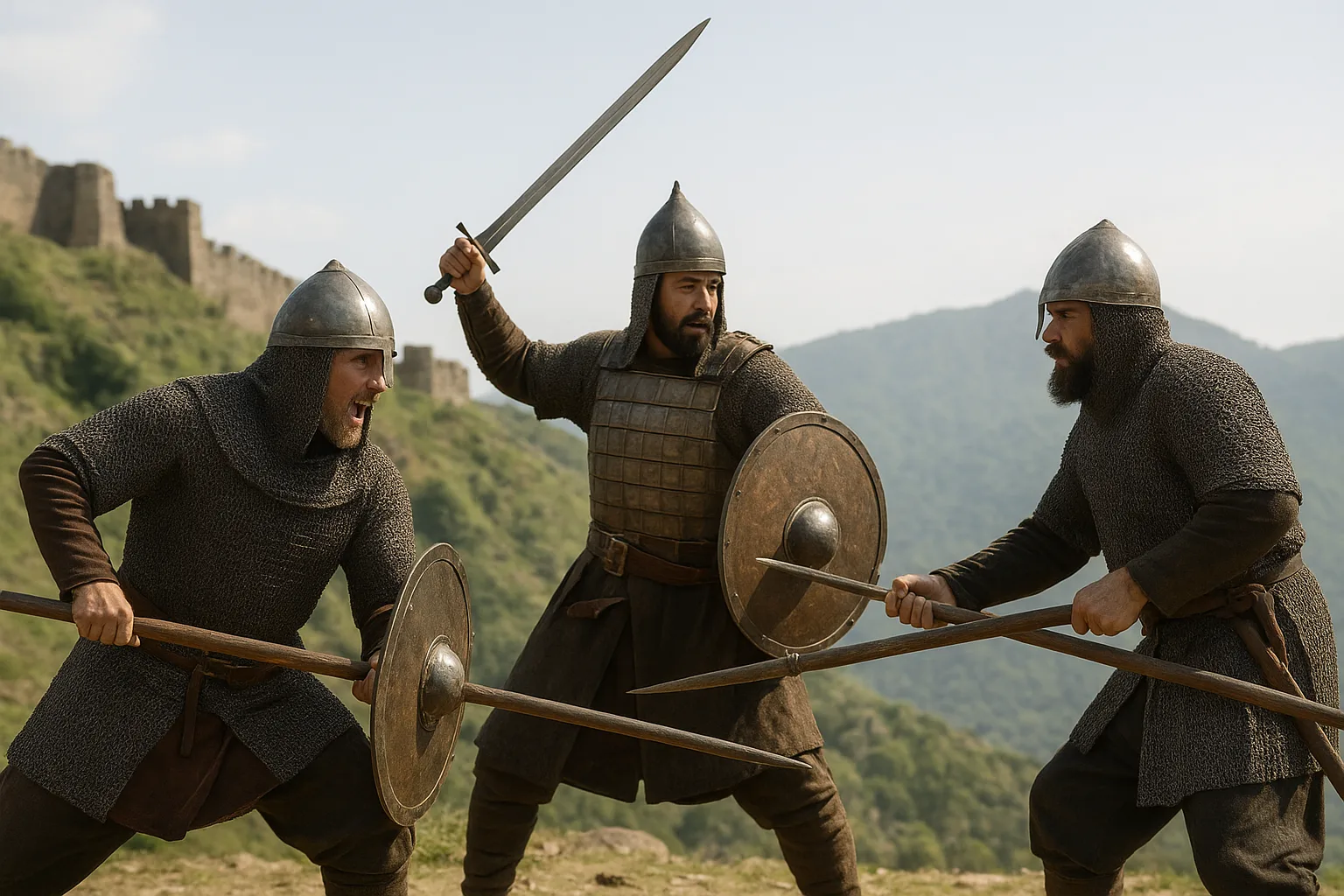
While many early wars vanished into legend, certain episodes stand out in the chronicles. The Tarikh-i-Kangra and regional gazetteers record repeated clashes between Kangra and Chamba in the 10th and 11th centuries, particularly over control of passes leading to the Ravi and Beas valleys. These campaigns were rarely decisive; rather, they established a pattern of shifting boundaries, tribute payments, and the exchange of hostages.
The rise of Nurpur (then known as Dhameri) as a rival Rajput state marked another turning point. According to both oral traditions and later Mughal records, skirmishes between Kangra and Nurpur over fertile tracts and trade rights were common. Sometimes these disputes simmered for generations, interrupted by temporary alliances—often sealed with strategic marriages—against a common enemy, such as the Gorkha or Mughal incursions to come. The hill rajas, for all their rivalry, shared a sense of belonging to a distinctive Himalayan polity, distinct from both the Punjab plains and the distant Delhi courts.
Trade, Tribute, and the Mountain Economy
Kangra’s prosperity hinged on its command of trade routes connecting the Indian plains with Lahaul, Spiti, and Tibet. Salt, wool, grain, and precious stones passed through its markets. Control of these routes—and the ability to levy tolls—was a major source of friction. A sudden raid or a change in the allegiance of a minor chieftain could tilt the balance, with ripple effects felt in every hamlet and village.
Yet, these conflicts were rarely wars of annihilation. The hill states, hemmed in by geography and kinship ties, often resorted to calculated shows of force, limited sieges, and negotiated settlements. The landscape itself—steep valleys, narrow passes, sudden mists—favored local defenders and made drawn-out campaigns costly. Over centuries, this produced a culture of wary coexistence, punctuated by bursts of violence and the ever-present possibility of reconciliation.
Legacy of the Warrior Hills
Even now, as modern roads wind through the valleys and mobile towers rise beside ancient shrines, the memory of these medieval rivalries lingers. Family names, temple festivals, and even local disputes echo the patterns set centuries ago. The fortresses—some ruined, some restored—stand as reminders that the shape of modern Kangra was forged not in isolation, but in the crucible of competition and alliance with its neighbors.
As we continue this series, the next chapter will explore how Kangra’s rulers learned to navigate not only their immediate rivals, but the growing ambitions of imperial powers from the plains. The story of Kangra is far from static; its roots in these ancient wars continue to nourish its sense of identity and resilience.
Previous: Kangra Fort: History and Legends
Next: Temple Culture of Medieval Kangra