
Series: History of Una, Himachal Pradesh, India
Phase 2: Medieval Period — Part 8 of 30
This article forms part of a continuing series that follows the gradual emergence of organised power in the western Himalayas. As small communities gave way to clans, chieftainships, and hill states, patterns of rule, alliance, and conflict began to take shape. This phase examines how authority was negotiated through land, ritual, and warfare, laying the groundwork for regional kingdoms that would dominate the medieval landscape.
A Dawn Over Una’s Fields
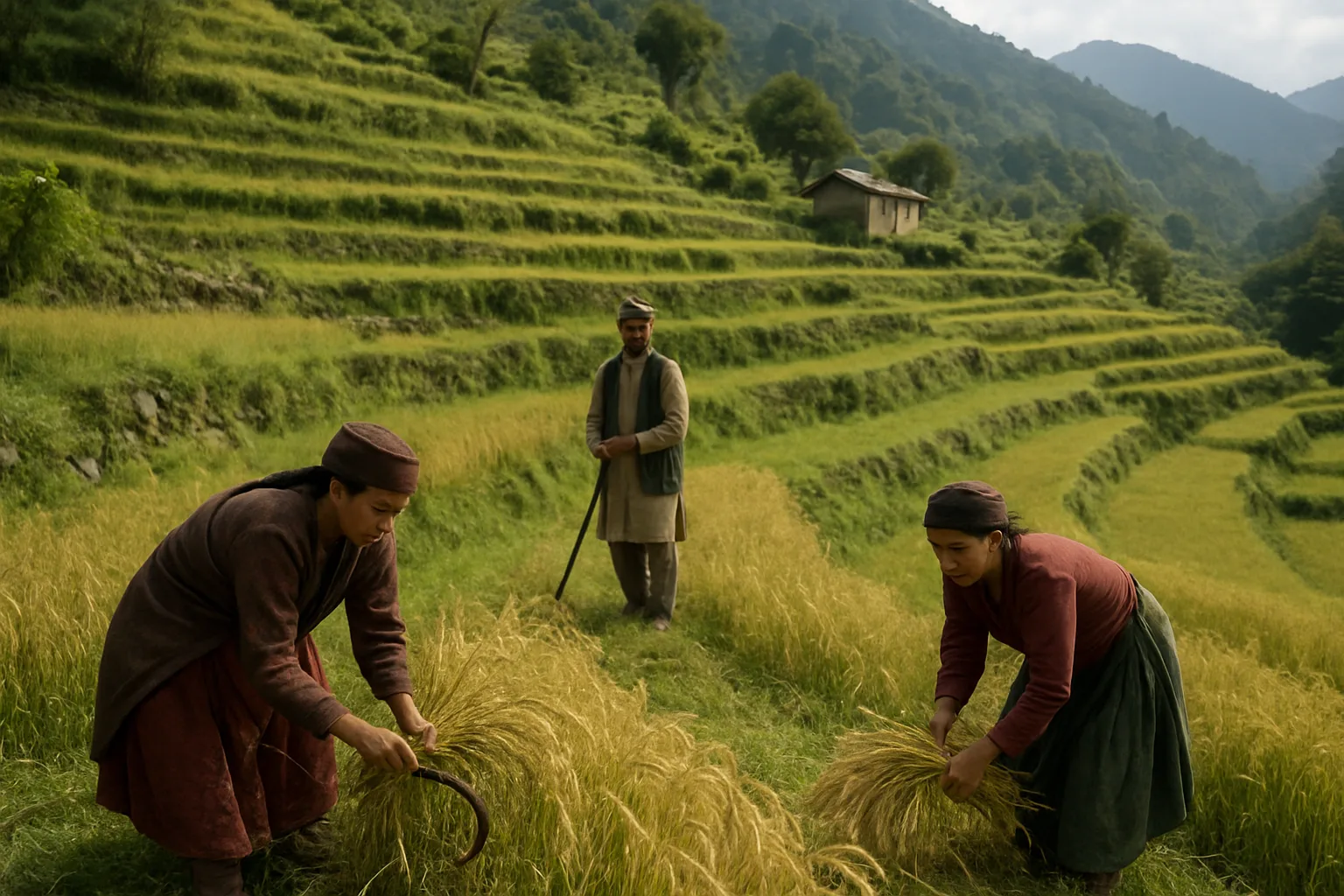
The sky above Una, centuries ago, glowed with the first blush of daylight. The Shivalik foothills cast long shadows across wheat fields ready for harvest. In the crisp morning air, the rhythmic sound of wooden ploughs being dragged by sturdy zebu oxen echoed from the valley. A cluster of thatched-roof huts stood close together, smoke curling from their hearths. Here, in the medieval period, the day began early and ended only when the stars scattered over the hills. Life was laborious, yet rich with tradition, ritual, and a sense of place that endures in Una’s villages even now.
Boundaries and Belonging: Una in the Medieval Map
Medieval Una was more than a remote outpost. Nestled along the frontier of the Kangra kingdom, it was a borderland—a meeting ground between the Punjab plains and the rising hills of Himachal. The Beas River, a lifeline for the region, marked both a boundary and a bridge for trade and culture. Medieval records, including local Rajput chronicles and Persian accounts, describe Una as a mosaic of villages governed by local chieftains, their loyalties often shifting between the powerful rulers of Kangra, Jaswan, and the encroaching influences of the Delhi Sultanate and later Mughal authority.
The villages themselves were the heart of the region. Each was a tightly knit community, bound by lineage, caste, and custom. While the outside world saw Una as a strategic waypoint, for those who lived here, it was home—a landscape shaped by fields, forests, and the steady pulse of village life.
Cycles of the Land: Agriculture and the Seasons
In medieval Una, the economy revolved around the land. The year was measured not by calendars, but by the rhythm of the plough and the monsoon. Wheat, barley, and pulses filled the fields in winter; millet and rice thrived during the kharif (summer) season. The Beas and Swan rivers nourished the alluvial plains, and the ingenuity of Una’s people was evident in their use of traditional irrigation systems—small canals (kuhl) and rain-fed tanks (talabs) that ensured fields survived even in lean years.
Women rose before dawn to grind grain on stone querns, while men mended tools or tended livestock. Children chased goats along the dappled forest edge. Village elders watched the clouds anxiously each June, praying for timely rains. The harvest brought the community together in shared labor and celebration, marked by folk songs and communal feasts. Yet, life was precarious. Drought, flood, or a sudden raid could tip the balance from abundance to hunger.
The Village Economy: Barter, Markets, and Artisans
Money was rare in rural Una. Most trade took place through barter—a sheaf of wheat for a length of homespun cloth, a basket of lentils for a jar of clarified butter. Each village had its own specialists: potters shaping clay into sturdy vessels, blacksmiths forging sickles and ploughshares, weavers spinning cotton and wool into rough-hewn cloth. These artisans were crucial to the local economy, their skills handed down through generations.
Once a week, villagers traveled to larger markets in Amb or Bangana, where traders from Punjab arrived with salt, jaggery, spices, and ironware. The market was a place of excitement, gossip, and opportunity—where news from distant lands mingled with the cries of hawkers. Occasionally, traveling Sufi dervishes or Jain merchants would pass through, bringing tales from Lahore, Delhi, or the Himalayan valleys. The outside world was never far away, even in this rural heartland.
Power and Protection: Chieftains, Warriors, and Temples
Political power in medieval Una was deeply local. Village headmen (muqaddams) and petty chieftains, often belonging to Rajput clans like the Guleria or Jaswal, served as intermediaries between the peasants and regional rulers. They collected taxes—sometimes in kind, sometimes in coin—and provided protection from bandits or rival lords. In return, they claimed a share of the harvest and the deference of their communities.
Temples stood at the center of village life, their stone idols adorned with marigold garlands. Here, villagers gathered not only for worship but for council, dispute resolution, and festivals. The temple was a sanctuary in troubled times—a place where local gods watched over the fields and forests, and ancestral tales were retold by flickering lamp-light. Warriors from the region, often recruited in times of conflict, defended both faith and farmland, their swords and shields displayed during annual fairs.
The Shape of Faith: Rituals and Social Order
Religion provided structure and solace. Most villagers worshipped local deities—Naina Devi, Chintpurni, and Baba Balak Nath—whose shrines dotted the hills. Seasonal festivals marked sowing and harvest, blending Vedic rituals with folk customs unique to the region. Caste shaped daily life: Brahmins performed rites and kept oral genealogies; Rajputs claimed martial honor; artisans and shepherds sustained the village’s pulse.
Yet, medieval Una was not isolated from currents of change. Sufi mystics from Punjab brought stories of unity and spiritual equality, drawing audiences from all castes. By the late medieval period, the arrival of Sikhism from nearby Anandpur Sahib began to challenge old patterns, as did the Mughal court’s distant edicts, which reached Una through tax collectors and traveling officials.
Storms at the Border: Invasion, Tribute, and Adaptation
Life in Una was shaped by the uncertainty of borderland existence. The shadow of conflict often loomed over the villages. Periodic invasions by hill rajas, ambitious Sikh chieftains, or Mughal governors brought demands for tribute. Local legends recall nights when villagers hid their grain and cattle in forest hollows, or when the temple bells sounded a warning across the valley.
Yet, adaptation was the region’s hallmark. When new rulers arrived, villages found ways to negotiate their survival—offering supplies, pledging nominal loyalty, and continuing old customs as far as possible. The resilience born of this precarious existence would leave a lasting imprint on Una’s collective memory.
Echoes of the Past: Medieval Roots in Modern Una
Today, traces of medieval Una linger in unexpected ways. The layout of many villages—clustered homes, central temples, and communal wells—reflects patterns set centuries ago. Agricultural cycles and festivals, from Baisakhi to Lohri, still mark the rhythms of rural life. The coexistence of faiths and castes, the pragmatism forged by borderland uncertainty, and the pride in local craftsmanship are all legacies of this era.
As Una’s fields sway in the monsoon wind, it is easy to imagine the medieval ploughman pausing to watch the sky, or the village market buzzing with barter and news. The medieval period, with its hardships and hopes, remains woven into the land—shaping a sense of community and resilience that endures in every hamlet and hillside today.
Previous: Local Chiefs and Feudal Administration in Medieval Una
Next: Religious Centres and Faith Practices in Medieval Una