
Series: History of Una, Himachal Pradesh, India
Phase 2: Medieval Period — Part 9 of 30
This article forms part of a continuing series that follows the gradual emergence of organised power in the western Himalayas. As small communities gave way to clans, chieftainships, and hill states, patterns of rule, alliance, and conflict began to take shape. This phase examines how authority was negotiated through land, ritual, and warfare, laying the groundwork for regional kingdoms that would dominate the medieval landscape.
Before Dawn: The Temple Bells of Una
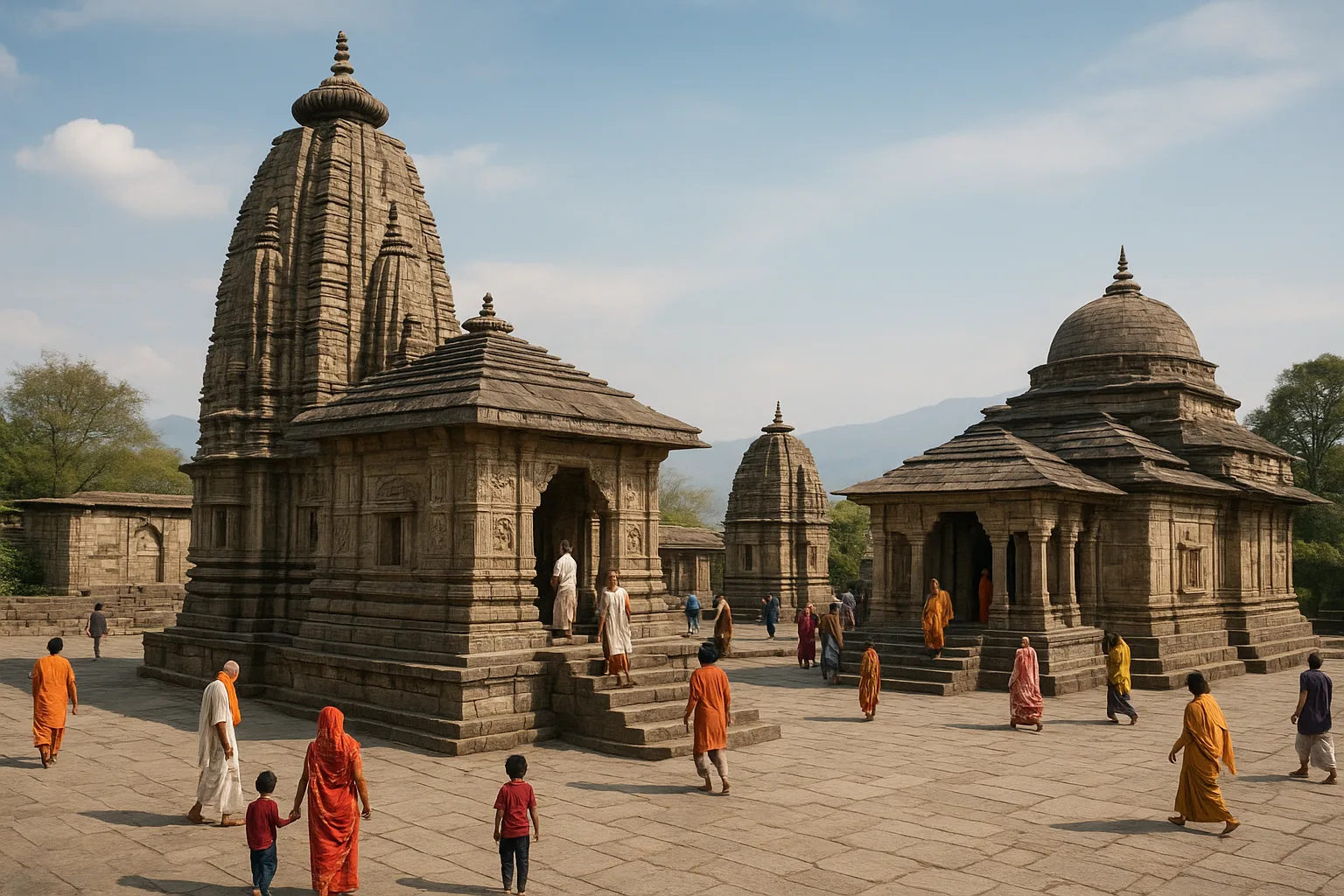
The first rays of sunlight slip over the Shivalik foothills, gilding the rooftops of medieval Una in a golden hush. In the chilly air, a bell rings from a hillside shrine—a deep, resonant sound that floats over terraced fields and winding paths. Villagers, wrapped in woolen shawls, gather at the temple’s threshold, their footsteps crunching on dew-wet earth. This is not merely a morning ritual but the heartbeat of a community whose days, seasons, and destinies are woven into the very fabric of faith.
Land of Many Devotions: Una’s Religious Mosaic
Medieval Una was not a monolith of worship, but a vibrant tapestry where diverse faiths intersected. The region’s geography—nestled between the plains of Punjab and the highlands of Kangra—made it a crossroads for traders, pilgrims, and wandering mystics. By the 11th century, the area was dotted with shrines and temples, each with its own story, drawing people from distant valleys and neighboring kingdoms.
Local oral traditions speak of ancient Shaivite yogis meditating in forest clearings, their hair matted and eyes closed in trance. At the same time, Vaishnavite influences flowed in, carried by pilgrims traveling to sacred sites like Jawalamukhi and Chintpurni, both of which would become prominent in the broader region’s spiritual landscape. Buddhist relics from earlier centuries lingered in folk memory, even as new forms of worship took root.
Temples as Anchors: Sites of Worship and Power
Among Una’s earliest documented religious sites, the Mata Chintpurni temple stands out. Though the existing structure is later, the site itself has medieval origins, drawing devotees across caste and clan lines. Here, the goddess is believed to grant relief from worldly worries—her shrine, set on a wooded hill, a beacon in times of plague or drought.
Other temples, like the ancient Shiva shrines in Rakkar and the surrounding villages, served as both spiritual and administrative centers. Land grants (recorded on copper plates and palm leaves) from local chieftains and Rajput rulers helped sustain these institutions, allowing them to accumulate wealth and influence. The priests were not merely custodians of ritual—they mediated disputes, kept genealogies, and advised local leaders.
The temple courtyards, alive with the scent of marigolds and burnt ghee, became gathering places for festivals, marriages, and village councils. Here, the sacred and the practical coexisted: a prayer for rain, a debate over inheritance, a song for a departed ancestor.
The Arrival of Sufis and the Spread of Islam
By the 13th and 14th centuries, as the Delhi Sultanate extended its reach northward, Sufi mystics began to appear on Una’s horizons. These wandering saints, often from distant lands, brought new ideas and devotional practices. Their khanqahs—simple, hospitable lodges—offered food to travelers and the poor, and their songs and poetry drew crowds from every corner of society.
Unlike the militarized expansions occurring elsewhere, the spread of Islam in Una was subtle and syncretic. Stories abound of Sufi saints—like the revered Sheikh Baba Barohi—mediating local disputes and even sharing in Hindu festivals. The line between Hindu and Muslim devotion could blur, especially in villages where a Sufi’s tomb and a Hindu shrine stood side by side.
Some Rajput clans, seeking alliances or protection, converted to Islam, while others retained their ancestral faiths. The region’s religious centres adapted, incorporating new motifs and rituals. This complex coexistence gave Una a distinctive, tolerant character that would endure even as political boundaries shifted.
Faith in Daily Life: Rituals, Festivals, and Folklore
For most residents of medieval Una, faith was not confined to temples or mosques. Every home was a mini-sanctuary—thresholds marked with sacred symbols, kitchens animated by prayers to ancestral spirits. The agricultural cycle was steeped in ritual: spring sowing began with offerings to local deities, while harvest festivals like Baisakhi united entire villages in feasting and song.
Women played a central role in household worship, reciting ballads and lighting lamps at dusk. Children grew up with stories of wandering ascetics, miracle-working saints, and the goddess who guarded the fields from wild beasts. Traveling bards and mendicants, passing through Una’s markets, wove a shared mythology that transcended caste or creed.
Yet divisions persisted. Caste-based restrictions often dictated who could enter the inner sanctum of a temple or join certain processions. These boundaries were sometimes challenged—by reformist bhakti poets, by Sufi egalitarianism, by the slow but steady changes wrought by trade and migration.
Patrons, Pilgrims, and Pilgrimage Routes
The religious centres of Una flourished thanks to a complex web of patronage. Local rajas, such as those from the Jaswan and Kutlehar dynasties, endowed temples with land and silver, seeking both spiritual merit and political legitimacy. Merchants funded roadside shrines, hoping for safe passage through bandit-infested forests or floods.
Pilgrimage routes crisscrossed the landscape, linking Una to major centres like Kangra, Jawalamukhi, and Anandpur Sahib. During festival seasons, entire caravans of pilgrims would descend upon Una, their colorful processions winding along the riverbanks, accompanied by music, dance, and the occasional quarrel over the order of precedence.
These journeys were more than religious obligation—they were opportunities for trade, cultural exchange, and the forging of new alliances. News from distant cities, new musical styles, even strange spices and textiles found their way into Una through the rhythms of pilgrimage.
Conflict and Compromise: The Challenges of Faith
As with much of medieval India, faith in Una was periodically tested by conflict. The arrival of new rulers—first the Delhi Sultanate, then the Mughals—brought intermittent campaigns and shifting allegiances. Temples and shrines were sometimes targets, their treasures looted or their practices suppressed, only to be restored in quieter times through local resilience and negotiation.
Yet, despite the occasional flare of violence or decree, Una’s religious mosaic persisted. Stories from the Akbar era, recounted in the Ain-i-Akbari and local bardic chronicles, emphasize the emperor’s policy of tolerance and the continued coexistence of diverse faiths. It was, in many ways, the pragmatic wisdom of the region’s elders—and the unifying power of festivals—that held the community together when politics threatened to divide.
Echoes Through Time: Medieval Faith in Modern Una
Walk the streets of Una today, and the past is never far away. Ancient temples still ring with the chants of dawn, and the tombs of local saints attract devotees of all backgrounds. Many festivals—once strictly the domain of a single faith—are now celebrated by the whole community, their origins layered with centuries of adaptation.
The religious centres and practices of medieval Una have left an indelible legacy: a spirit of tolerance, a love of ritual, and a sense of belonging rooted in place and memory. Even as new challenges arise and the world grows closer, the heartbeat of faith that once shaped medieval Una continues to echo through its hills, fields, and bustling markets, reminding all who visit of the enduring power of belief.
Previous: Village Life and Economy in Medieval Una
Next: Una’s Strategic Role Between Kangra and Punjab