
Simple Stretching Routine for Tight Muscles: Easy Steps to Feel Better
Feeling tight muscles after a long day at work, exercise, or just sitting too much is common—and stretching can be one of the simplest ways to find relief. A regular stretching routine not only helps reduce muscle tightness but also improves flexibility, circulation, and overall wellbeing. Even a few minutes a day can make a big difference.
Why Stretching Matters for Tight Muscles
Muscle tightness often results from prolonged sitting, repetitive movements, or stress. When muscles become tight, they can restrict movement and cause discomfort or even mild aches. Stretching gently lengthens these muscles, improves blood flow, and promotes relaxation.
Research supports that consistent stretching can help maintain muscle health and flexibility. It’s not about pushing into pain but rather easing into gentle movements that your body appreciates.
Step-by-Step Simple Stretching Routine
This routine focuses on common areas where tightness occurs: neck, shoulders, back, hips, and legs. You can do these stretches anywhere—at home, in the office, or even outdoors.
- Neck Stretch
- Sit or stand tall with your shoulders relaxed.
- Slowly tilt your head to the right, bringing your ear toward your shoulder without raising your shoulder.
- Hold for 20 seconds, feeling a gentle stretch on the left side of your neck.
- Repeat on the left side.
- Shoulder Rolls
- Lift your shoulders up toward your ears.
- Slowly roll them back and down in a circular motion.
- Repeat 10 times, then reverse the direction.
- Chest Opener
- Stand tall and clasp your hands behind your back.
- Gently straighten your arms and lift your chest, squeezing your shoulder blades together.
- Hold for 20-30 seconds.
- Cat-Cow Stretch (for back and spine)
- Get on your hands and knees with your wrists under your shoulders and knees under your hips.
- Inhale, arch your back, lifting your head and tailbone (Cow).
- Exhale, round your back, tucking your chin and tailbone (Cat).
- Repeat slowly 8-10 times.
- Hip Flexor Stretch
- Kneel on your right knee with your left foot in front, knee bent at 90 degrees.
- Shift your weight forward slightly until you feel a stretch in the front of your right hip.
- Hold for 20-30 seconds, then switch sides.
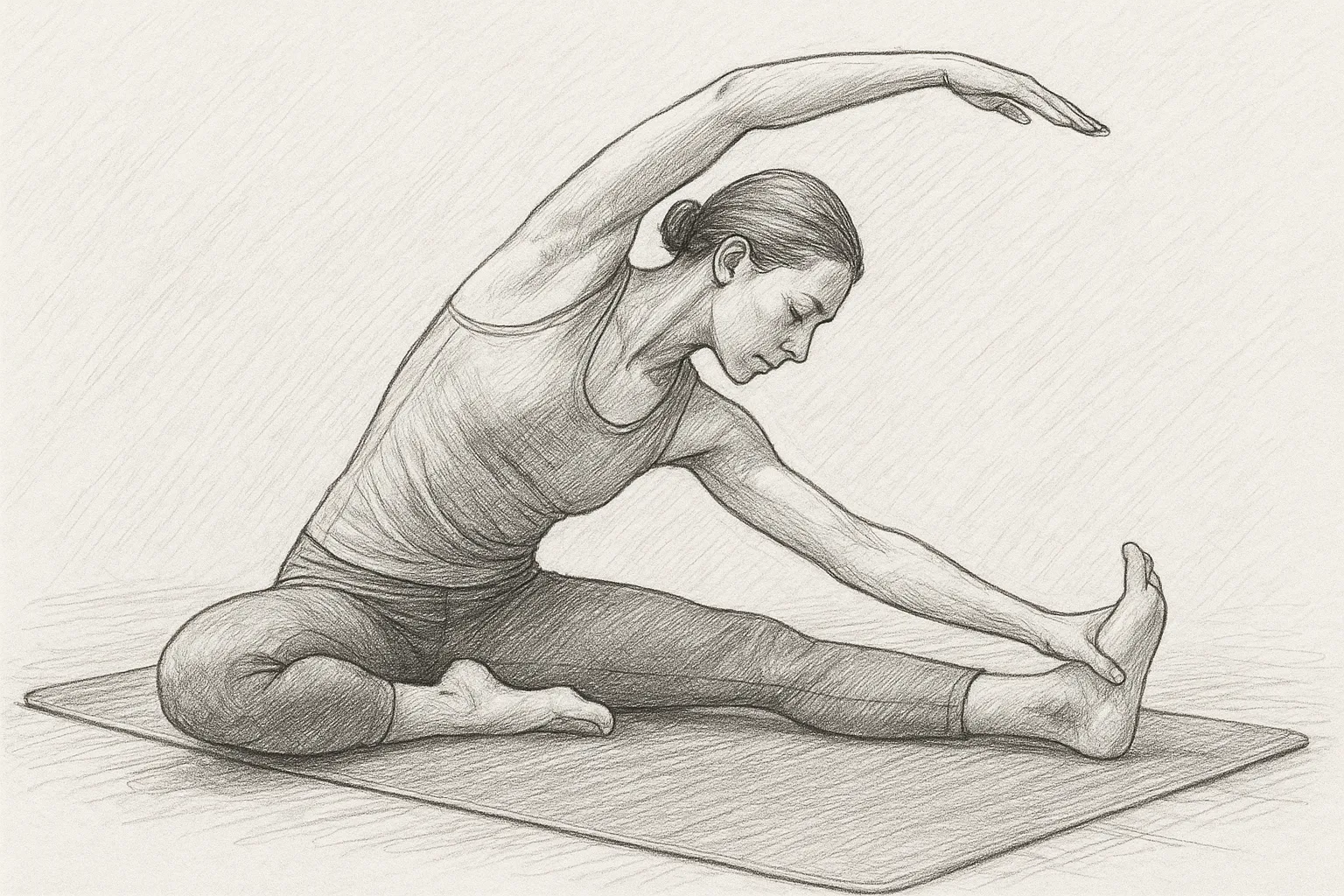
- Hamstring Stretch
- Sit on the floor with your right leg extended and left leg bent, foot touching your inner thigh.
- Lean forward gently over your right leg, keeping your back straight.
- Hold for 20-30 seconds, then switch legs.
Tips for a Sustainable Stretching Habit
- Consistency is key: Try to stretch daily, even if just for 5-10 minutes.
- Move gently: Avoid bouncing or pushing into pain. Stretch to a comfortable tension.
- Focus on breathing: Deep, slow breaths can help your muscles relax and improve the effectiveness of each stretch.
- Incorporate stretching into your routine: Stretch after waking up, during work breaks, or before bed.
- Listen to your body: If a stretch feels uncomfortable or causes pain, ease off or try a modified version.
- Warm up first: Stretching cold muscles can be less effective and uncomfortable. A few minutes of light movement before stretching helps.
Common Myths About Stretching
There are lots of ideas floating around about stretching, so let’s clarify a few common myths.
Myth 1: Stretching Before Exercise Prevents Injuries
While stretching can improve flexibility, research shows that static stretching right before intense activity may temporarily reduce muscle strength. Instead, a gentle warm-up with dynamic movements (like leg swings or arm circles) followed by stretching after exercise is often better.
Myth 2: You Have to Stretch for Hours to See Benefits
Even short daily sessions of 5-10 minutes can improve muscle tightness and flexibility over time. The key is regularity rather than duration.
Myth 3: Stretching Should Be Painful to Work
Stretching should never be painful. Mild tension or a gentle pull is normal, but sharp or intense pain means you should stop immediately and adjust your position.
When to Be Careful
If you have a recent injury, chronic pain, or a medical condition affecting your muscles or joints, it’s best to check with a healthcare professional before starting any new stretching routine. They can guide you on safe and effective movements tailored to your needs.
Conclusion
Incorporating a simple stretching routine into your day can help ease tight muscles, improve comfort, and boost your overall wellbeing. With just a few gentle stretches and mindful breathing, you can create a sustainable habit that supports your body’s natural flexibility and relaxation. Remember, the goal is to move gently and listen to your body, making stretching a positive and enjoyable part of your daily life.
This article provides general educational information only and is not a substitute for professional medical advice. Always consult a qualified healthcare professional for personal guidance.