
Series: History of Kullu, Himachal Pradesh, India
Phase 1: Ancient & Mythological Roots — Part 5 of 30
This article is part of a broader historical series exploring the earliest layers of human presence in the western Himalayas. Beginning with landscape, belief, and early patterns of movement and settlement, the series traces how communities adapted to mountainous environments long before formal states or written records emerged. These foundational centuries shaped cultural memory, local traditions, and relationships with the land that would endure through later periods of change.
Valleys Walled by Mountains: An Ancient Kullu Morning
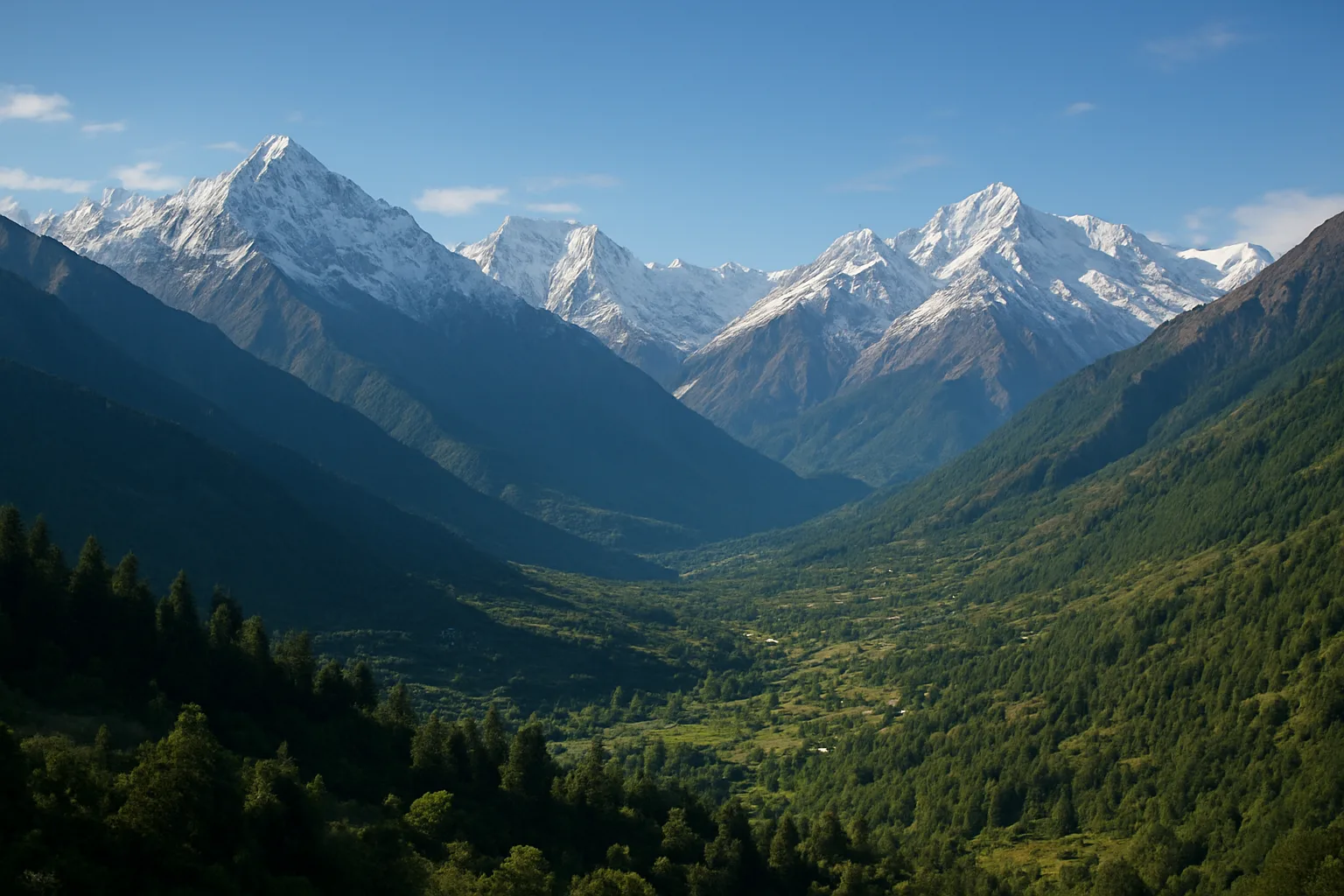
Mist lingers over the Beas as dawn creeps into the Kullu valley. The river, restless and ancient, has carved its story through rock and time. High above, the Pir Panjal and Dhauladhar ranges stand silent, their glaciers feeding the torrents below. Long before written records, before the earliest chronicles, these mountains shaped human fate here—making Kullu a world apart.
The Land Beyond the Passes: Factual Anchors in Early Kullu
Even in the earliest centuries BCE, Kullu’s geography set it apart. The valley, stretching for about 80 kilometers between soaring ridges, is accessible only through a handful of high passes—Rohtang to the north, Jalori and Bashleo in the south-east. This natural isolation is not just a feature of the landscape; it has been the defining context for every human story within these hills.
Ancient Sanskrit texts like the Mahabharata and Puranas, though mythic in tone, refer to Himalayan regions as remote abodes of sages and semi-divine beings. Early local traditions, gathered in regional gazetteers and oral chronicles, call Kullu by many names: Kulanthapitha—the “end of the habitable world.” For outsiders, it was a place at the edge of both geography and imagination.
Myth and Memory: Origins in Oral Tradition
According to Kullu’s oral histories, the valley emerged from a cataclysm. Legends speak of Manu, the great progenitor, who survived a deluge and found refuge here, laying the foundations of a new society. These stories, passed through generations, contain echoes of ancient migrations and settlement patterns, even as they blend with the supernatural.
Temples dedicated to Manu and other early deities still mark village centers. The valley’s sacred geography—in which every peak, spring, or grove might house a spirit—reflects a worldview shaped by both awe and isolation. In these stories, the landscape is more than backdrop: it is a living, unpredictable force, both nurturing and perilous.
Archaeological Traces and Early Communities
Material evidence from Kullu’s earliest periods remains sparse, as the valley’s climate and its shifting riverbeds have erased many traces. Yet scattered finds—stone tools, pottery shards, and burial mounds—hint at human presence dating back to the Neolithic era. Most settlements were small, clinging to defensible terraces above the floodplain or tucked into forest clearings.
By the early Iron Age, communities in Kullu were likely organized in clan-based groups, their livelihoods tied to shifting agriculture, pastoralism, and forest gathering. The mountains forced isolation, but also fostered resilience: self-reliant villages, each with its own deity, rituals, and oral law. Social memory was preserved in song and festival, in the shrines that still dot the valley’s ridges and riverbanks.
Trade Routes and the First Glimpses of the Wider World
Kullu’s seclusion was never absolute. The Beas valley was a corridor—albeit a treacherous one—linking the plains of Punjab to the highlands of Ladakh and Tibet. Ancient traders, pilgrims, and wandering ascetics braved its forests and snows. The Rohtang Pass, open only in summer, was a lifeline for commerce in salt, wool, and grain.
Early references in Buddhist and Jain texts—from the 3rd century BCE onwards—suggest that Kullu was known as a waystation on Himalayan routes. These contacts brought not just goods, but new ideas: Buddhist and Shaiva influences blended with older animist practices, giving rise to the syncretic traditions still visible in Kullu’s festivals and rituals.
Emergence of Early Hill States
By the early centuries CE, the first hill polities were taking shape. Regional chronicles and later Rajput genealogies speak of chieftains and petty kings, rooted in their valleys but aware of neighbors beyond the passes. Kullu itself, according to the Kullu Gazetteer and local bards, was ruled by dynasts who claimed descent from mythic ancestors—yet whose real authority depended on their ability to mediate between fractious clans, the demands of the land, and the will of the gods.
The valley’s isolation made conquest difficult, but not impossible. Occasional incursions from the west and south—by Kushans, Guptas, or later, the rulers of Kangra—left faint but real marks: a coin hoard here, a fragmentary inscription there. Yet the essential pattern held: Kullu’s rulers were mountain chieftains, their authority drawn as much from ritual as from arms.
Belief Systems and the Sacred Landscape
In ancient Kullu, belief was inseparable from place. Every village maintained its own deity, enshrined in wooden temples and honored through elaborate festivals. These deities—often depicted in human form but believed to inhabit the landscape itself—mediated between people and the unpredictable world around them. The power of the gods was felt in the weather, the harvest, and the health of the community.
Over centuries, new religious influences—Buddhism, Shaivism, later Vaishnavism—layered upon the valley’s older animist beliefs. The result was not replacement, but fusion: a living tradition in which ancient spirits and imported gods coexist, each with their own place in the valley’s cosmology.
Legacy of Isolation: Kullu’s Enduring Character
The mountains that once set Kullu apart have also been its crucible. Geography imposed hardship, but it also fostered a culture of resilience, independence, and deep reverence for the land. Oral traditions, local deities, and village councils—these ancient features still shape community life. Even today, Kullu’s festivals and rituals echo the valley’s earliest settlements, a living testimony to endurance across centuries.
As we move forward in this series, the next part will follow the transition from myth and oral memory to the first shadowy records of dynastic rule. The ancient patterns of geography and isolation will continue to echo in the unfolding history of this remarkable Himalayan valley.
Previous: Tribal Communities That Shaped Early Kullu
Next: Foundation of the Kullu Kingdom