
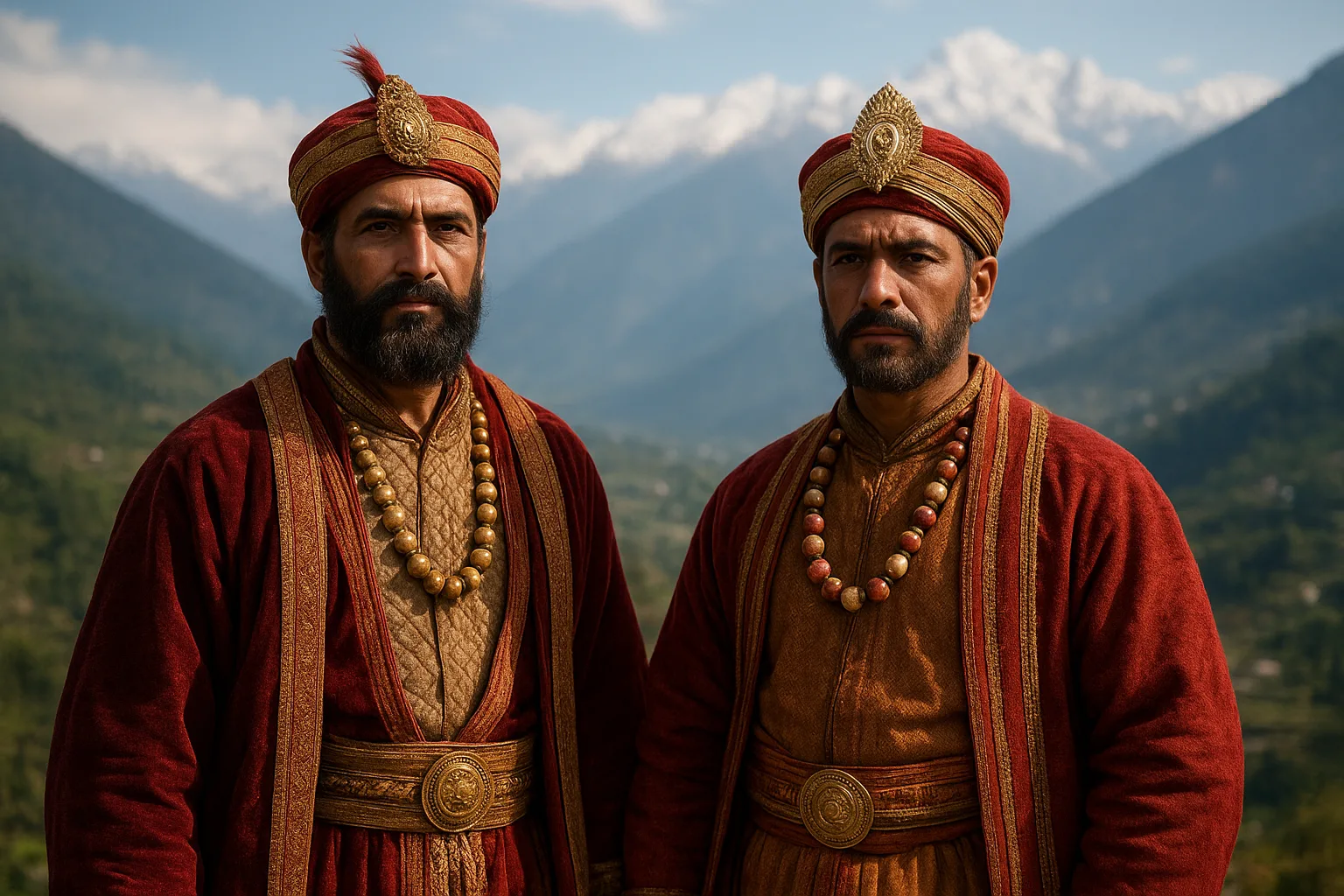
Series: History of Kullu, Himachal Pradesh, India
Phase 2: Medieval Kingdom — Part 6 of 30
This article forms part of a continuing series that follows the gradual emergence of organised power in the western Himalayas. As small communities gave way to clans, chieftainships, and hill states, patterns of rule, alliance, and conflict began to take shape. This phase examines how authority was negotiated through land, ritual, and warfare, laying the groundwork for regional kingdoms that would dominate the medieval landscape.
A Valley Wakes to Dawn
The high Himalayan morning arrives in silence. Down in the broad bowl of the Kullu valley, mist drifts between deodar forests and the restless Beas River, its waters swollen by distant snows. Today, the valley is cradled by bustling towns and apple orchards; a thousand years ago, it was a crossroads of spirits and strangers, a place where legend gave way to the first stirrings of a kingdom.
To stand at the edge of the old trade route into Kullu—where the path from the lowlands climbs along the river, hemmed by steep pine and oak—you sense how geography shaped destiny. Here, at the threshold of the inner Himalaya, communities huddled for warmth, survival, and meaning, long before the valley’s rulers would carve their names in stone or script.
Land of Legends and Early Settlers
Kullu’s earliest memory is shrouded in myth and oral tradition. Local lore, repeated by generations and recorded in regional gazetteers, holds that the valley was once known as ‘Kulantapitha’—the end of the habitable world. Tales speak of Manu, the ancient lawgiver, landing here after the great deluge. Some say the valley was once a lake, drained by divine intervention so that humans might settle. These stories, still alive in local custom and ritual, form a cultural bedrock even as they recede beyond the reach of verifiable history.
But beneath the myth, archaeological traces point to early habitation. The Kullu basin, fertile and relatively sheltered, drew waves of migrants: Austroasiatic groups, early Indo-Aryan settlers, and Tibeto-Burman communities seeking new lands. By the first millennium BCE, small settlements clustered along the riverbanks. They built with stone and wood, worshipped local deities, and learned to read the rhythms of the mountain climate.
From Shrines to Settlements: Belief and Community
In this early period, spiritual life bound people to the land as tightly as kinship. Each village guarded its own tutelary deity—nagas (serpent spirits), goddesses of field and forest, and later, incarnations of Shiva and Durga. Wooden temples with steep roofs rose at crossroads, their beams carved with stories from both local and pan-Indian mythologies. Religious processions and fairs brought distant hamlets together, forging networks of trust and exchange that foreshadowed later political unions.
Yet these communities were never isolated. The Beas valley served as a corridor between the Punjab plains and the high passes to Ladakh and Tibet. Traders and pilgrims carried not just salt, wool, and grain, but also news, beliefs, and new technologies. Over centuries, the foundations were laid for both a shared culture and the rivalries that would define the region’s future.
Hill States Arise: The Political Landscape of the Western Himalaya
By the early centuries CE, the broader western Himalaya was a tapestry of small polities. Neighboring valleys—Mandi, Lahaul, Chamba, and Kangra—saw the emergence of hereditary chiefs and petty kings. Some claimed descent from the mythical Pandavas or local heroes; others rose from powerful village headmen or priestly lineages. These rulers wove together alliances, marriages, and armed confrontations, constantly negotiating the shifting balance of power.
Kullu’s own process of state formation unfolded gradually. While oral traditions trace the royal line back to the legendary Vihangamani Pal, a figure said to have arrived from the plains around the 1st century CE, historical inference suggests a more complex origin. Early Kullu rulers likely emerged from among dominant clans—perhaps through control of sacred sites, grain stores, or strategic river crossings. Over generations, their authority crystallized into the outlines of a nascent kingdom.
Chronicles and First Kings: Glimpses of Recorded History
The earliest written glimpses of Kullu appear in later chronicles and regional records. The Kullu Gazetteer, compiled under British administration in the 19th century, draws on local bardic traditions to reconstruct a line of early kings. Among the first named rulers is Vihangamani Pal, whose arrival and establishment of a dynasty are wrapped in legend yet reflect a broader pattern: the migration of influential families from the plains into the relative safety of the hills, seeking new dominions as the Gangetic heartland underwent upheaval.
By the medieval period, Kullu’s monarchs began to leave more tangible traces—temples bearing royal grants, copper-plate inscriptions, and the rudiments of courtly administration. These rulers presided over a mosaic of villages, each retaining strong local identities but now united beneath a shared royal patronage. Their legitimacy depended as much on ritual and custom as on force of arms.
Trade, Conflict, and the Shaping of Identity
Kullu never slept alone in the mountains. Merchants from Ladakh, Yarkand, and the Punjab wound their way through the valley, exchanging pashmina, salt, and grains. Buddhist monks, Shaiva ascetics, and Sufi travelers left faint but meaningful imprints on the region’s spiritual landscape. The Kullu kings—mindful of both opportunity and threat—fortified key passes and levied tolls, even as they navigated the ambitions of neighboring hill states and, occasionally, distant empires.
Yet despite these pressures, the kingdom’s core identity remained distinct. Fierce pride in local gods, festivals, and dialects set Kullu apart from its neighbors. The hill people, renowned for their independence, expected their rulers to protect both their autonomy and their sacred traditions. It was a fragile equilibrium, tested by both internal rivalries and the larger tides of Himalayan history.
Roots That Endure
The story of Kullu’s foundation is less a single moment than a slow, layered emergence—from lake and legend, through migration and settlement, to the forging of a kingdom in the shadow of snow-capped peaks. Its earliest rulers, remembered in half-mythical genealogies and stone shrines, established patterns of governance, faith, and trade that still echo in the rhythms of valley life.
Today, as the Dussehra festival draws thousands to Kullu’s historic maidan and the Beas still winds its ancient course, the valley’s identity is rooted in these beginnings—woven from memory, resilience, and a shared reverence for land and tradition. In the next part of our series, we will trace the rise of Kullu’s first historic kings, exploring how they navigated conflict and alliance to shape the destiny of their mountain realm.
Previous: Geography and Isolation in Ancient Kullu History
Next: Local Dynasties and Hill Chiefs of Medieval Kullu