
Series: History of Una, Himachal Pradesh, India
Phase 1: Ancient & Early Roots — Part 5 of 30
This article is part of a broader historical series exploring the earliest layers of human presence in the western Himalayas. Beginning with landscape, belief, and early patterns of movement and settlement, the series traces how communities adapted to mountainous environments long before formal states or written records emerged. These foundational centuries shaped cultural memory, local traditions, and relationships with the land that would endure through later periods of change.
Before Dawn: A Ritual Beneath the Hills
Long before temples rose from stone and towns clustered along riverbanks, the people of Una gathered beneath the shadowy folds of the Sivalik hills. Imagine a predawn hush: villagers encircle a fire, the air thick with incense and anticipation. They invoke the spirits of the land—river, forest, mountain—seeking protection and a bountiful harvest. This was Una’s earliest spiritual world, alive with meaning and mystery, where every rock and rivulet might conceal a deity’s presence.
The Land and Its Spirits: Una’s Ancient Faith
Una’s geography shaped its earliest beliefs. Nestled where the Sivalik foothills meet the Punjab plains, the land is marked by undulating ridges, seasonal streams, and fertile valleys. Archaeological finds from nearby Kangra and Harappan outposts suggest that early settlers in Una, dating back to the Indus Valley’s twilight (circa 1800–1200 BCE), revered natural forces. Their faith was fluid, woven into the daily cycle of rain, sowing, and harvest, and the great watercourses—most notably the Sutlej and Swan rivers—became sacred arteries of life.
Stone tools, pottery shards, and occasional terracotta figurines unearthed in the region hint at ritual offerings and ancestor worship. The idea of the sacred was not confined to built shrines, but lived in groves, springs, and the very soil. Oral tradition, passed through generations, tells of ancestral spirits—”devtas”—guarding particular hills and trees, a belief that persists in rural Una even today.
From Animism to Early Vedic Influences
By the second millennium BCE, waves of Indo-Aryan migration brushed Una, bringing new language, myth, and ritual. While older animistic practices endured, they mingled with the Vedic worldview. The Rigveda, composed not far to the south, echoes with hymns to rivers, the sun, and fire: forces Una’s people already knew well. Local chieftains, or “rajas,” emerged as patrons of fire sacrifices—”yajnas”—performed atop hills or along riverbanks, believed to preserve cosmic order.
This era saw the rise of sacred sites that would shape Una’s identity for centuries. Oral lore links the area to sages like Vashistha and Parashurama, who, according to legend, meditated in the forests above the Swan valley. Though direct evidence is elusive, the persistence of these stories in Una’s villages underscores how ancient faiths and Vedic ritual interwove, creating a spiritual mosaic unique to the region.
Hill Shrines and Village Deities
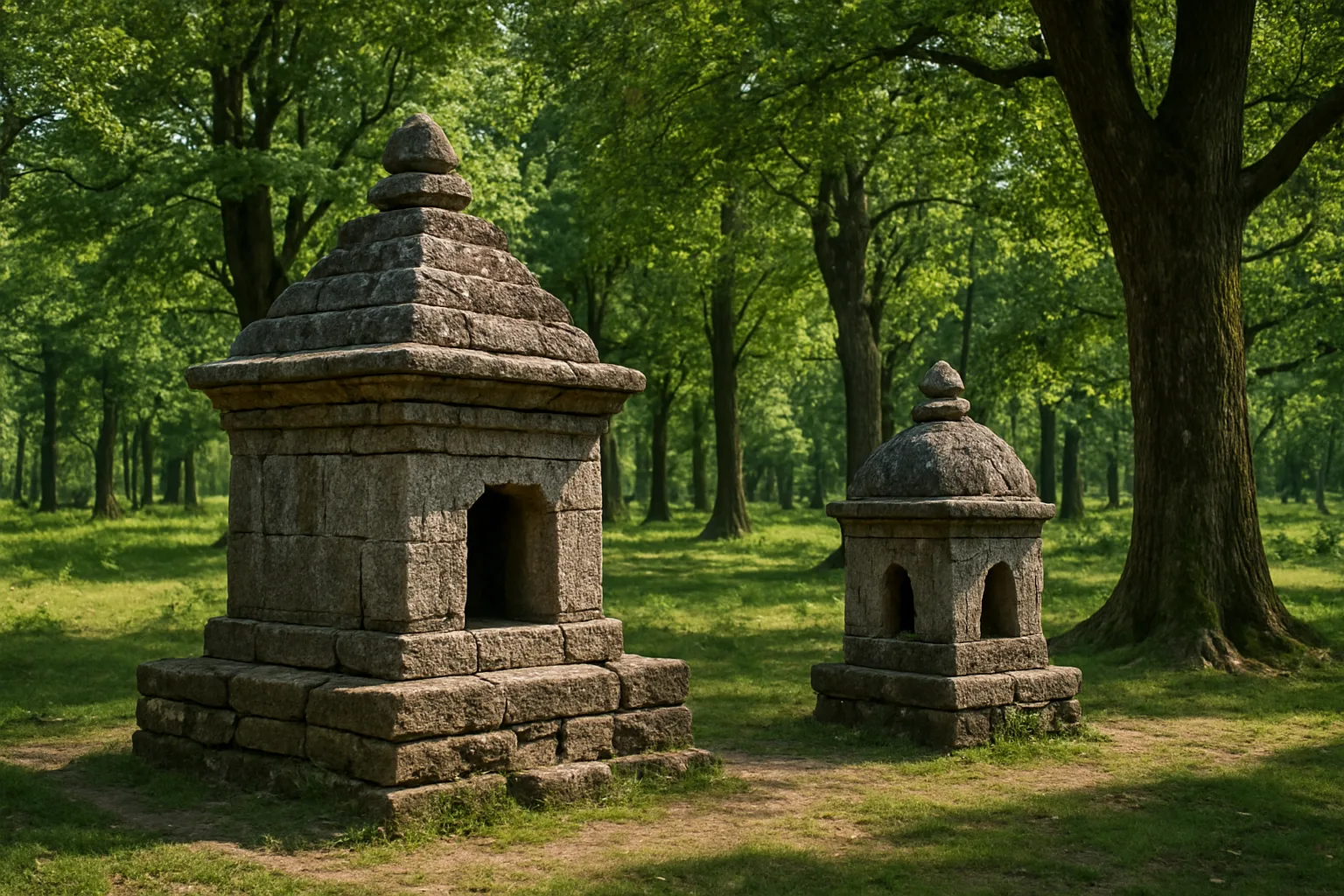
As Una’s settlements grew, so did the importance of fixed sacred places. Small shrines—often little more than a mound of stones or a sheltering tree—marked sites where miraculous events were believed to have occurred. These were not grand temples, but intimate, communal centers of worship. The focus was less on distant pantheons and more on local deities—”gram devtas”—who guarded crops, livestock, and children.
One enduring tradition speaks of the goddess Chintpurni, whose temple today draws thousands but likely began as a simple forest shrine. Villagers say she first revealed herself to a humble devotee, granting miracles and protection. Oral genealogies, preserved by “bards” (known as “pandits” and “gaddis”), trace the origin of such sites to times when tribal clans sought the favor of unseen powers before embarking on hunts or wars.
Lakes, Rivers, and the Ritual Calendar
Water—always precious in the undulating hills—became a spiritual force in its own right. The Swan river, with its seasonal floods and clear pools, was more than a water source: it was a living being, honored with offerings at the start of planting or after a successful harvest. Even today, older residents recall how their grandparents would pour milk or grains into the river at dawn, a silent prayer for health and prosperity.
Seasonal festivals, some still observed in modern Una, often trace their roots to these ancient rituals. Spring’s arrival was marked by processions to hilltops, where offerings were made to ensure rain. The winter solstice brought gatherings at sacred groves, where elders recited stories of gods and ancestors, binding the community together across generations.
Encounters with Buddhism and Jainism
By the third century BCE, the Mauryan Empire’s reach extended into the foothills, and with it, new religious currents. Ashoka’s edicts, carved in distant Kangra and Kalsi, proclaimed tolerance and moral living. Buddhist monks, traveling from the great centers at Taxila and Sarnath, passed through Una’s valleys, pausing to meditate in its quiet forests. Local tradition hints at hidden caves used for meditation, and mounds that may have been early Buddhist stupas—though time and monsoon have erased much.
Jain traders, too, traversed Una’s routes, leaving their mark in the form of modest stone carvings and ethical tales embedded in village folklore. While neither Buddhism nor Jainism established major centers in Una, their ideals of non-violence and compassion subtly influenced local custom, softening older, harsher rites.
The Rise of Shaivism and Goddess Worship
From the early centuries CE, Shaivism—devotion to Shiva—began to dominate Una’s religious landscape. The wild hills and forests provided apt settings for the worship of Shiva as “Mahadeva,” lord of beasts and ascetics. Hermits established ashrams in secluded glades, and the clang of bells mingled with the sound of flowing streams.
Alongside Shiva, the worship of the Mother Goddess (in forms like Durga and Chandi) flourished. Many of Una’s present-day temples, such as the revered Chintpurni shrine, have roots in these early centuries. Festivals honoring the goddess brought together entire villages, reinforcing social bonds and offering respite from the hardships of rural life.
Sacred Sites and Lasting Legacies
By the time regional kingdoms such as the Katoch dynasty of Kangra began to assert control (circa 10th century CE), Una was dotted with sacred sites, each layered with centuries of prayer and legend. Pilgrims traced paths along ridges to ancestral shrines, and spiritual leaders—”gurus” and “sadhus”—found refuge in the tranquil hills. The boundaries between the sacred and everyday were porous: a field, a spring, a solitary tree could all become places of power, depending on the need and the season.
Some of these sites, like the ancient mound at Amb or the forest shrine near Bangana, remain places of quiet veneration. Others have vanished, remembered only in the songs of wandering minstrels. Yet their influence endures, woven into the rhythms of village life, from marriage rituals to harvest songs.
Echoes in Modern Una
The spiritual tapestry woven by Una’s earliest inhabitants still shapes its present. The Chintpurni temple draws pilgrims from across northern India; village festivals follow ancient calendars; elders recount stories of river spirits and mountain gods. Even as new roads and industries transform the landscape, the sacred sites of Una anchor its people to a deep, resilient past—a reminder that faith is not just about gods and temples, but about belonging, memory, and the enduring bond between land and community.
Previous: Una’s Place in Ancient Trade and Migration Routes
Next: Una During the Medieval Hill–Plains Interface Era