
Series: History of Una, Himachal Pradesh, India
Phase 1: Ancient & Early Roots — Part 4 of 30
This article is part of a broader historical series exploring the earliest layers of human presence in the western Himalayas. Beginning with landscape, belief, and early patterns of movement and settlement, the series traces how communities adapted to mountainous environments long before formal states or written records emerged. These foundational centuries shaped cultural memory, local traditions, and relationships with the land that would endure through later periods of change.
The Distant Echoes of Caravan Bells
Imagine a dawn mist drifting through the low hills of Una. The year is somewhere in the second century BCE. Traders from Gandhara, their carts creaking with silk and lapis, pause at a clearing where the Soan River bends gently. Their destination: the eager markets of the Punjab plains and, perhaps, distant Mathura. For centuries, long before the names of empires changed, Una’s valleys echoed not only with the hooves of traders’ horses but also with the footfalls of migrants, pilgrims, and adventurers whose journeys would shape the character of this land.
Ancient Crossroads: Geography as Destiny
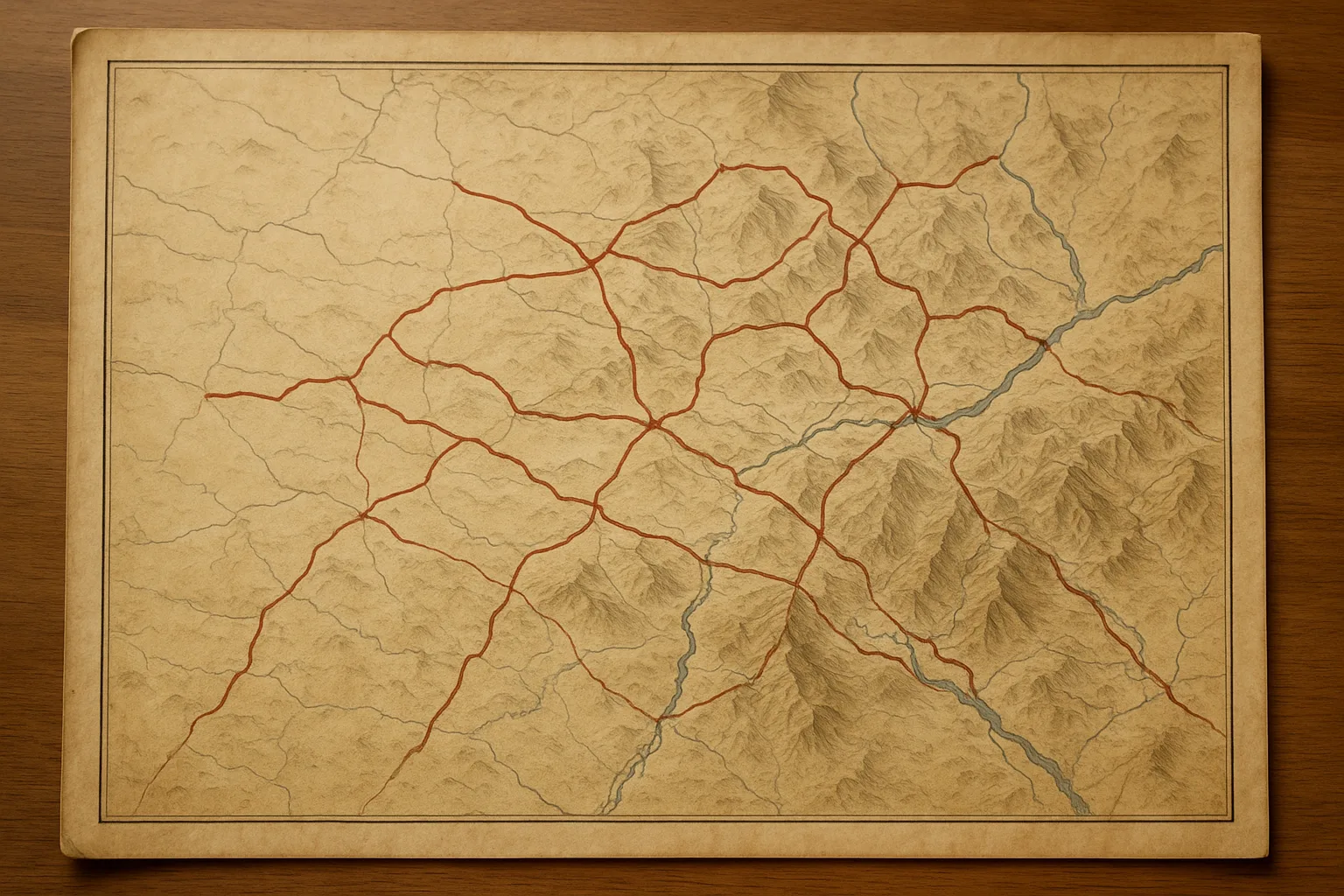
Una’s strategic location, nestled between the Shivalik foothills and the broad plains that stretch toward Punjab, was never an accident of nature. It is the gentle break where highland meets lowland, a natural corridor that beckoned those moving between the Himalayas and the Indo-Gangetic plain. To the north, the old roads wound toward Kangra and the sacred Himalayan passes. To the south, they spilled into the fertile heartland of the Punjab, connecting to routes as far west as Taxila and east to the Ganges basin.
This unique geography made Una a vital node in the web of ancient Indian trade routes—an unsung, enduring link in the story of movement and exchange.
Early Civilizations on the Move
Archaeological finds in the wider region—ceramic shards, terracotta figurines, and ancient copper tools—hint at settlements that flourished along rivers like the Swan centuries before written records. These communities, likely influenced by the Indus Valley to the west and the Painted Grey Ware cultures of the north, were not isolated. They traded salt, grains, and crafted goods, their local roads feeding into larger arteries of commerce.
As Vedic society expanded, Una found itself along the migratory routes of pastoral tribes moving in search of new pasturelands. Oral traditions, preserved in the folk songs of the region, still recall the wanderings of clans and the arrival of sages who crossed these hills, carrying not just goods but new ideas, rituals, and languages.
The Mauryan Link: Ashoka’s Footsteps
By the third century BCE, the Mauryan Empire under Ashoka reached far into the northwestern hills. Edicts carved in distant Kangra and Kalsi reveal the emperor’s efforts to promote dharma across his dominion. It is likely that Mauryan envoys and Buddhist monks traveled the well-trodden paths through Una, en route to the monastic centers of the Himalayan foothills.
These travelers brought with them not only imperial authority but also Buddhist texts and the seeds of new religious communities. The region’s ancient stupa mounds and scattered relics, though often weathered by time, bear silent witness to this transformative era.
Gupta Gold and the Flow of Silk
The subsequent Gupta period saw Indian trade networks flourishing. Gold coins bearing the images of Samudragupta and Chandragupta II circulated through the hands of traders crisscrossing northern India. Una, by then an established stopover, would have seen the passage of caravans bearing silk from China, spices and gems from southern India, and horses from Central Asia.
It was not just commerce that flowed through Una’s valleys. The migration of artisans, musicians, and religious teachers enriched the local culture, blending the traditions of hill tribes with those of the wider subcontinent. The region’s folk festivals, with their echoes of distant lands, are living remnants of this era of movement and mingling.
Medieval Migrations: Rajput and Gorkha Footprints
The medieval centuries brought new waves of migration. Rajput clans, driven by the shifting fortunes of wars in Rajasthan and the Punjab, settled in the hills of Himachal, including the valleys surrounding Una. Their arrival transformed the local polity, introducing new forms of administration, fortifications, and patronage of temples and crafts.
In the late eighteenth century, the Gorkha invasions shook the region. Soldiers and displaced families moved through Una, seeking refuge or opportunities in the wake of conflict. The ancient roads witnessed not just commerce but the forced migrations and resilience of communities adapting to turbulent times.
Bazaars, Pilgrims, and the Colonial Road
As Mughal and later Sikh influence reached into the hills, Una’s old trade routes adapted. Bazaars flourished at river crossings, linking local produce—wool, honey, millet—with distant markets. Pilgrims journeying to shrines in Jawalamukhi or Chintpurni stopped in Una’s rest houses, their presence recorded in village tales and temple inscriptions.
The British colonial era brought new roads and administrative boundaries, but many of these followed the ancient paths. The Grand Trunk Road, a marvel of the Raj, skirted Una, but the region’s old tracks remained arteries for local commerce and seasonal migration well into the twentieth century.
Echoes of the Past in Modern Una
Today, the highways that cut across Una’s landscape are threaded atop the bones of older roads. The markets bustle with goods from across India, and the town’s mix of languages and customs reflects centuries of arrivals and exchanges. Families recall ancestors who once guided caravans or sheltered pilgrims, their stories woven into the memory of the land.
Una’s history as a crossroads—of goods, people, and ideas—has shaped not just its economy but its very identity. The rhythms of ancient trade and migration still pulse beneath its modern surface, reminding residents and visitors alike that every journey through Una is a step along a path traveled for millennia.
Previous: Early Agrarian Communities of Una
Next: Religious Beliefs and Sacred Sites of Early Una