
Series: History of Una, Himachal Pradesh, India
Phase 2: Medieval Period — Part 6 of 30
This article forms part of a continuing series that follows the gradual emergence of organised power in the western Himalayas. As small communities gave way to clans, chieftainships, and hill states, patterns of rule, alliance, and conflict began to take shape. This phase examines how authority was negotiated through land, ritual, and warfare, laying the groundwork for regional kingdoms that would dominate the medieval landscape.
Dawn at the Crossroads: Una’s Forgotten Frontier
The sun rises over the low hills of Una. Smoke from a caravan encampment curls skyward, mingling with the morning mist. Traders from the Punjab plains gather their goods—cotton, spices, silks—while Rajput horsemen, their armor glinting, stand watch at the edge of the forest. In the early medieval centuries, Una was neither a city nor a village: it was a threshold. Here, the northern hills of Kangra met the open plains, and every traveler, merchant, or invader moved through this liminal place, shaping its destiny.
Where Hills Meet Plains: Una’s Strategic Geography
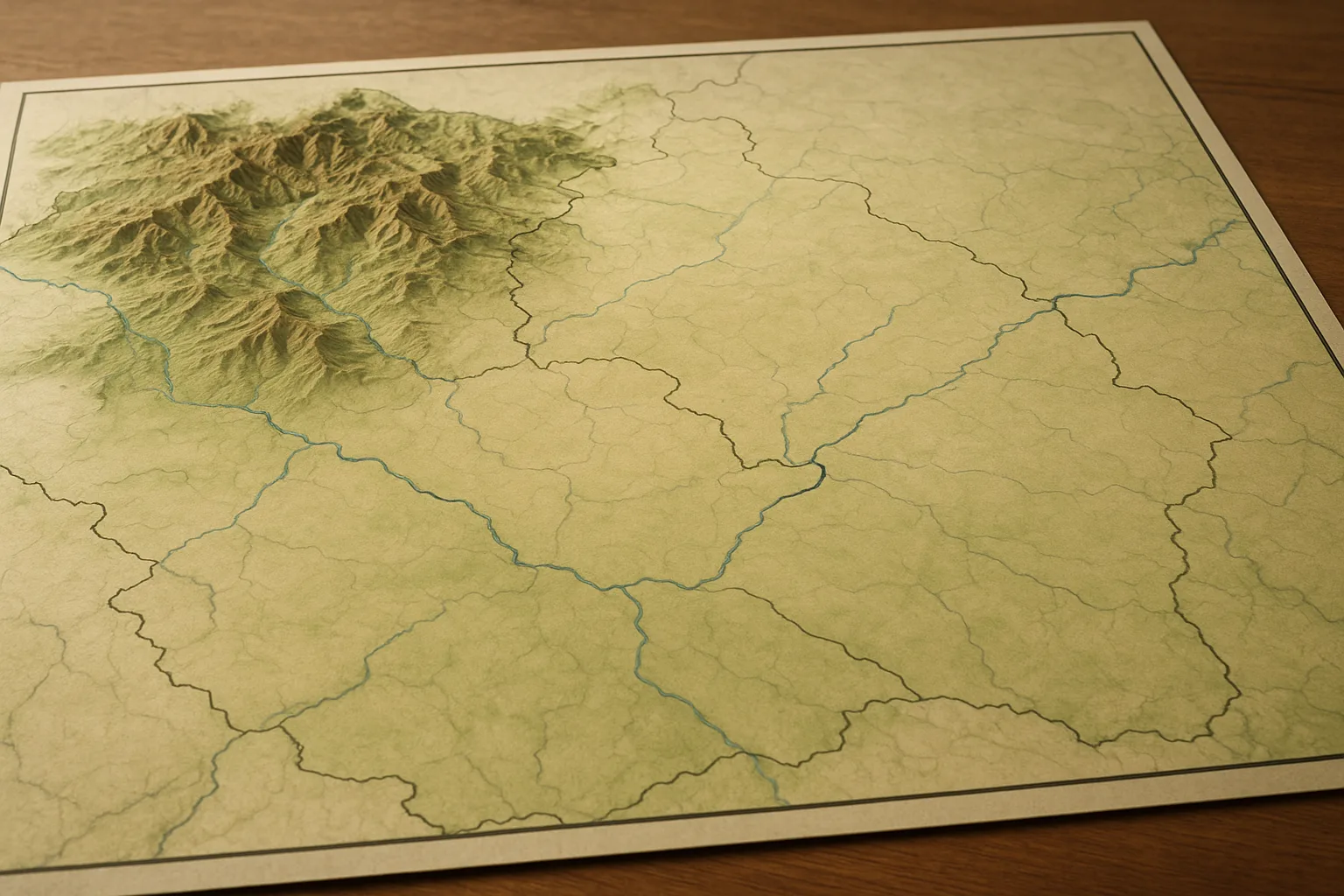
Una’s story in the medieval era is inseparable from its geography. Nestled between the sharp ridges of the Shivaliks and the fertile plains leading to Hoshiarpur and Jalandhar, Una was more than a passage—it was a buffer and a bridge. The Swan River, flowing gently in the monsoon, became a lifeline for settlements and a natural boundary for armies. Paths from the Punjab plains would wind northward, climbing toward Kangra, Nurpur, and the deeper Himalayas. For centuries, those who controlled Una controlled access: to the hills’ timber and minerals, to the plains’ markets, and to the region’s very security.
The Early Medieval Tapestry: Dynasties and Disputes
By the ninth and tenth centuries, the political map of northwestern India was a patchwork of small kingdoms and chieftaincies. The Katoch dynasty, based in mighty Kangra, held sway over the hills, balancing alliances and rivalries with Rajput clans. South of Una, the fertile tracts of the Punjab plains were claimed by various local rajas and, increasingly, by ambitious newcomers from the west. In this world, Una was often a bargaining chip—its control passed through hands as marriages, treaties, and skirmishes shifted the balance of power.
Caravans, Temples, and Markets: The Pulse of Medieval Life
Medieval Una was alive with the rhythms of trade and pilgrimage. Caravans laden with salt and grains would pause at the settlement’s rest houses, their drivers exchanging news from distant Lahore or Mathura. Monks on their way to the hill temples and Sufi dervishes heading for shrines of the Punjab would cross paths at Una’s riverbanks. Local legends recall the ancient Maheshwari Devi Temple, already venerated by the tenth century, and the scattered stone shrines that dotted the landscape. Markets sprang up near these holy places—selling copperware, wool, and dried fruit from the hills, and textiles and spices from the plains.
Forts and Watchtowers: Defending the Threshold
With opportunity came danger. The medieval centuries were marked by raids, rivalries, and the ever-present threat of invasion. Small forts—usually simple earthworks or stone bastions—rose along the Swan River and at strategic hillocks. Oral traditions speak of garrisons stationed at Amb and Bangana, tasked with relaying warnings to Kangra or intercepting bands of raiders. The Katoch kings, aware of Una’s vulnerability, often sent trusted relatives as governors, ensuring loyalty and quick response.
Winds of Change: Turks, Sultans, and the Shifting Frontier
The twelfth and thirteenth centuries brought new turmoil. The first Turkish invasions swept across the north, culminating in the rise of the Delhi Sultanate. Mahmud of Ghazni’s legendary raids on Kangra Fort reverberated through the region, and although Una itself was spared large-scale destruction, its people felt the shocks. Armies marching to Kangra or deeper into the hills had to pass through this corridor—sometimes as conquerors, sometimes as fugitives. The Sultanate’s growing reach meant new taxes, new laws, and, occasionally, new settlers. Persian and Afghan soldiers, Sufi mystics, and administrators arrived, mingling with the Rajput and local Pahari populations.
Negotiating Survival: Local Chieftains and Sultanate Rule
Unlike the plains, where the sultans’ authority was direct and often harsh, Una’s rulers negotiated a more ambiguous status. Many local chieftains paid tribute but retained autonomy in daily affairs. Rajput and Katoch families continued to govern the hills, their loyalty bought with grants of land and ceremonial titles. Records suggest that Una became a refuge for those fleeing upheaval in the plains—a trend that would intensify as Mongol and later Timur’s invasions sent shockwaves through north India.
Cultural Crossroads: Faith, Language, and Identity
Medieval Una was not merely a military outpost or a trading hub. It was a meeting place of cultures. The region’s dialects absorbed words from Persian and Punjabi; folk songs celebrated both hill gods and Sufi saints. Festivals brought together Hindu and Muslim communities, especially during harvest and at local shrines. It is said that the Mahashivratri fair at Amb, drawing crowds from both hills and plains, became a symbol of Una’s hybrid identity. The stone inscriptions and faded wall paintings found near Una hint at a society where boundaries were porous—where merchants and mendicants, soldiers and storytellers, all left their mark.
Legacy of the Interface: Enduring Tensions and Transformations
By the end of the medieval era, Una had weathered centuries of change. It remained a frontier—sometimes embattled, sometimes flourishing, always essential to the fortunes of Kangra and the wider region. The rise of Mughal power in the sixteenth century would bring new forms of administration and economic integration, but the memory of Una’s pivotal role as a hill–plains interface endured in local lore and tradition.
Echoes in the Present: How the Medieval Era Shapes Una Today
Walk through modern Una and you can still sense the echoes of its medieval past. The town’s markets, bustling with goods from both hill and plain, recall the ancient trade routes. Religious festivals remain vibrant, shaped by centuries of cultural exchange. The landscape—marked by rivers, low hills, and the occasional ruined fort—reminds residents and visitors alike of Una’s historic role as a gateway and guardian. In its blend of traditions and its strategic position, Una continues to embody the spirit of a place where worlds meet and history never quite sleeps.
Previous: Religious Beliefs and Sacred Sites of Early Una
Next: Local Chiefs and Feudal Administration in Medieval Una