
Series: History of Kangra, Himachal Pradesh, India
Phase 2: Medieval Power — Part 6 of 30
This article forms part of a continuing series that follows the gradual emergence of organised power in the western Himalayas. As small communities gave way to clans, chieftainships, and hill states, patterns of rule, alliance, and conflict began to take shape. This phase examines how authority was negotiated through land, ritual, and warfare, laying the groundwork for regional kingdoms that would dominate the medieval landscape.
The Valley at Dawn: Early Kangra’s Living Landscape
Mist curled through the cedar forests as the sun’s first rays struck the stronghold of Nagarkot. In the shadow of the Dhauladhar, Kangra was already ancient when the world first heard of it. Here, between the Beas and the Ravi rivers, a mosaic of hills, rivers, and fertile valleys bore witness to centuries of migration, worship, and struggle. Long before its name was carved in stone, this valley had become a crucible for communities whose legends would outlast empires.
Myth, Memory, and the Echoes of Antiquity
Much of Kangra’s earliest past is preserved in memory and song rather than parchment. Oral traditions, still whispered in village courtyards, speak of the land as Trigarta—“three rivers”—a name that surfaces in the Mahabharata and in local ballads. According to legend, the valley was ruled by the mighty Rajan Susharma Chandra, an ally of the Kauravas, who is said to have survived the fall of ancient Hastinapura and returned to rebuild his fortress here.
Yet, historians tread carefully with these tales. While the Mahabharata offers a tantalizing origin story, the first clear footprints of Kangra’s rulers appear only centuries later. The Katoch family—whose name is woven with both legend and documented history—claimed descent from Susharma Chandra, using ancestral memory to legitimize their rule. These traditions, though mythic, formed the backbone of identity for Kangra’s people, enduring through invasions and upheavals.
Geography and the Seeds of Settlement
The valley’s geography shaped its destiny. As early as the first millennium BCE, proto-historic settlements clustered along riverbanks, their economies tied to the rhythms of the land. Archaeological evidence—tools, pottery, and remnants of early agriculture—suggests a gradual transition from tribal clusters to small chiefdoms, each controlling strategic passes and trade routes that threaded through the hills to the plains below.
By the time Buddhist and Jain travelers began recording their journeys through the northwestern Himalayas, Kangra had emerged as a node on the ancient Uttarapatha—the great northern road linking Gandhara with the Ganges basin. Caravans brought salt, wool, precious stones, and ideas, making the valley both cosmopolitan and fiercely independent.
The First Hill States and Shifting Allegiances
Political organization in early Kangra was never static. Communities grouped themselves around fortified settlements—garhs—built on spurs and ridges, each ruled by a chieftain who owed allegiance only as long as power allowed. Over time, a pattern emerged: alliances forged in war and marriage, broken by ambition or betrayal, then reforged against common threats from the plains.
By the early centuries CE, references to the Trigarta Kingdom in the Puranas and Buddhist chronicles suggest a recognized polity, with Nagarkot (modern Kangra) as its capital. The rulers of Kangra—by now identifiable as the ancestors of the Katoch clan—claimed sovereignty over the three river valleys, a claim that would be repeatedly tested as northern India’s empires ebbed and flowed.
Faith, Fortresses, and the Fabric of Early Society
The spiritual life of Kangra was as layered as its terrain. The valley’s earliest shrines were dedicated to local deities—spirits of rivers, rocks, and forests—whose worship continues today. But with the rise of Brahmanical Hinduism, new temples rose in stone, the most famous being the ancient Jawalamukhi and Brijeshwari Devi shrines. These temples, along with Buddhist monasteries at nearby Tira and Chintpurni, made Kangra a crossroads for pilgrims and scholars alike.
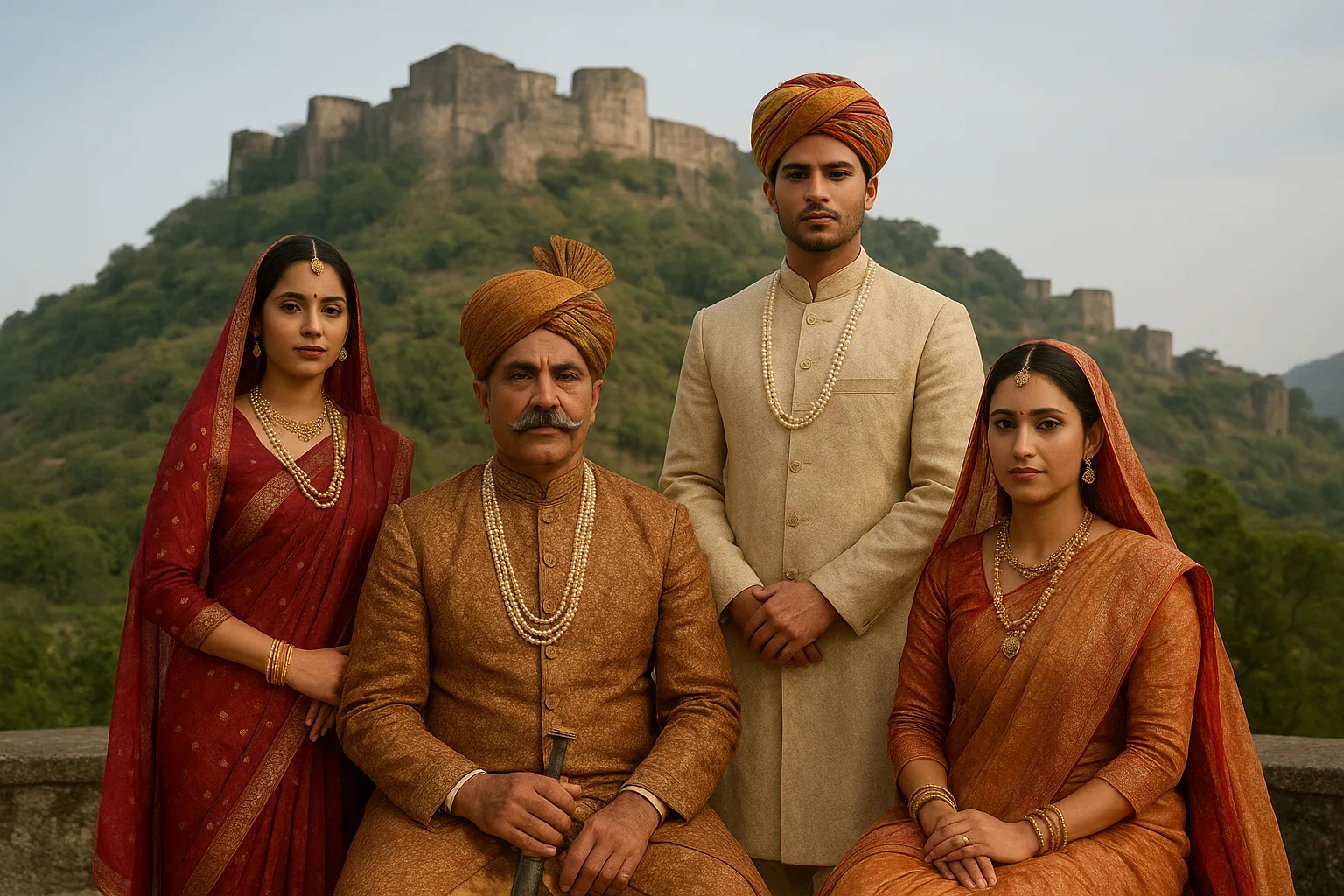
The fort at Nagarkot became the heart of the emerging dynasty. By the sixth century CE, according to regional gazetteers and the Rajatarangini of Kashmir, the Katoch rulers had consolidated their hold, building alliances with neighboring hill states like Guler, Jaswan, and Nurpur. While the precise lineage remains debated, the dynasty’s power was rooted in control over sacred sites, fertile land, and the lucrative trade routes that wound through the mountains.
Rivals and Incursions: Kangra Amid Empires
As the Katoch dynasty gathered strength, the valley’s fortunes were increasingly bound to the ambitions of distant powers. The march of the Gupta Empire left its imprint, though Kangra’s hills offered both refuge and resistance to imperial control. Later, as the White Huns swept through northern India in the fifth and sixth centuries, the Katochs are said to have defended their fortresses with tenacity, earning both scars and renown.
With the coming of the early medieval period, Kangra’s rulers played a delicate game—offering tribute, forging alliances, or waging defiant wars as circumstances demanded. The chronicles of neighboring Kashmir often mention Kangra’s princes as both rivals and allies in the region’s shifting mosaic of power.
Legacy of the Early Katochs
By the dawn of the second millennium, the Katoch dynasty stood as one of the oldest surviving royal houses in the Indian subcontinent. Their claim to ancestry in the age of epics—whatever its historicity—became a powerful tool, binding their subjects to a lineage that stretched back before recorded history. The dynasty’s imprint on Kangra’s landscape and culture was indelible: fortresses still stand amid the ruins, and the rhythms of temple festivals echo the ancient rites of kings.
In today’s Kangra, the memory of these beginnings is alive in tradition and daily life. The Katoch name evokes both pride and continuity, a reminder that the region’s identity was forged in the crucible of geography, myth, and the relentless tides of history. As we move forward in this series, we will witness the Katoch dynasty’s fortunes as they confront new invaders, shape their political destiny, and leave a legacy that still shapes the valley’s soul.
Previous: Strategic Importance of Kangra’s Geography
Next: Kangra Fort: History and Legends