
Series: History of Una, Himachal Pradesh, India
Phase 5: Modern Era — Part 30 of 30
This article appears within a continuing historical series that follows the western Himalayas into the modern era. With the end of princely rule and the integration into independent India, long-standing social and political patterns were reconfigured. This phase examines how development, state formation, and memory interact with inherited landscapes, shaping contemporary life while carrying forward echoes of the past.
A Roadside Memory at the Foothills
The evening air in Una is thick with the scent of temple incense and the sound of distant truck horns as they rumble down National Highway 503A. At a roadside tea stall, elders gather, their conversations drifting to memories of different times—of kings and invaders, of partition trains packed with hope and heartbreak, and of a town that has always found itself at the crossroads. Here, where the Shivalik foothills roll gently into the Punjab plains, Una’s story begins—not as a mere district, but as a living testament to resilience and transition. To understand Una is to walk a tightrope between past and present, where every stone and marketplace echoes with the weight of centuries.
Ancient Crossroads: The Early Settlements
Long before Una acquired its present name, these lands served as the fertile margins of early Indian civilization. Archaeological finds at nearby places like Dholbaha and Masrur suggest that the region was a conduit for migration and trade, connecting the Himalayan hinterlands with the great riverine cultures of the Indus and Ganges. Local legends recall that the area around Una was once dense forest, home to itinerant tribes and early agrarian communities, their lives mapped by the Sutlej and Swan rivers.
As Buddhism flourished across northern India, the region felt the gentle ripple of the Mauryan and Kushan empires. The proximity to Kangra and Hoshiarpur—both locales of enduring importance—meant that Una was never isolated. Rather, it was a threshold, a place where pilgrims, traders, and armies found passage. The name ‘Una’ itself, some say, derives from the Sanskrit ‘Unnat’, meaning ‘to rise’—a subtle nod to both geography and aspiration.
Medieval Struggles and Princely Ambitions
The medieval era brought waves of change. By the 10th century, Una and its surrounding hills were shaped by the ambitions of local Rajput chieftains, notably the Katoch dynasty of Kangra. This period was marked by shifting alliances, skirmishes for territory, and the construction of forts that now lie in ruin, overgrown with wild fig and peepal roots.
As the Delhi Sultanate expanded, Una found itself at the periphery of great northern campaigns. The Mughal era, too, left its mark: Akbar’s annexation of the hill states in the late 16th century brought a brief stability, but also imposed new taxes and administration. The temples of Chintpurni and Jawalaji, both within reach of Una, became centers of pilgrimage and resistance—a spiritual counterweight to imperial authority.
Stories from village elders recall the exploits of Raja Sansar Chand of Kangra, whose rivalry with the Gorkhas and eventual alliance with the British redrew the region’s political map. Una, then a collection of villages and outposts, became a prize in greater games, its fate determined by distant courts and battlefield whispers.
Colonial Encounters and the Shadow of Partition
The 19th century dawned with the British East India Company consolidating control. Una, on the southern flank of the princely state of Kangra, was subsumed into the Punjab Province after the Anglo-Sikh wars. British administrators, entranced by the region’s strategic location, laid down new roads and introduced land revenue systems that upended local ways.
Yet, it was the Partition of 1947 that irrevocably transformed Una. The town, perched on the border of Punjab and Himachal, became a flashpoint for refugee movement. Eyewitness accounts describe trains arriving daily, packed with families fleeing violence, clutching little more than hope. The railway station, built during British rule to connect the hills with the plains, became both lifeline and witness—its platforms stained with stories of loss and beginning anew.
For many, Una was not just a stopping point but a new home. The influx of Punjabis, Sindhis, and others altered the cultural fabric, blending languages, cuisines, and faiths. The old town adjusted, its markets swelling with new shops and faces, its festivals now a kaleidoscope of traditions.
The Formation of Himachal Pradesh and Una’s Identity
Post-independence, the political map of northern India shifted. In 1966, following the Punjab Reorganization Act, Una was transferred from Hoshiarpur district (Punjab) to Himachal Pradesh. This administrative realignment was more than bureaucratic; it was an assertion of identity. Suddenly, Una was not just a frontier town but a gateway to Himachal—a role it still plays today.
The decades that followed saw rapid development: schools, hospitals, and the construction of the Bhakra Dam, whose waters transformed both agriculture and industry in the region. Urbanization gathered pace, but the sense of being on the cusp—of belonging to both the hills and the plains—remained. Politically, Una produced leaders who championed regional interests, ensuring that the town’s voice was heard in Shimla and Delhi alike.
Yet, the memory of partition, princely intrigue, and ancient migrations continued to shape attitudes. Una became a place where the past was never far away—a fact made tangible in the annual fairs at Chintpurni and the bustling bazaars where old and new intermingle.
Modern Una: Industry, Diversity, and Challenge
Today’s Una is a hive of activity. With its strategic position on highways and rail lines, the town has grown into a commercial hub. Small and medium industries—textiles, dairy, and agro-processing—dot its outskirts. The government’s emphasis on education and infrastructure has produced a generation that looks outward, even as it honors ancestral roots.
The town’s demography reflects its layered history: Hindu, Sikh, and Muslim families live side by side, their festivals and rituals spilling into shared spaces. Local politics, too, is shaped by this diversity, with community leaders and activists drawing on both tradition and progressivism. Environmental challenges, particularly the fate of the Swan River (often threatened by sand mining and pollution), have mobilized local youth and NGOs.
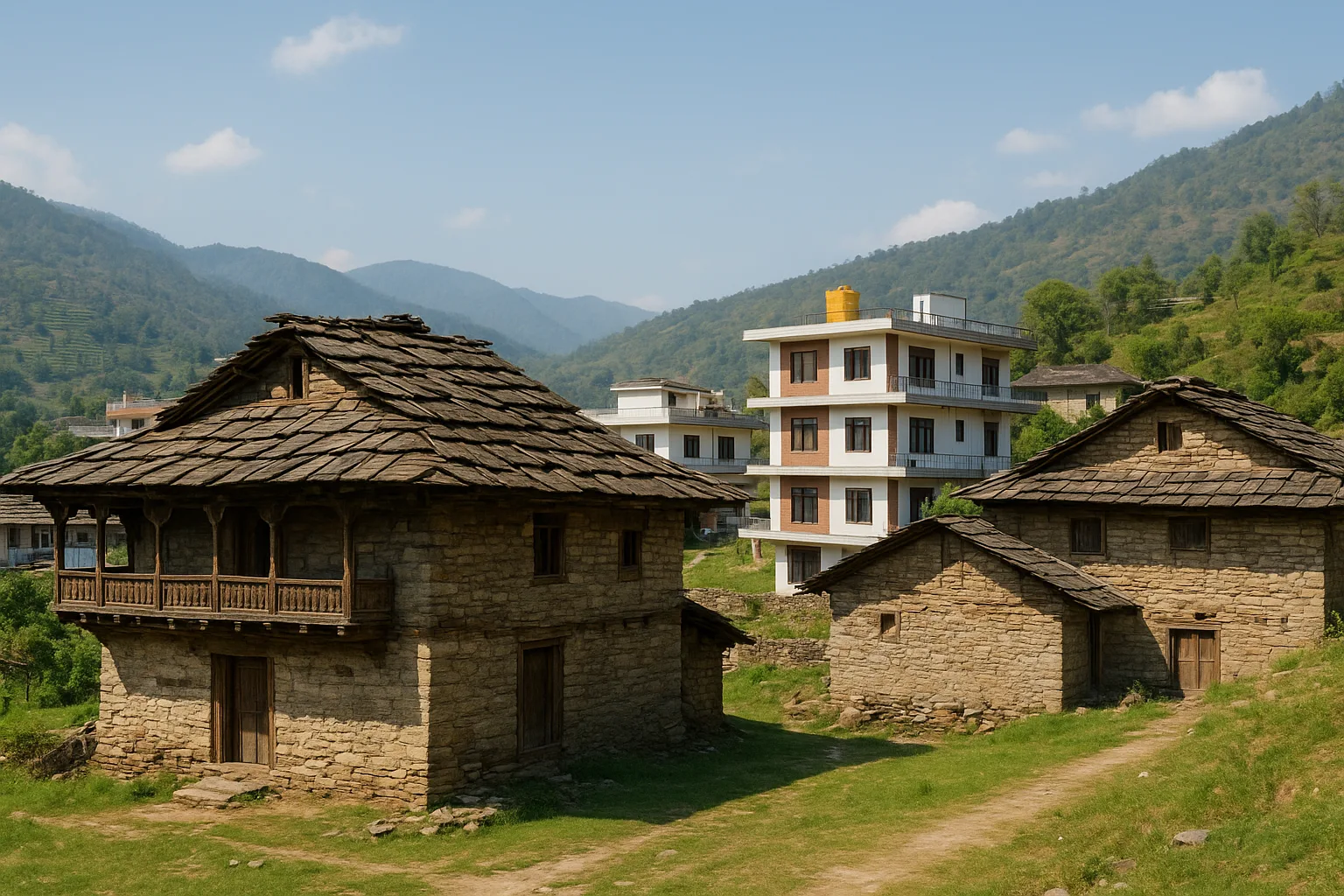
Modern Una is not without its dilemmas. Balancing development with sustainability, honoring heritage while embracing change—these are the conversations that animate town halls and university seminars alike. The echoes of ancient trade routes and princely courts linger, even as new apartment blocks rise against the foothills.
The Road Ahead: Vision and Possibility
What, then, does the future hold for Una? The answer lies in its past. The resilience that saw it through invasions, migration, and political upheaval is now channeled into innovation and community spirit. Local entrepreneurs are harnessing digital technology, schools are experimenting with new curricula, and women’s cooperatives are leading village economies.
Tourism, too, is on the horizon. Pilgrims to Chintpurni and Jawalaji pass through Una, but recent efforts aim to showcase the region’s historical sites, traditional crafts, and natural beauty. The sense of being a crossroads—a meeting point of cultures and destinies—remains Una’s greatest strength.
As Himachal Pradesh looks to the future, Una stands ready: not just as a border town, but as a microcosm of India’s journey—complex, layered, and forever in motion.
Reflections: The Living Tapestry of Una
Walking through Una today, one senses the invisible threads that bind its people and places—a living tapestry woven from ancient migrations, princely intrigues, colonial encounters, and modern aspirations. The town’s history is not just a chronicle of dates and events; it is a reservoir of memory and meaning. Each new generation, growing up amidst old temples and new industries, carries forward stories of survival and hope.
Una’s past is never truly past; it shapes the questions its people ask of themselves and the world. In every tea stall conversation, every festival, and every act of resilience, the legacy of centuries endures—reminding all who pass through that history here is not something to be preserved in museums, but something to be lived, debated, and continually reimagined.
Previous: Oral Histories and Memories of Una’s Elders