
Series: The UK Allotment Year
Phase 2: Crop-Specific Growing Guides — Part 17 of 50
This section covers how to grow common UK allotment crops — from potatoes to herbs and soft fruits — including soil tips, spacing, pest control, and harvesting advice.
Onions and Shallots: Planting Sets and Harvest Timing
Early spring is the perfect time to think about planting onions and shallots on your allotment. These versatile crops form the backbone of many kitchen recipes, and with the right timing and care, you can enjoy a plentiful harvest from late summer into autumn. Whether you’re a first-time grower or looking to improve your technique, understanding when to plant sets and how to time your harvest will set you up for success.
Why Plant Onion and Shallot Sets?
Planting sets—small, immature bulbs—is a reliable and straightforward way to grow onions and shallots in the UK. They establish quickly, reduce the risk of disease compared to seed, and often provide an earlier harvest. Sets are especially useful for beginner gardeners who want a dependable crop with minimal fuss.
When to Plant Onion and Shallot Sets
- Onion sets: Plant from late February through April, depending on your local climate. Early planting encourages larger bulbs, but avoid planting in waterlogged soil.
- Shallot sets: Typically planted slightly earlier than onions, from late February to early March.
- Choose a dry day with soil temperature above 7°C to encourage good root development.
Preparing Your Plot
- Soil: Light, well-drained soil is ideal. If your soil is heavy clay, improve drainage by adding organic matter such as well-rotted compost or garden compost.
- Site: Pick a sunny spot protected from strong winds to reduce stress on young plants.
- Bed preparation: Clear weeds thoroughly and fork over the soil to a depth of about 20cm (8 inches) to loosen it.
Planting Steps
- Sort your sets: Choose firm, healthy onion or shallot sets. Discard any that are soft, shrivelled, or showing signs of disease.
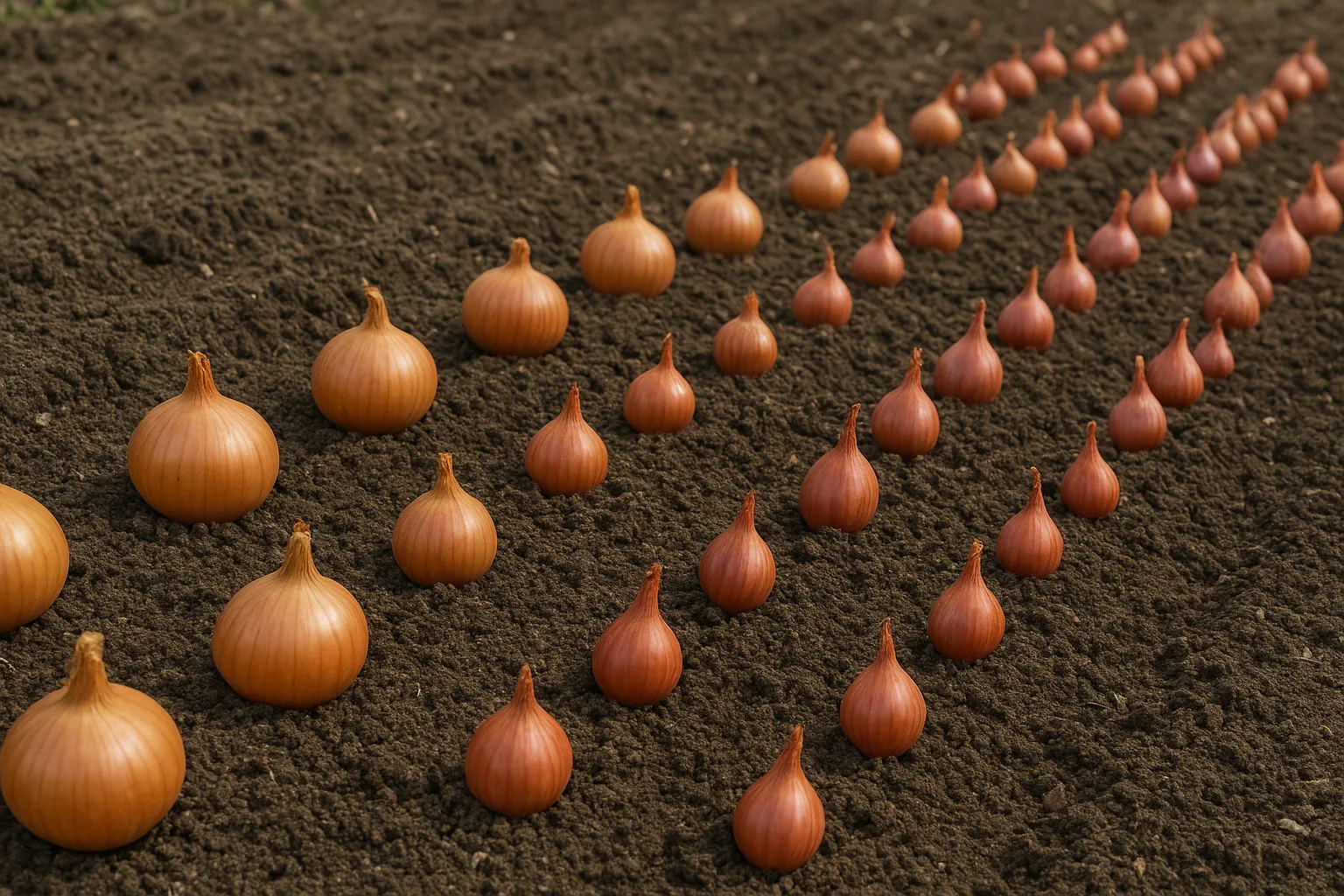
- Spacing: Plant onion sets about 10–15cm (4–6 inches) apart in rows spaced 30cm (12 inches) apart. Shallots can be planted slightly closer, around 8–10cm (3–4 inches) apart.
- Depth: Press each set into the soil with the pointy end upwards, about 2–3cm (1 inch) deep, just covered by soil.
- Watering: Water lightly after planting to settle the soil but avoid waterlogging.
Care and Maintenance
- Watering: Onions and shallots need consistent moisture, especially during dry spells. Water at the base to prevent fungal diseases.
- Weeding: Keep the bed weed-free, especially while plants are young, to reduce competition for nutrients.
- Feeding: Apply a balanced organic fertiliser or well-rotted manure early in the growing season. Avoid high-nitrogen feeds which encourage leafy growth over bulb development.
- Mulching: A light mulch of straw or garden compost can help retain moisture and suppress weeds.
- Support: Shallots often don’t require staking; onions may benefit from light support if grown in exposed sites.
Harvest Timing
Knowing when to harvest is key for storage and flavour. Both onions and shallots are ready to harvest when their tops start to yellow and fall over.
- Onions: Usually ready from late July to September, depending on planting time and variety.
- Shallots: Typically mature a little earlier, from July onwards.
- Give the bulbs a week or two after tops fall before lifting to allow skins to dry and toughen.
Harvesting Tips
- Use a fork gently to loosen soil; avoid damaging bulbs.
- Brush off excess soil but do not wash as this can promote rot.
- Leave bulbs to dry in a warm, airy place out of direct sun for 1–2 weeks.
- Once cured, trim roots and cut tops to about 2.5cm (1 inch) for storage.
- Store onions and shallots in a cool, dry, well-ventilated spot, such as a mesh bag or open crate.
Common Mistakes to Avoid
- Planting sets too deep or too shallow: Can result in poor bulb formation or rotting.
- Overcrowding: Leads to small bulbs and increased disease risk.
- Ignoring drainage: Waterlogged soil causes rotting, especially in winter.
- Skipping weed control: Weeds compete for nutrients and moisture, reducing yield.
- Harvesting too early: Bulbs won’t store well if not fully matured and cured.
Tools and Materials
- Garden fork or spade for soil preparation
- Hand trowel for planting sets
- Watering can or hose with a gentle spray
- Organic compost or well-rotted manure
- Mulching materials such as straw or garden compost
- Protective gloves to handle soil comfortably
Eco-Friendly Growing Tips
- Choose organic sets certified free of chemical treatments.
- Use homemade compost and natural mulches to enrich soil.
- Encourage beneficial insects by planting companion flowers nearby.
- Manage weeds by hand rather than using herbicides.
Next Actions for This Month
- Prepare your onion and shallot bed by clearing weeds and adding compost.
- Order or source healthy onion and shallot sets from reputable suppliers.
- Choose a planting day with dry weather and soil temperature above 7°C.
- Plant your sets following the spacing and depth guidelines above.
- Set reminders to water regularly during dry periods and keep the bed weed-free.
With these straightforward steps, you’ll be well on your way to enjoying homegrown onions and shallots from your allotment. Keep an eye on your crop as the summer progresses, and look forward to harvesting bulbs bursting with flavour to use fresh or store for winter cooking.
Previous: Tomatoes in the UK Climate: Greenhouse vs. Outdoor Varieties
Next: Herb Corners: Growing Sage, Thyme, and Rosemary on the Plot