
Series: The UK Allotment Year
Phase 2: Crop-Specific Growing Guides — Part 14 of 50
This section covers how to grow common UK allotment crops — from potatoes to herbs and soft fruits — including soil tips, spacing, pest control, and harvesting advice.
Perfecting Carrots: Avoiding Forked Roots and Carrot Fly
Spring is an ideal time to focus on carrots, as sowing and early care now can make all the difference between a bumper crop of long, straight roots and a disappointing harvest of forked, damaged carrots. For UK allotment holders, the twin challenges of forked roots and carrot fly can be frustrating, but with the right preparation and timing, you can enjoy crisp, sweet carrots that are a joy to grow and eat.
Why Do Carrots Fork?
Forked carrots are usually caused by obstacles in the soil or damage to the young roots. Common reasons include:
- Soil that’s too heavy or compacted: Carrots need loose, well-drained soil free from stones and clumps.
- Damage from cultivation: Forking can happen if the roots get nicked or bruised during weeding or hoeing.
- Excessive nitrogen: Too much nitrogen encourages leafy growth at the expense of root shape.
- Root disturbance: Moving or thinning seedlings roughly can cause forked roots.
Carrot Fly: The Hidden Threat
The carrot fly is a common pest in the UK that lays eggs near carrot plants. Larvae burrow into the roots, causing tunnels, rot, and a bitter taste. It’s important to prevent infestations early because once the larvae are inside the roots, control is difficult.
Key Tasks to Prevent Forked Roots and Carrot Fly
1. Prepare Your Soil Thoroughly
- Choose a sunny, well-drained spot on your allotment.
- Dig or double-dig to a depth of about 30-40cm to loosen the soil.
- Remove all stones, roots, and debris—anything that might block or damage growing roots.
- Incorporate plenty of organic matter such as well-rotted compost or leaf mould to improve soil texture without making it heavy.
- Avoid fresh manure or high-nitrogen fertilisers, which encourage leafy growth and can worsen forked roots.
2. Sow Carrot Seeds at the Right Time
- In most parts of the UK, sow carrots from mid-March to June for a summer or autumn harvest.
- For successive crops, sow every 2-3 weeks until early July.
- Use fine seedbeds and cover seeds with a thin layer (about 1cm) of fine soil or vermiculite to keep them moist.
- Keep the soil consistently moist during germination, which usually takes 2-3 weeks.
3. Thin Seedlings Carefully
- When seedlings are about 3-5cm tall, thin them to 5-7cm apart to give roots space to develop straight and long.
- Use scissors to snip out weaker seedlings rather than pulling, which can disturb roots of nearby plants.
4. Protect Against Carrot Fly
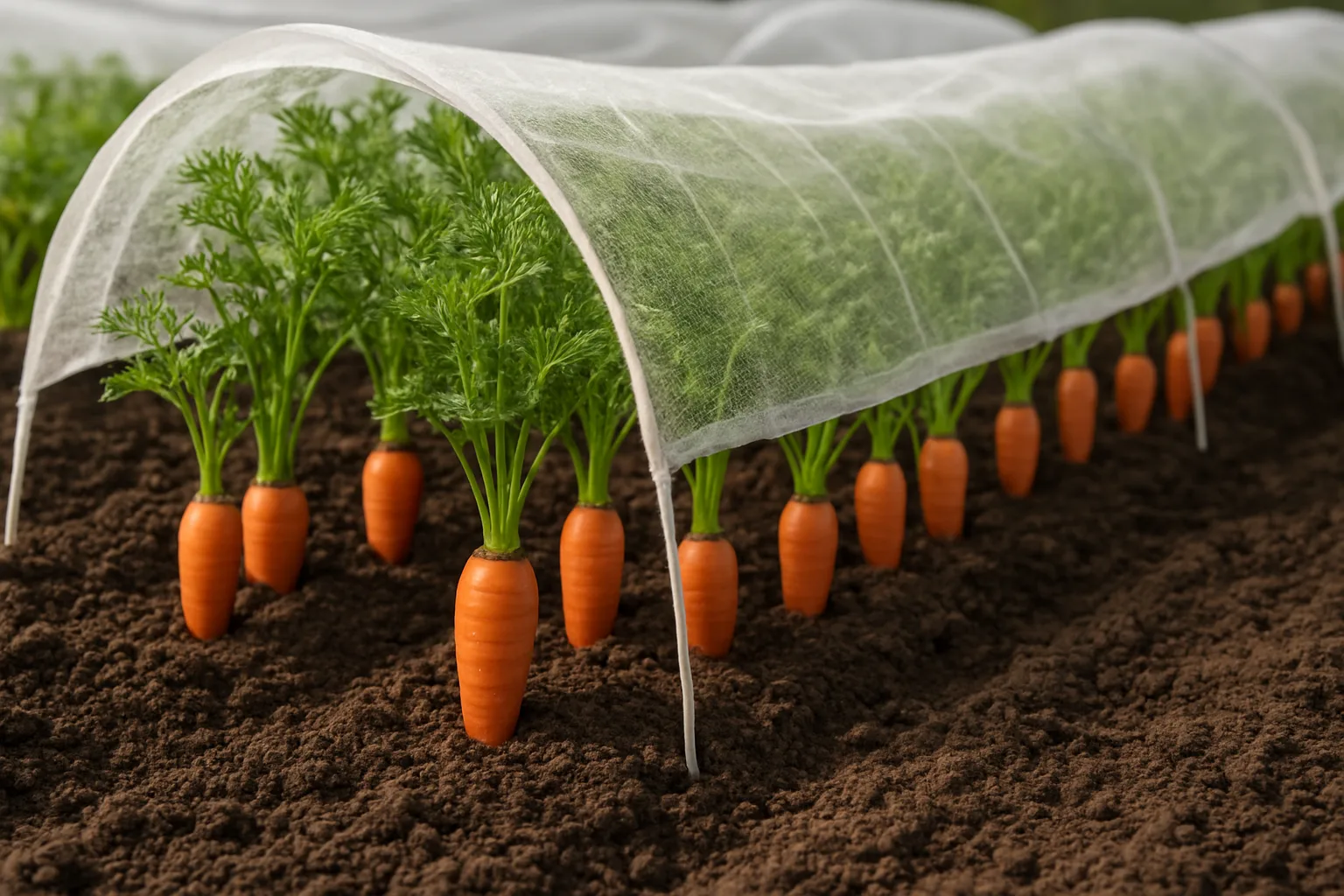
- Use physical barriers such as fine mesh or horticultural fleece supported on wire hoops to keep carrot flies away from your crops.
- Ensure barriers are in place immediately after sowing, as carrot flies are attracted to young plants.
- Consider companion planting with strong-scented crops like onions or garlic nearby to deter carrot flies.
- Rotate carrot crops each year to different parts of your allotment to reduce pest build-up.
5. Maintain Even Moisture and Avoid Stress
- Water carrots regularly during dry spells to prevent cracking and splitting.
- Mulch around plants with straw or fine bark to conserve moisture and suppress weeds.
- Keep weeds under control but avoid damaging roots with cultivation.
Checklist for Perfect Carrots
- Soil loosened and stones removed
- Organic matter well incorporated, avoiding fresh manure
- Seeds sown in fine, moist seedbed at the right depth and time
- Seedlings thinned carefully with scissors
- Carrot fly barriers installed immediately after sowing
- Companion plants like onions nearby
- Regular watering and mulching applied
- Crop rotation planned for next year
Common Mistakes to Avoid
- Planting carrots in heavy clay or unprepared soil: This restricts root growth and causes forking.
- Over-fertilising with nitrogen-rich feeds: Leads to lush tops but poor root formation.
- Ignoring carrot fly protection: Waiting until you see damage is too late.
- Thinning seedlings by pulling: Disturbs neighbouring roots and causes deformities.
- Watering inconsistently: Dry spells followed by heavy watering cause carrots to crack.
Tools and Materials to Have Ready
- Garden fork or spade for soil preparation
- Fine rake or hoe to create a smooth seedbed
- Scissors for delicate thinning
- Horticultural fleece or fine mesh netting for pest barriers
- Compost or leaf mould for soil improvement
- Mulch material such as straw or bark chips
- Watering can or hose with a fine rose
Next Steps for This Month
- Prepare your carrot bed now while the soil is still workable – clear stones and dig in organic matter.
- Sow your first batches of carrot seed from mid-March onwards, covering with fleece to protect from carrot fly.
- Set up companion planting by sowing onions or garlic nearby.
- Monitor soil moisture and water regularly if needed, especially during dry spells.
- Plan crop rotation for next year to avoid returning carrots to the same ground.
With a little care and attention this spring, you’ll be rewarded with a harvest of sweet, straight carrots that are perfect for fresh eating and storage. Keep an eye on pests and soil conditions, and enjoy the satisfaction of growing top-quality carrots on your UK allotment.
Previous: How to Grow Potatoes in a Small UK Allotment
Next: Growing Brassicas: From Seed to Slug Protection