
Series: The UK Allotment Year
Phase 2: Crop-Specific Growing Guides — Part 13 of 50
This section covers how to grow common UK allotment crops — from potatoes to herbs and soft fruits — including soil tips, spacing, pest control, and harvesting advice.
How to Grow Potatoes in a Small UK Allotment
Spring is here, and for many UK allotment holders, that means it’s time to start thinking about potatoes. They’re a staple crop, perfect for small spaces, and with the right approach, you can harvest a generous yield even on a modest plot. Whether you have a single raised bed or a compact corner, potatoes can be a rewarding choice that fits well into the UK growing calendar.
Why Grow Potatoes Now?
March to early April is ideal for planting seed potatoes in most parts of the UK. The soil is starting to warm up, and with careful timing, you can avoid late frosts that might damage young shoots. Early preparation means you’ll be on track for a summer harvest, enjoying fresh, homegrown potatoes from July onwards.
Choosing the Right Seed Potatoes
- Variety: Choose varieties suited to your cooking preferences and growing season. Early types like ‘Rocket’ or ‘Swift’ mature quickly, while maincrop varieties such as ‘Maris Piper’ store well for winter use.
- Seed Quality: Buy certified seed potatoes from garden centres or online suppliers to reduce disease risk.
- Chitting: Starting your seed potatoes off by chitting (encouraging sprouts) in a light, cool place with good air circulation for 4-6 weeks before planting can give you a head start.
Preparing Your Small Plot
Potatoes thrive in well-drained, fertile soil. Here’s how to get your small allotment area ready:
- Soil Preparation: Loosen the soil to about 20-25cm deep, removing stones and weeds.
- Organic Matter: Incorporate well-rotted compost or garden manure to improve fertility and moisture retention.
- pH Check: Potatoes prefer slightly acidic soil (pH 5.5–6.5). If your soil is alkaline, adding garden sulphur or organic matter can help adjust pH over time.
Planting Your Potatoes
With limited space, consider these planting methods:
- Traditional Rows: Space seed potatoes about 30cm apart in trenches 15cm deep, with rows 60cm apart.
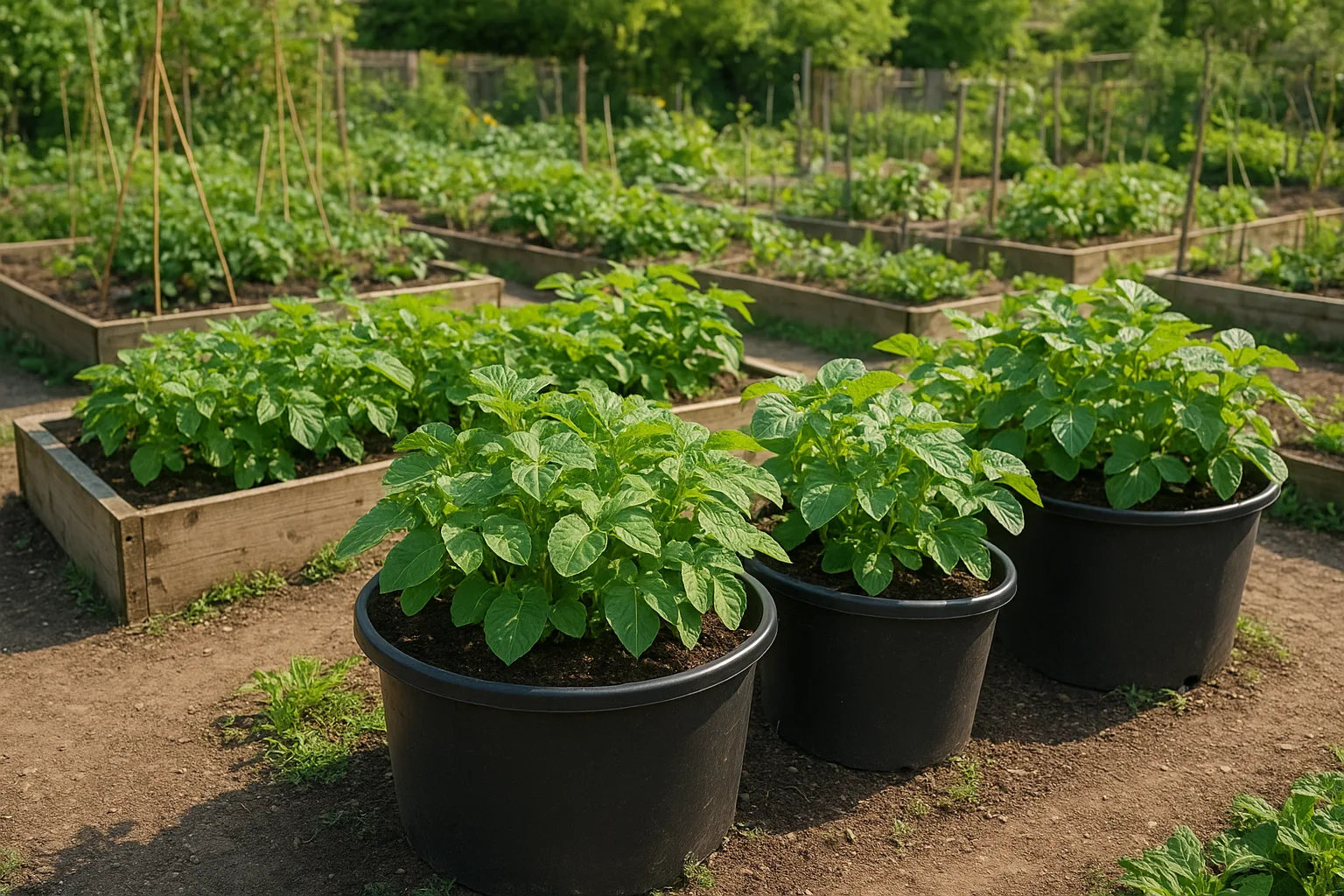
- Grow Bags or Containers: Ideal for small plots. Fill with quality compost and plant 2-3 seed potatoes per bag.
- Raised Beds: Plant in trenches or mounds, ensuring good drainage.
Timing: Plant once the risk of severe frost has passed, typically mid-March to early April in southern UK, and a little later further north.
Care and Maintenance
- Watering: Keep soil moist but not waterlogged, especially during flowering when tubers develop.
- Earthing Up: When shoots reach 15-20cm, mound soil or compost around stems to protect tubers from light and prevent greening.
- Feeding: Use organic feeds like seaweed or comfrey liquid fertiliser every 2-3 weeks to support growth.
- Weeding: Keep the area weed-free to reduce competition for nutrients and water.
Harvesting and Storage
- Early Potatoes: Ready about 10-12 weeks after planting when plants flower. Harvest carefully with a fork to avoid damaging tubers.
- Maincrop Potatoes: Harvest in late summer or early autumn once foliage dies back.
- Storage: Cure potatoes in a cool, dark, frost-free place for a week before storing in a dry, ventilated area.
Quick Checklist for Growing Potatoes in a Small Allotment
- Buy certified seed potatoes and chit them indoors from February
- Prepare soil with compost and check pH
- Plant seed potatoes from mid-March to early April
- Water regularly and earth up shoots when 15-20cm tall
- Feed every few weeks with organic fertiliser
- Keep plot weed-free and watch for pests
- Harvest early crops by June/July and maincrop by September
Common Mistakes to Avoid
- Planting Too Early: Cold, wet soil can cause seed potatoes to rot or sprout poorly.
- Skipping Earthing Up: Exposed tubers turn green and become toxic.
- Overwatering: Waterlogged soil leads to rot and fungal diseases.
- Using Supermarket Potatoes: These are often treated to prevent sprouting and are more likely to carry diseases.
- Ignoring Crop Rotation: Growing potatoes in the same spot year after year increases disease risk. Rotate with other crops like legumes or brassicas.
Tools and Materials You’ll Need
- Garden fork or spade for soil preparation
- Compost or well-rotted manure
- Seed potatoes suitable for your region and taste
- Watering can or hose with gentle spray
- Organic liquid fertiliser (seaweed, comfrey)
- Grow bags or containers (optional for small spaces)
- Garden gloves and kneeling mat for comfort
Next Steps This Month
- Start chitting seed potatoes on a light windowsill or cool shed
- Prepare your allotment soil by clearing weeds and adding organic matter
- Order or collect your chosen seed potatoes early to ensure availability
- Plan your planting layout considering space-saving methods like containers
- Keep an eye on weather forecasts to pick the best planting date
With these practical steps, you’re well on your way to growing a successful potato crop in your small UK allotment. Potatoes are forgiving and versatile, making them perfect for beginners and experienced gardeners alike. Happy planting!
Previous: December Growing Guide: Planning, Mulching, and Reflection
Next: Perfecting Carrots: Avoiding Forked Roots and Carrot Fly