
Series: The UK Allotment Year
Phase 1: The Allotment Year — Month by Month — Part 11 of 50
This phase walks through the UK allotment year month by month — from planning in January to reflecting in December. Perfect for beginners or seasoned growers who want a month-by-month checklist for thriving plots.
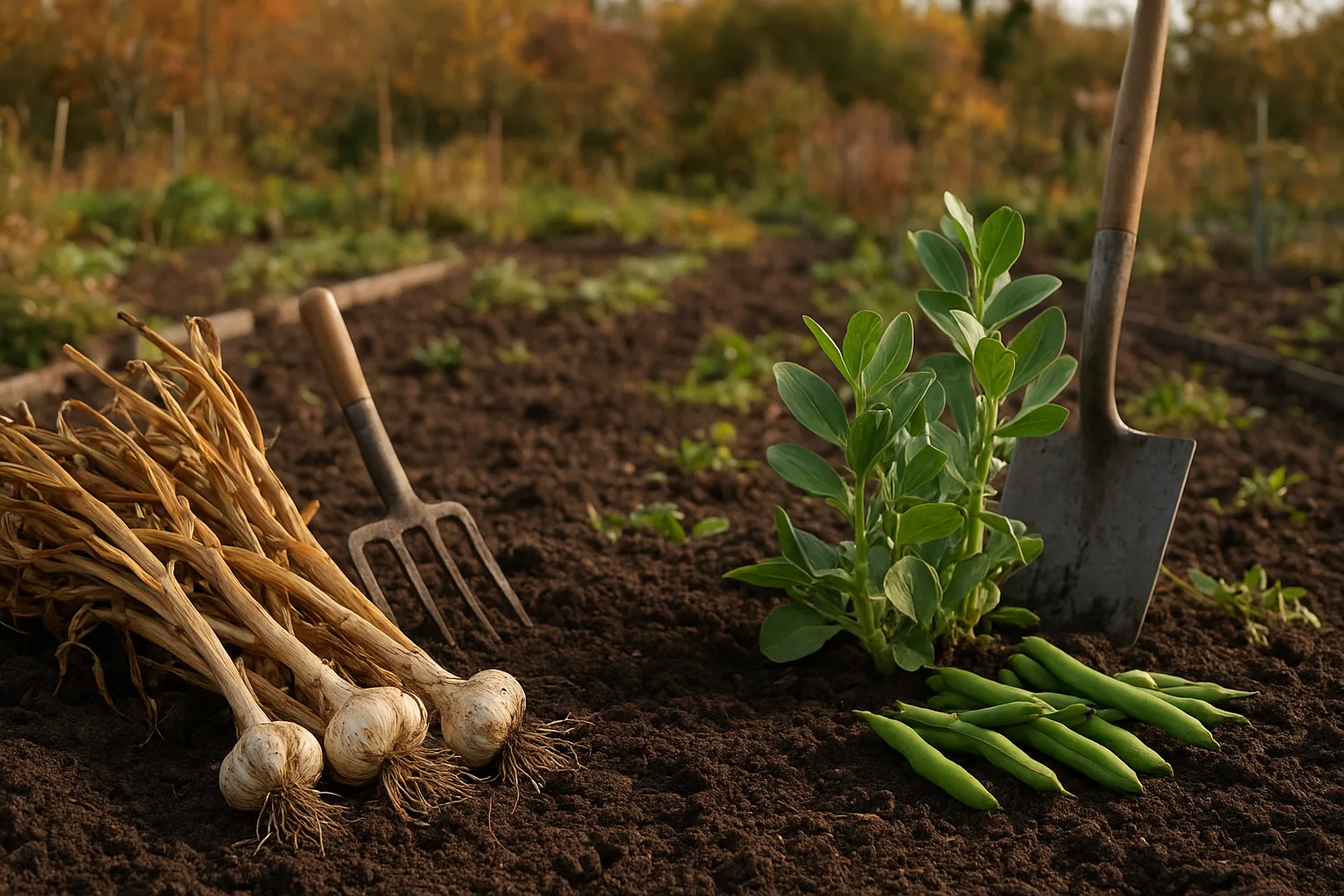
November in the Allotment: Garlic, Broad Beans, and Tidying Up
November marks a quieter yet crucial time on the UK allotment. As autumn fades and winter approaches, the focus shifts from harvesting to preparing for the coming season. The soil cools and moisture increases, creating ideal conditions for planting garlic and broad beans. Meanwhile, tidying up your plot now reduces pests and diseases, and sets you up for a productive spring. Whether you are new to allotmenteering or a confident plot holder, November demands thoughtful action to make the most of this transition month.
Key Tasks for November
- Plant Garlic: November is the prime month to plant garlic cloves for a summer harvest. Choose a sunny, well-drained spot and plant individual cloves upright, about 5cm deep and 15cm apart.
- Sow Broad Beans: Early November is ideal for sowing broad beans outdoors, especially hardy varieties. Plant seeds 5cm deep and 20cm apart in rows spaced 40-50cm.
- Tidy and Clear Your Plot: Remove spent plants, clear weeds, and compost healthy plant material. This reduces overwintering pests and diseases.
- Mulch Beds: Apply a layer of organic mulch such as well-rotted compost or leaf mould to protect soil structure and retain moisture over winter.
- Check and Repair Infrastructure: Inspect supports, netting, and paths. Fix any damage before winter storms arrive.
- Collect Rainwater: Set up water butts to capture autumn and winter rainfall for spring use.
Planting Garlic
Garlic thrives when planted from November to early December. Choose firm, healthy cloves from organic or untreated bulbs to avoid disease. Avoid supermarket garlic that may be treated.
- Break bulbs into individual cloves just before planting, leaving the papery skins on.
- Plant with the pointed end up, 5cm deep, spacing cloves 15cm apart in rows 30cm apart.
- Water in well if the soil is dry.
- Apply a mulch layer to protect from frost and help retain moisture.
- Garlic requires a sunny site with fertile, well-drained soil. Incorporate compost or well-rotted manure beforehand if possible.
Sowing Broad Beans Outdoors
Broad beans are hardy and well suited to November sowing. Varieties like ‘Aquadulce Claudia’ do well when sown now, giving a head start for an early summer crop.
- Soak seeds overnight to speed up germination.
- Plant 5cm deep, spaced 20cm apart, in rows 40-50cm apart.
- Firm the soil gently and water if dry.
- Protect young seedlings with horticultural fleece if harsh weather is forecast.
- Stake taller varieties to prevent wind damage once established.
Tidying Up Your Plot
Cleaning the allotment is essential to reduce pests and prepare for winter crops.
- Remove spent crops and diseased plants—do not compost diseased material to avoid spreading pathogens.
- Clear weeds thoroughly to reduce competition and hideouts for pests.
- Use a garden fork to gently loosen soil without disturbing beneficial earthworms.
- Compost healthy green waste or add to a separate heap for leaf mould.
- Collect fallen leaves to use as mulch or for leaf mould.
Mulching and Soil Protection
Applying mulch in November helps protect soil structure during wet, cold weather and suppresses winter weeds.
- Use well-rotted organic matter: compost, leaf mould, or shredded bark.
- Apply a 5-10cm layer over bare soil and around planted cloves or beans.
- Avoid fresh manure that may burn plants or encourage slugs.
Tools and Materials to Have Ready
- Hand fork and trowel for planting and loosening soil.
- Gardening gloves to protect hands during tidying.
- Watering can or hose for watering newly planted crops.
- Organic mulch materials: compost, leaf mould, shredded bark.
- Horticultural fleece or cloches for frost protection.
- Stakes and twine for supporting broad beans.
- Compost bin or heap for green waste.
Quick November Allotment Checklist
- Plant garlic cloves 5cm deep, 15cm apart.
- Sow broad beans 5cm deep, 20cm apart.
- Clear spent crops and weeds; compost healthy material.
- Apply organic mulch to beds.
- Check and repair supports, netting, and paths.
- Set up water butts to collect rainwater.
- Protect young broad beans with fleece if needed.
Common Mistakes to Avoid in November
- Planting too shallow or too deep: Garlic and broad beans need correct depth for good root establishment and frost protection.
- Using treated or supermarket garlic: Can carry diseases and may not be suitable for UK growing conditions.
- Leaving unhealthy plant material on the plot: This can harbour pests and diseases over winter.
- Neglecting to mulch: Bare soil is prone to erosion and nutrient loss through winter rain and wind.
- Forgetting to water newly planted crops: Dry soil hinders germination and root development.
Next Steps for the Allotment Year
With garlic and broad beans safely in the ground and your plot tidied, your focus in December shifts to monitoring weather and protecting emerging plants from frost and pests. Start planning your spring crops and prepare seed trays indoors for early sowing. Keep paths clear and your tools clean and ready for the busy months ahead.
November is a month of preparation and care—get these right and your allotment will reward you well come next summer.
Previous: October Allotment Jobs: Composting and Cover Crops for Winter
Next: December Growing Guide: Planning, Mulching, and Reflection