
Series: History of Solan, Himachal Pradesh, India
Phase 5: Modern Era — Part 25 of 30
This article appears within a continuing historical series that follows the western Himalayas into the modern era. With the end of princely rule and the integration into independent India, long-standing social and political patterns were reconfigured. This phase examines how development, state formation, and memory interact with inherited landscapes, shaping contemporary life while carrying forward echoes of the past.
A Morning in Solan: New Rhythms on Old Streets
The sun rises gently over the hills surrounding Solan, painting the whitewashed walls of old bungalows in a golden glow. As shop shutters groan open along Mall Road, the aroma of fresh buns and brewing tea drifts from a bakery that’s been standing since the days of the Raj. Schoolchildren in crisp uniforms dart past, their laughter mingling with the calls of vegetable vendors. It’s a scene that would have once been unimaginable—a town where the ancient and the contemporary jostle for space, each leaving indelible marks on the other.
Solan’s transformation from a modest bazaar on a trade route to a thriving urban center is no mere accident. The town’s history is a story of shifting priorities, outside influences, and the determination of its people to adapt without losing their roots. To understand the present rhythms of Solan, one must journey through the decades that shaped its landscape and spirit.
From Market Hamlet to Colonial Cantonment
In the late 19th century, Solan was a small settlement nestled in the shadow of the Shoolini temple. The surrounding region, part of the princely state of Baghat, was dotted with Deodar forests and terraced fields, its economy tied to seasonal fairs and the rhythms of agriculture. The arrival of the British changed everything. Recognizing Solan’s strategic location along the new Kalka-Shimla railway line, colonial authorities established it as a cantonment in the 1840s, building barracks, churches, and administrative offices among the pines. The hill station’s cool climate and accessibility soon attracted traders, civil servants, and missionaries, each bringing habits and expectations that would alter the social fabric of the town.
The British left their mark not only through architecture but in the structure of urban life. Wide, tree-lined avenues, formal gardens, and the iconic Solan Brewery (established 1855) introduced new rhythms and tastes. As the cantonment’s population grew, the town’s bazaar expanded, welcoming Pahari, Punjabi, and even Tibetan traders. The first hints of cosmopolitanism appeared in the streets: a Gurkha soldier buying sweets beside a British officer, a local woman selling handwoven shawls to a missionary’s wife.
Railway Revolution and the Rise of Industry
The early 20th century brought a seismic shift. In 1903, the Kalka-Shimla railway extended its iron tracks through the heart of Solan. The rhythmic chug of the steam engine echoed across the valley. Suddenly, goods and ideas flowed faster than ever before—tea from Assam, books from Calcutta, fashion from Lahore. The railway was more than an engineering marvel; it was an artery pulsing with possibility.
Solan’s population swelled as laborers, merchants, and government clerks arrived in search of opportunity. The town’s layout morphed to accommodate new arrivals: houses crept up hillsides, new markets sprouted beside old, and the clang of construction became a familiar soundtrack. The Solan Brewery, already renowned, expanded its operations, employing hundreds and supplying beer to cantonments across northern India. Other small industries—textiles, food processing, woodworking—followed, shaping distinct working-class neighborhoods.
With economic opportunity came subtle changes in lifestyle. Local families, once reliant on subsistence farming, found work in factories and shops. British customs—tea at four, cricket on Sundays—filtered into daily routines. Yet, the town never lost its Pahari core. Festivals like Shoolini Mela continued to draw thousands, blending new influences with age-old tradition.
Independence, Migration, and the Expanding Town
The mid-20th century was a time of profound upheaval. As the British prepared to leave, Solan found itself at the crossroads of a new India. Partition in 1947 brought an influx of refugees from Punjab and what became Pakistan. Families arrived with little more than hope, and Solan’s landscape shifted almost overnight. Tents became houses, and empty plots transformed into bustling colonies. The town’s population doubled in a decade, straining old infrastructure but also injecting fresh energy and enterprise.
Key figures emerged during this era. Local leaders like Daulat Ram Chauhan championed education, establishing the town’s first modern schools. Small business owners, many of them refugees, opened clothing shops, sweet stalls, and transport companies. Women’s associations formed, advocating for basic sanitation and healthcare. The municipality, first established in 1950, set about paving roads, extending water lines, and organizing public spaces for a rapidly urbanizing town.
Despite the chaos, Solan’s sense of community endured. Neighbors helped each other rebuild, and the town’s many temples and gurdwaras became centers not just of worship, but of social support and civic life.
Green Revolution and the Changing Face of Work
The 1960s and 1970s brought further transformation, as Solan became an unlikely epicenter of India’s agricultural modernization. The Dr. Yashwant Singh Parmar University of Horticulture and Forestry, established in nearby Nauni in 1985, drew experts and students from across the country. Solan soon earned a new nickname: the Mushroom City of India. Research stations, cold storage units, and packaging plants changed the economic landscape, offering new livelihoods beyond the brewery and bazaar.
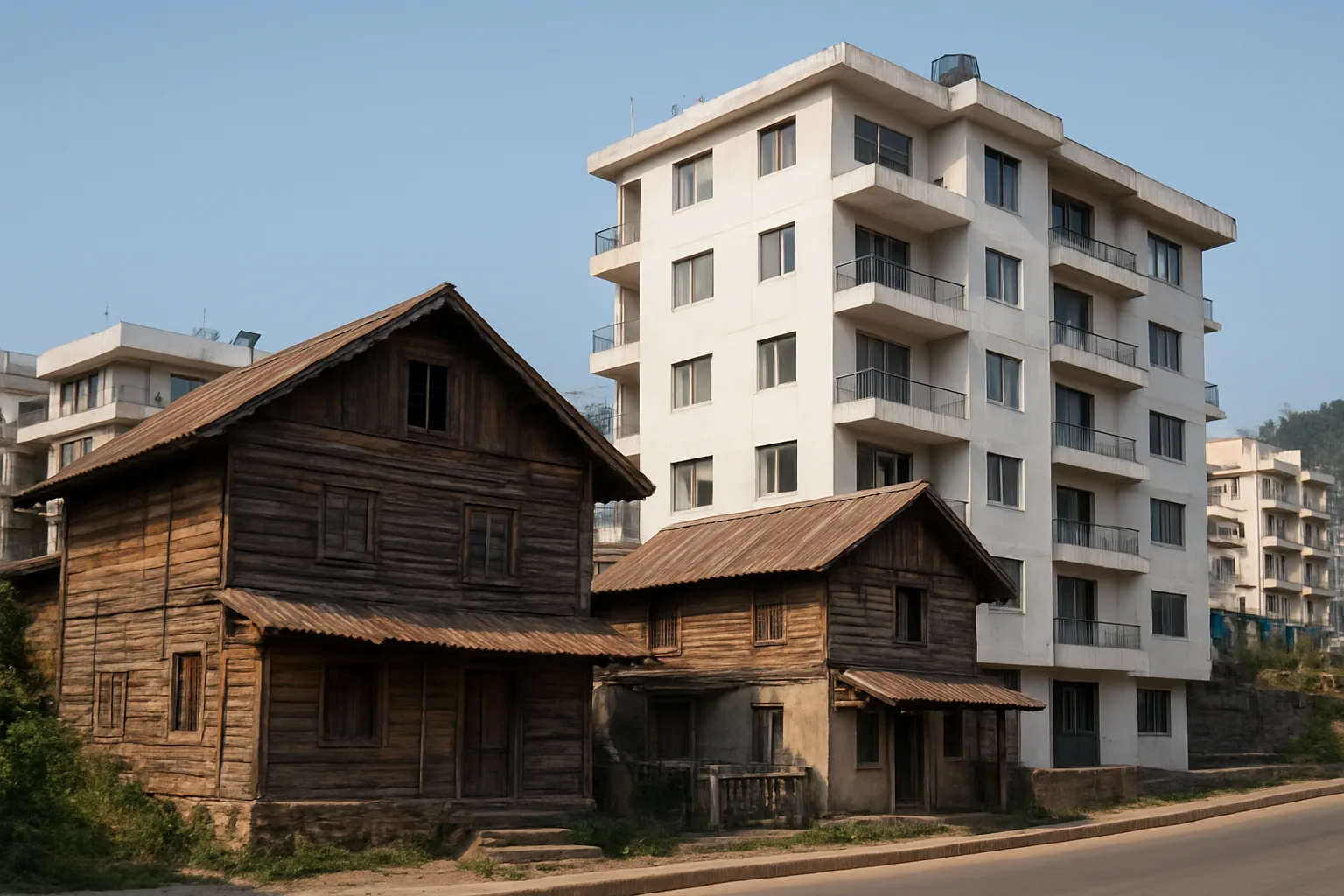
With prosperity came changes in housing and consumption. Concrete apartments began to replace wood-and-stone houses. Scooters and Ambassador cars joined the bullock carts on town roads. Middle-class families sent children to English-medium schools, and cinemas screened the latest Bollywood hits. The aspirations of Solan’s citizens shifted: no longer content with tradition alone, they sought opportunity, education, and the promise of urban modernity.
Modernization, Mobility, and the Digital Era
The last three decades have witnessed the most dramatic changes yet. With the construction of the Chandigarh-Shimla highway and expanded bus services, Solan became a crucial node between plains and hills. The town’s population surged as migrants from Himachal’s villages—and from as far away as Bihar and Nepal—settled in search of opportunity. Shopping complexes, coaching centers, and fast-food outlets emerged where orchards once bloomed.
Technology reshaped daily life. In the 2000s, cable television and the internet arrived, bringing global culture into Solan’s living rooms. Young people flocked to new colleges, aspiring to careers in IT and management. Cafes replaced tea stalls as gathering places. Yet, the old persists: every June, the Shoolini Mela still halts traffic, and elderly men still gather in the shade of the old clock tower to debate politics and reminisce about the past.
Solan’s physical boundaries stretched to absorb neighboring villages, blurring the line between rural and urban. With growth came new challenges: pollution, traffic congestion, and the struggle to preserve green spaces. The town’s administration, now led by a generation born after Independence, faces tough questions about development, equity, and sustainability.
Everyday Life: The Pulse of a Changing Town
Urban growth has left its imprint on how people live, work, and dream. Families once packed tightly into ancestral homes now inhabit multi-story flats. Women, who a century ago rarely left home without a male escort, run businesses and teach in colleges. The town’s cuisine has evolved, mixing Punjabi, Himachali, and even Chinese flavors in roadside dhabas and upscale restaurants alike.
Social life, too, has changed. Social media platforms connect Solan’s youth to global trends, but real-world community remains strong. Old-timers gather at Gandhi Chowk for their morning walks, while students organize street plays and environmental drives. Traditional festivals are broadcast on local cable networks, watched by a diaspora that stretches from Delhi to Dubai.
Yet, for all its transformation, Solan retains an elusive charm—a sense of continuity that bridges generations. The clatter of morning markets, the serenity of Shoolini Mata’s shrine, and the annual monsoon downpours remain unchanged, even as the skyline rises and the streets grow busier.
Looking Back, Living Forward
As we reflect on Solan’s journey from a quiet colonial outpost to a vibrant urban hub, the threads of continuity and change are impossible to ignore. Each wave of growth—whether sparked by railway lines, migration, or digital innovation—has brought challenges and opportunities, reshaping not just the town’s physical contours but the aspirations of its people.
Today, Solan stands at another crossroads. Its residents debate the costs of unchecked expansion and the need to preserve heritage. Yet, the spirit that animated traders, teachers, and refugees generations ago endures: a willingness to adapt, to welcome the new without erasing the old. In the bustling markets and quiet bylanes, the story of Solan’s urban growth is still being written—one sunrise, one street, and one shared memory at a time.
Previous: Education and Research Institutions in Modern Solan
Next: Tourism and Heritage Attractions of Solan