
Series: History of Shimla, Himachal Pradesh, India
Phase 1: Ancient & Early Roots — Part 4 of 30
This article is part of a broader historical series exploring the earliest layers of human presence in the western Himalayas. Beginning with landscape, belief, and early patterns of movement and settlement, the series traces how communities adapted to mountainous environments long before formal states or written records emerged. These foundational centuries shaped cultural memory, local traditions, and relationships with the land that would endure through later periods of change.
Traces of Faith Amidst the Cedars
As the first rays of the sun crest the Shivalik foothills, mist clings to the ridges where ancient deodar and oak trees stand sentry. In these highlands—what would become the Shimla region—generations have risen to the hush of forest, the rush of mountain streams, and the presence of forces both visible and unseen. Long before the echo of colonial boots, these slopes harbored beliefs as old as the stones beneath the moss. It is here, in the shadow of the Himalayas, that the spiritual roots of Shimla took hold.
The Land and Its Early Inhabitants
By the early centuries of the Common Era, the territory comprising present-day Shimla was part of the wider Himalayan landscape known for its rugged terrain and ecological richness. Archaeological surveys across Himachal Pradesh suggest continuous human presence since the Neolithic era, with evidence of small settlements and seasonal migration patterns. The region’s tribal communities—such as the Koli, Kanet, and Gaddi—are believed to have shaped the earliest rhythms of life here, living in close communion with the land and its cycles.
While written records from the ancient period are scarce, regional gazetteers compiled in the 19th century—drawing on oral memory and surviving local chronicles—describe a people who revered the mountains as living entities. The hills, forests, and rivers were not merely resources but participants in a spiritual covenant, and this worldview would come to define the area’s sacred geography.
Oral Tradition and Sacred Geography
Oral traditions—passed from elders to children in the flickering light of hearth fires—speak of the region as a realm of deities and spirits. Among these, tales of the goddess Shyamala, whose name is said to echo in “Shimla,” persist in local lore. While the precise origins of the toponym remain debated, the belief in a protective mother goddess is deeply rooted, appearing in folk songs and seasonal festivals. In these stories, the goddess embodies the land itself, her blessings sought for harvest, health, and communal harmony.
Other narratives recount the wanderings of sages (rishis) and legendary heroes, such as the Pandavas of the Mahabharata, who are believed in local belief to have traversed these mountains during their exile. Such stories, though mythological, have shaped the way communities mark and revere particular stones, springs, and groves. Natural features—rocky outcrops, ancient trees, secluded caves—became the first “temples,” their sanctity acknowledged through ritual and oral memory rather than written scripture.
From Animism to Early Hindu Influences
Historical inference, based on both the material remnants and cultural continuity, suggests that the earliest belief systems in the Shimla hills were animistic. Spirits of forest and water, ancestors, and local deities (devtas and devis) were invoked for protection and agricultural fertility. Over time, as the broader currents of Vedic and later Hindu traditions reached the Himalayan foothills—likely via trade and pilgrimage routes—these indigenous practices absorbed new elements.
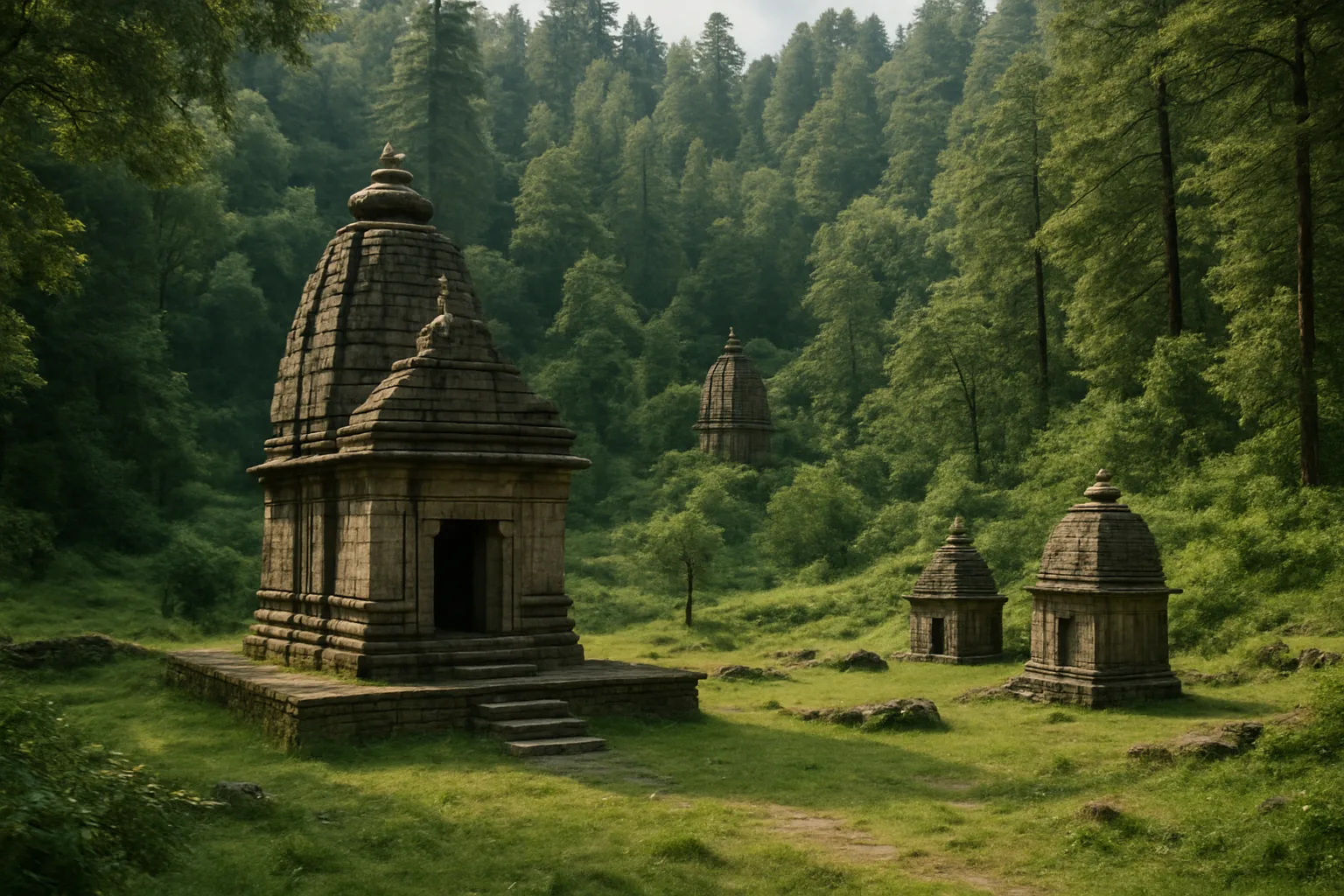
By the early medieval period (c. 7th–10th centuries CE), the worship of Shiva and various forms of the Devi gained prominence, often blending with pre-existing cults. Small shrines, sometimes little more than a stone heap beneath an ancient tree, began to appear at crossroads, hilltops, and springs. These shrines, rarely monumental, reflected the practical spirituality of a people attuned to the land’s unpredictability. Local priests and shamans (known regionally as pujaris and malis) mediated between the human and spiritual realms, their authority rooted in ritual knowledge and oral tradition.
Early Settlements and the Rise of Hill States
By the turn of the first millennium, the emergence of small principalities began to give political shape to the region. The earliest states relevant to Shimla—such as Keonthal, Bushahr, and Jubbal—trace their origins to this period, though their boundaries and lineages are often reconstructed from later genealogies and local ballads. These hill states, nestled amid the ridges and valleys, functioned as semi-autonomous polities, their rulers (often styled as Ranas or Thakurs) drawing legitimacy from both martial prowess and ritual sanction.
Documented history from regional chronicles, such as the Gazetteer of the Simla District (1888), records that these early rulers were keen patrons of local shrines and festivals. Patronage was not merely devotional; it reinforced social cohesion and the ruler’s standing as mediator between the sacred and the secular. Royal patronage led to the development of temple complexes, many of which remain focal points of worship today, although their earliest structures were likely simple wooden or stone edifices.
Sacred Sites and Pilgrimage Networks
Across the pre-colonial Shimla highlands, a constellation of sacred sites emerged, each with its own legends and local significance. The Jakhoo Hill—now crowned with a modern Hanuman temple—was long considered the abode of hill spirits and, according to oral tradition, a place visited by Hanuman himself during the mythic search for the Sanjeevani herb. Springs such as Chadwick Falls and the glens of Mashobra and Kufri were similarly associated with protective spirits and seasonal rites.
Historical records indicate that these sites were not isolated; rather, they formed part of broader pilgrimage and trade routes connecting the Himalayan interior to the plains. Merchants, pilgrims, and wandering ascetics traversed these paths, exchanging goods, stories, and spiritual ideas. In this way, the religious landscape of Shimla was both locally rooted and open to outside influences, facilitating the gradual integration of regional and pan-Indian traditions.
Continuity and Change in Sacred Practice
By the eve of the colonial encounter, the spiritual life of the Shimla hills was characterized by profound continuity amidst subtle change. Local deities remained central to community identity, their shrines and festivals anchoring the social calendar. Yet, the slow infusion of broader Hindu practices and the emergence of more formal temple architecture signaled a region in dialogue with the world beyond its valleys.
These ancient beliefs and sacred geographies endure in present-day Shimla, where rituals, fairs, and pilgrimages still mark the rhythm of communal life. The interplay of oral tradition, historical memory, and living faith continues to shape the city’s character, even as new influences arrive with each passing generation.
As we follow the arc of Shimla’s history, the next part of this series will turn to the era of regional consolidation and the gradual integration of the hill states—a period that set the stage for the momentous changes of the modern age.
Previous: Tribal and Pastoral Communities of Pre-British Shimla
Next: Shimla’s Hills in Regional Trade and Migration Routes