
Series: History of Shimla, Himachal Pradesh, India
Phase 1: Ancient & Early Roots — Part 3 of 30
This article is part of a broader historical series exploring the earliest layers of human presence in the western Himalayas. Beginning with landscape, belief, and early patterns of movement and settlement, the series traces how communities adapted to mountainous environments long before formal states or written records emerged. These foundational centuries shaped cultural memory, local traditions, and relationships with the land that would endure through later periods of change.
In the Silence of the Cedars: Before the Written Record
Long before the clangor of British hill stations or the bustle of modern bazaars, the high ridges and shadowed valleys of what is now Shimla lay swathed in the hush of deodar forests. The cool breath of the Himalayas swept across steep slopes, and the terrain—remote, deeply wooded, and daunting—stood as both haven and barrier. It is here, in this ancient landscape, that the earliest roots of Shimla’s story take hold.
Echoes of Myth and Memory: Oral Traditions
Among the oldest stories woven into the hills are those carried by oral tradition. Local belief holds that the region was once a domain of powerful deities—devtas—whose influence shaped both the land and its people. The village of Shyamala, from which Shimla draws its name, is associated in tradition with the goddess Shyamala Devi, an avatar of Kali. Shrines to her and other local deities, often set amid forests or near springs, attest to a spiritual geography long predating formal temples.
Oral tradition further suggests a connection to the broader Mahabharata cycle: some communities trace their origins to exiled Pandavas, believed to have sought refuge in Himalayan fastnesses during their wanderings. While such stories lie in the realm of myth, they have given rise to festivals, ritual sites, and a sense of ancient continuity among hill dwellers.
First Footprints: Early Settlement and Communities
Archaeological evidence across Himachal Pradesh indicates human presence in these hills since the Neolithic era, with traces of early agricultural and pastoral activity. The slopes around Shimla, though less yielding than the plains, offered water from perennial streams and shelter from lowland tumult. Early communities were likely small, kin-based groups practicing shifting cultivation and cattle herding, living in timber dwellings adapted to altitude and climate.
By the first centuries CE, these settlements had begun to form more complex social structures. Historical inferences, drawn from later land grants and genealogies, suggest the gradual emergence of local chieftains—thakurs and ranas—who controlled patches of cultivable land and woodland. The geography enforced a degree of isolation, giving rise to a mosaic of micro-regions, each with its own dialects, customs, and ruling lineages.
High Passes and Hidden Paths: Trade and Exchange
Despite the forbidding terrain, the hills of Shimla were never wholly cut off. Ancient trade routes threaded through the valleys, linking the Satluj and Yamuna river systems with the plains to the south and the highlands of Kinnaur and beyond. Salt, wool, and grain moved along these paths, as did news, beliefs, and technologies.
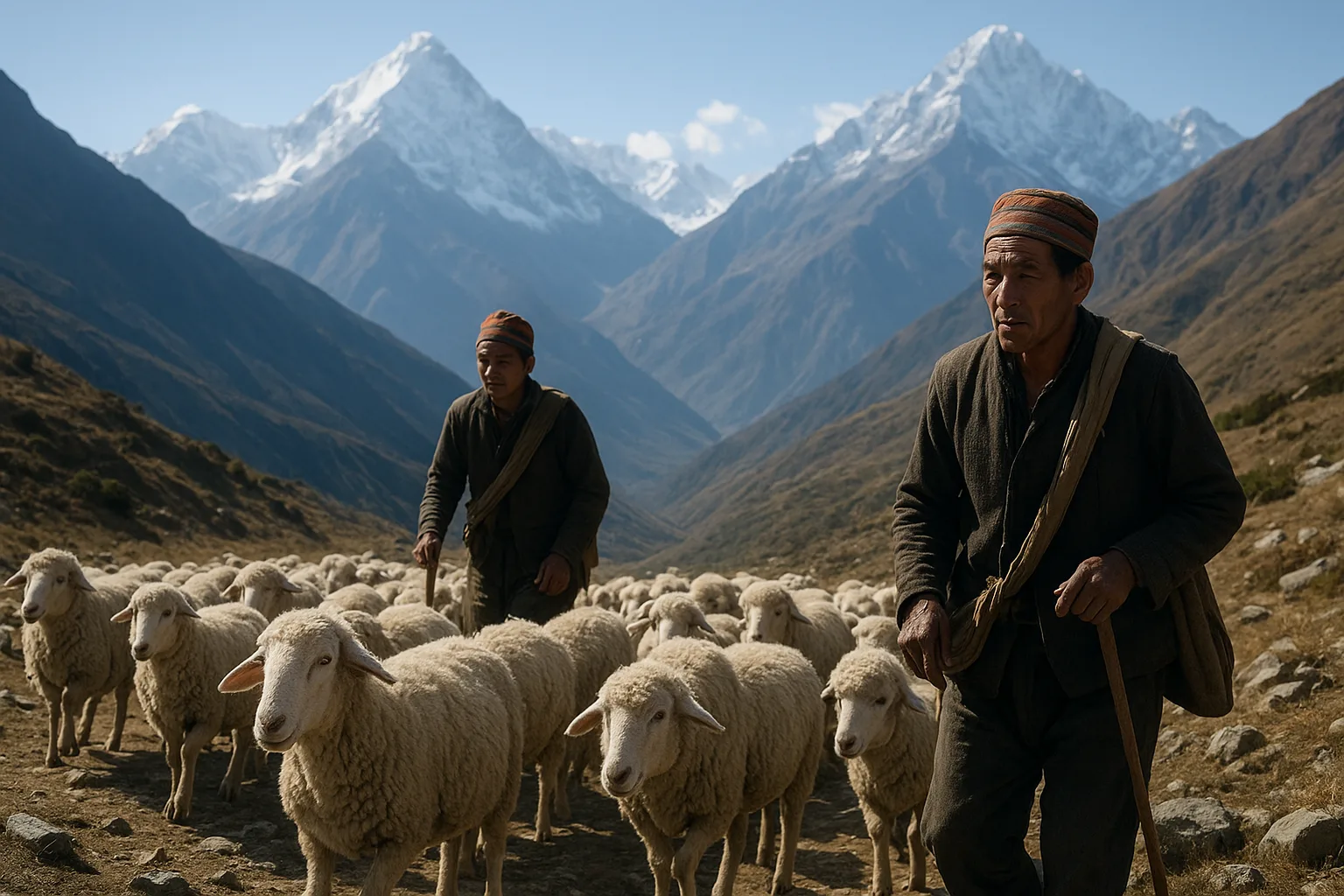
Travelers, traders, and pilgrims braved the ridges, sometimes guided by local shepherds who knew the passes intimately. Certain settlements, such as Jutogh and Kasumpti, emerged along these routes; their later importance as halting places is foreshadowed in their enduring names. These exchanges brought not only goods but new ritual practices—Buddhist, Shaivite, and folk traditions mingling in the seasonal fairs and shrines dotting the high country.
The Emergence of Hill Polities: Gorkha Shadows and Rajput Rise
By the early medieval period, the hills around Shimla saw the gradual crystallization of minor states and principalities. The region fell within the broader cultural sway of the western Himalayas, influenced by the polities of the Satluj basin and the powerful hill states of Sirmaur, Keonthal, and Bushahr.
Regional chronicles and gazetteers, such as the Gazetteer of the Simla District, describe a landscape of shifting allegiances and frequent contests for dominance. Rajput clans, arriving from the plains amid periods of upheaval, established petty chiefdoms, intermarrying with local elites and consolidating control over scattered villages. The authority of these rulers was often more nominal than absolute, hemmed in by both terrain and the tenacity of autonomous village assemblies.
In the late 18th century, the advance of the Gorkhas from Nepal brought a period of turbulence. The Gorkhas, expanding westward, briefly occupied much of the region, disrupting established polities and leaving an imprint on the local memory still evident in place names and oral tradition. Their eventual retreat—hastened by British intervention—set the stage for the political reordering of the hills in the early 19th century, a subject that will unfold in later parts of this series.
Belief Systems and Sacred Landscapes
Across these centuries, religious practice in the Shimla hills evolved in response to both isolation and encounter. The enduring veneration of local deities—often associated with natural features—ran parallel to the adoption of pan-Indian traditions. Shaivism held particular sway, as did the cults of Nagas and other serpent deities, reflecting the region’s connection to older Himalayan belief systems.
Temples of wood and stone began to appear by the early medieval era, their architecture blending indigenous forms with motifs drawn from both the plains and Trans-Himalayan regions. Seasonal festivals, some rooted in agricultural cycles and others in mythic memory, became central to communal identity. These patterns of belief gave the hills a distinct spiritual landscape, one that persists, albeit transformed, in the rituals and festivals of contemporary Shimla.
Continuities, Transitions, and the Living Past
The ancient roots of Shimla’s settlement, belief, and polity endure in subtle but unmistakable ways. The town’s older neighborhoods, the names of its streams, and the rhythms of local festivals all echo a time when forest and faith defined the boundaries of the known world. Even as British architecture and modern development have recast the skyline, the memory of earlier ages persists—sometimes quiet, sometimes resurgent, always present beneath the surface.
In the next part of this series, we will trace the transition from these ancient hill polities to the tumultuous era of colonial encounter, examining how the arrival of new powers reshaped the destiny of Shimla and its people.
Previous: Geography That Shaped Early Life in the Shimla Region
Next: Religious Beliefs and Sacred Sites Before Colonial Shimla