
Series: History of Mandi, Himachal Pradesh, India
Phase 2: Medieval Kingdom & Dynasties — Part 8 of 30
This article forms part of a continuing series that follows the gradual emergence of organised power in the western Himalayas. As small communities gave way to clans, chieftainships, and hill states, patterns of rule, alliance, and conflict began to take shape. This phase examines how authority was negotiated through land, ritual, and warfare, laying the groundwork for regional kingdoms that would dominate the medieval landscape.
In the Shadow of the Siwaliks
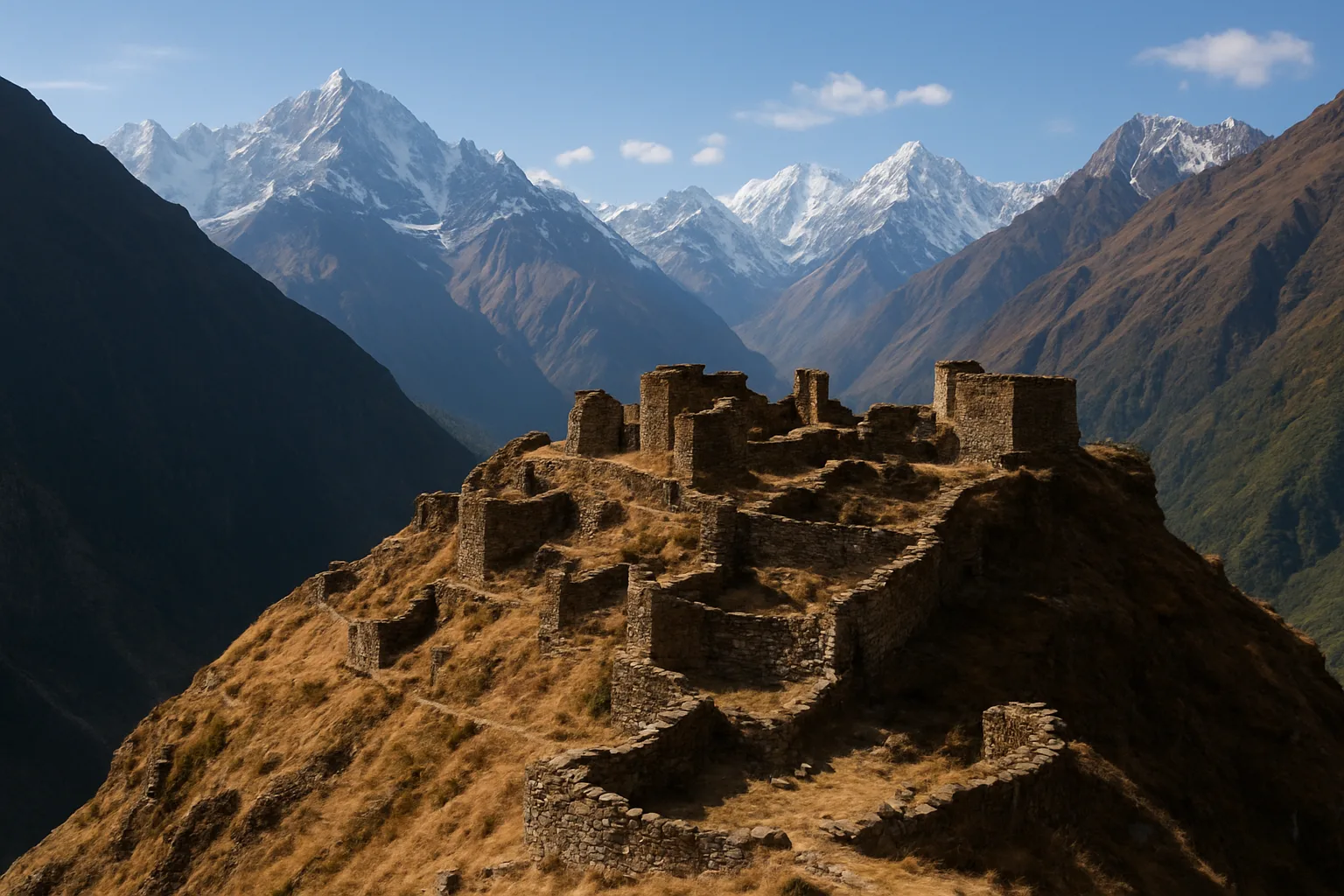
The monsoon clouds coil around the rugged ridges above the Beas River, and the air carries a scent of cedar and damp earth. Centuries ago, in what is now Mandi, these slopes were both a sanctuary and a crossroads. Herdsmen drove their flocks through ancient pine forests, and traders charted precarious paths between the plains and the high Himalayas. The landscape—untamed, unpredictable—set the stage for the emergence of one of Himachal’s most influential hill principalities.
Myth, Memory, and the Land’s Earliest Inhabitants
Long before written chronicles, local memory preserved the origins of Mandi in a tapestry of legend and oral tradition. Villagers recited tales of spirits and demi-gods who shaped the land, and of wise rajas who tamed its wildness. The Kullavi and Mandiali ballads, still sung at winter fires, hint at primordial settlements nestled along tributaries of the Beas—places where belief systems fused animist reverence for nature with the early imprints of Hindu worship. Some traditions trace Mandi’s ancestry to the mythic sage Mandavya, whose penance on a solitary hill supposedly bestowed sanctity on the region. Yet historians, sifting through these stories, distinguish their poetic truth from historical fact.
Archaeological traces—pottery shards, ancient terraces, and the ruins of small shrines—suggest that by the early medieval period, agrarian communities and clan-based hamlets were already thriving here. A patchwork of local chieftains, known as thakurs and ranas, exercised authority over scattered villages, their power rooted in kinship, land, and ritual prestige.
Trade, Pilgrimage, and the Mountain Routes
Mandi’s valleys, though remote, were never isolated. The great trans-Himalayan trade arteries—linking Kashmir, Ladakh, and Tibet to the Punjab plains—passed through or near this region. Long before it was a political center, Mandi’s location made it a node for itinerant merchants, wandering ascetics, and soldiers of fortune. Regional gazetteers recount how salt, wool, and precious stones moved along these tracks, and how local markets bustled during seasonal fairs. The proximity to the ancient pilgrimage circuit of the Panch Bhishma—five sacred sites along the Beas—infused the land with spiritual gravity, attracting yogis and traders alike.
It was along these routes that ideas, faiths, and technologies flowed. Early Buddhist influences mingled with Shaivite and Vaishnavite currents, a synthesis visible in the stone and wood temples that began to dot the hills.
The Dawn of Hill States and the Mandi Polity
By the 13th and 14th centuries, cracks were appearing in the old order of petty chieftaincies. The pull of expanding regional powers—most notably the Rajput kingdoms and the rising rulers of Kangra—put pressure on the fragmented hill societies. It was in this crucible that the first true political entity recognizable as Mandi began to form.
Oral traditions credit a line of Rajas—beginning perhaps with Ajbar Sen in the mid-16th century, though some genealogies reach further back—with unifying the disparate chiefdoms under a single standard. The process was slow, marked by alliances sealed through marriage, strategic warfare, and delicate negotiations with neighboring states like Suket and Kullu. Chroniclers describe how the early Mandi rulers invoked both martial prowess and divine favor, positioning themselves as protectors of the land’s sacred geography. Ajbar Sen, in particular, is remembered for moving his capital from Bhiuli to the present site of Mandi, signaling a new era of centralized authority.
Belief, Authority, and the Mandal System
The consolidation of Mandi’s rule was not merely political; it was also spiritual and administrative. The rajas drew legitimacy from their role as patrons of major temples—most notably the Triloknath and Bhutnath shrines—whose festivals became occasions for both devotion and statecraft. The mandal system, a network of appointed local officials, emerged to collect tribute, manage irrigation, and mediate disputes. This administrative innovation allowed the rajas to extend their influence into isolated valleys, binding distant hamlets to the central authority in Mandi town.
As the state matured, a distinctive courtly culture took root. Prakrit and Sanskrit learning flourished alongside local dialects, and artisan guilds—especially woodcarvers and metalworkers—received royal patronage. The stone temples, elaborate gateways, and the first palaces reflected both indigenous traditions and the influence of visiting artisans from the plains.
Rivalries, Resilience, and the Forging of Identity
Mandi’s ascent was shaped as much by conflict as by consensus. Periodic invasions—by neighboring hill states, and at times by Mughal officers seeking tribute—tested the principality’s cohesion. The rajas responded with a blend of diplomacy and strategic fortification, building new defensive works at key passes and fostering alliances through intermarriage. Chronicles note that while Mandi at times acknowledged the suzerainty of larger powers, it retained a remarkable autonomy, fiercely defending its institutions and customs.
Across centuries, the people of Mandi—Rajputs, Brahmins, artisans, shepherd castes—wove their identities into the fabric of the principality. The shared festivals, the enduring worship of local deities, and the memory of resistance became the glue binding this diverse society. Even as new technologies and ideas filtered in, the principality’s mountainous heartland nurtured a distinctive ethos—resilient, pragmatic, yet deeply spiritual.
Echoes of the Past: Mandi’s Foundations Today
Modern Mandi’s bustling markets and riverside temples bear silent witness to these layered beginnings. Many of the traditions—ritual fairs, temple patronage, reverence for the sage Mandavya—still shape civic life. The centuries-old tension between autonomy and external influence, so central to Mandi’s historical emergence, continues to inform local identity and politics.
As this series continues, we will follow the principality’s journey through the upheavals of the early modern period: the challenges of empire, the arrival of new faiths, and the forging of a modern administrative state. The story of Mandi, rooted in myth but shaped by history, is far from finished.
Previous: The Sen Dynasty: Rulers Who Shaped Medieval Mandi
Next: Mandi’s Historic Relations with Kangra, Kullu, and Suket