
Series: History of Shimla, Himachal Pradesh, India
Phase 2: Medieval Period — Part 10 of 30
This article forms part of a continuing series that follows the gradual emergence of organised power in the western Himalayas. As small communities gave way to clans, chieftainships, and hill states, patterns of rule, alliance, and conflict began to take shape. This phase examines how authority was negotiated through land, ritual, and warfare, laying the groundwork for regional kingdoms that would dominate the medieval landscape.
In the Shadow of the Cedar: Shimla’s Forgotten Centuries
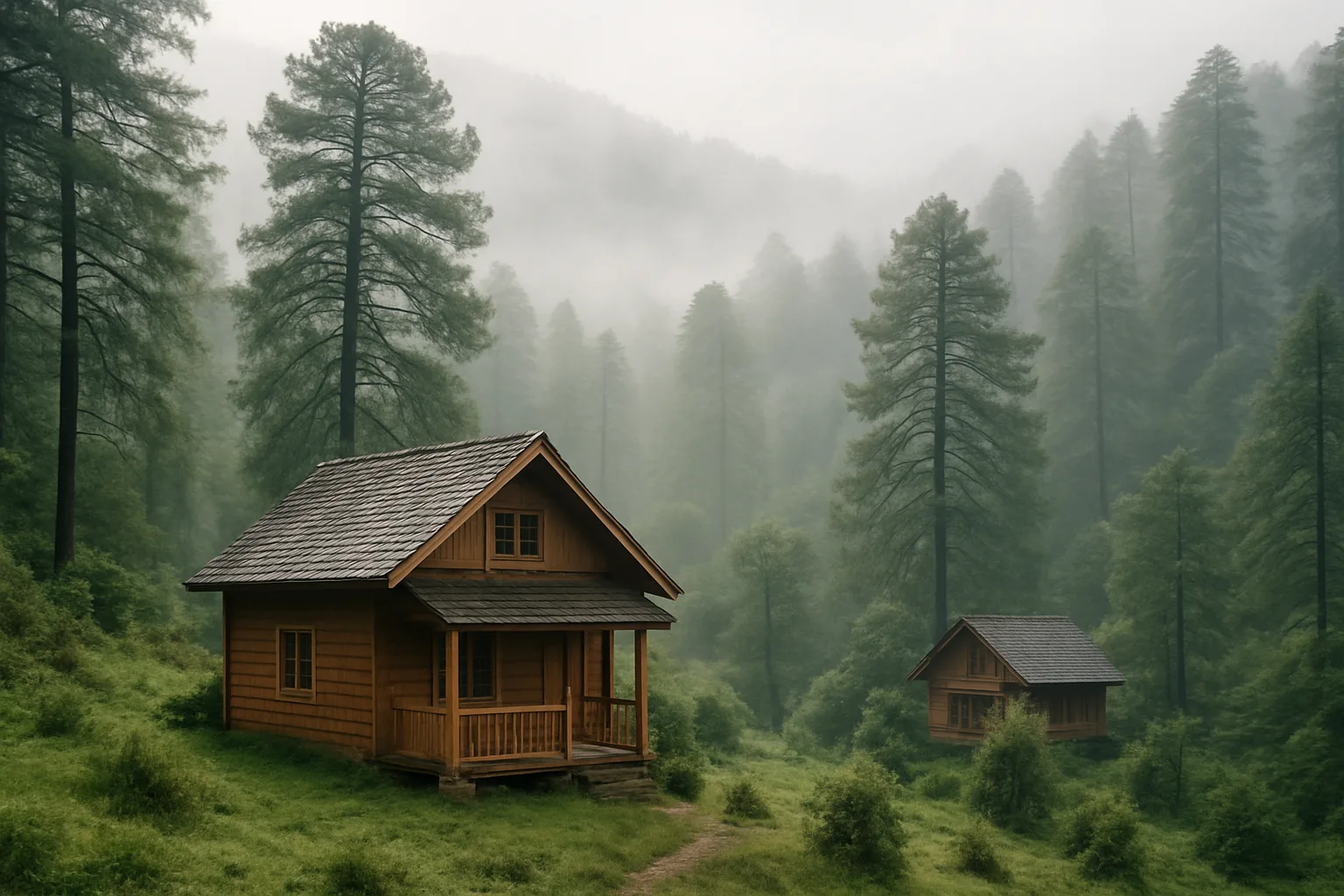
Amid the whispering forests of deodar and oak, the slopes above the Sutlej valley once lay draped in mist and silence. The highland that would later be called Shimla—now the bustling capital of Himachal Pradesh—was, for centuries, a place of quiet seclusion. Its ridges and glens bore the footprints of shepherds and the faint echoes of village fires, but little else disturbed the peace. To understand why this verdant upland remained a quiet backwater before the coming of the British, one must look closely at its geography, early inhabitants, and the subtle currents of history that shaped its destiny.
The Land Beyond the Plains: Geography and Early Settlement
Shimla sits perched at an altitude of over 2,000 meters, straddling a long, narrow ridge in the lower Himalayas. The terrain here is steep and rugged, veined by streams and cloaked in thick forest. Historically, such landscapes offered both sanctuary and challenge. While the surrounding valleys—especially those of the Sutlej and Pabbar rivers—hosted scattered human habitation from ancient times, the heights themselves remained sparsely populated. Archaeological evidence for early settlements is limited, and much of what is known derives from oral traditions and later regional chronicles.
According to local lore, small communities of shepherds, woodcutters, and cultivators eked out a living in these hills. The pastoralist Gaddi and Gujjar groups are believed to have moved seasonally through these uplands, driving their flocks between the Himalayan foothills and the higher pastures. Over time, the Koli, Kanet, and other agricultural communities established hamlets on gentler slopes, clearing patches of forest for maize and barley. The rhythms of life here were shaped by the seasons, the monsoon, and the mountain itself.
Myth, Legend, and the Sacred Landscape
As with much of the Himalaya, the early history of Shimla is interwoven with the threads of myth and devotion. Oral traditions hold that the area’s wooded heights were once favored by sages and ascetics. Some stories connect these hills to the wandering Pandavas of the Mahabharata, though such claims reside firmly in the realm of belief rather than documented history.
What emerges most clearly is the centrality of faith to the region’s early identity. The name “Shimla” itself is widely believed to derive from Shyamala Devi, a local incarnation of Kali, whose simple shrine once stood beneath the ancient trees. Over generations, rustic temples and stone altars appeared in forest clearings and beside village springs, dedicated to deities both pan-Indian and uniquely local. The landscape, seen through the eyes of its earliest inhabitants, was one of sacred presence and protective spirits—an outlook that shaped settlement patterns and social life.
Trade, Travel, and Isolation: The Margins of the Known World
Unlike the bustling river valleys of the Indo-Gangetic plains, Shimla’s heights found themselves largely bypassed by the great currents of ancient trade and migration. The major trans-Himalayan routes—linking Kashmir, Tibet, and the Punjab—ran far to the north and west. Occasional paths wove through the lower valleys, connecting the upper Sutlej and Satluj basin to the bustling markets of Rampur or Sultanpur (Kullu), but these seldom climbed to the remote, forested ridges above.
Medieval gazetteers and chronicles, such as those compiled by court historians of neighboring hill states, make only passing reference to the region. The lack of major passes and all-weather roads limited both commerce and conquest. In consequence, the area that would become Shimla remained something of a blank space on the political maps of the time—a place known, if at all, as the hinterland of more prominent valleys below.
The Rise of the Hill States: Power on the Periphery
From the late medieval period onward, the western Himalayas saw the emergence of a patchwork of small principalities—each centered on a fortified stronghold and ruled by a local raja or thakur. Among the most significant in the region south of the Sutlej were the states of Keonthal, Bushahr, and Jubbal. While their origins are clouded by legend, regional chronicles suggest that these polities took shape between the 10th and 14th centuries CE, often as offshoots or dependencies of older, larger kingdoms.
Shimla itself lay within the sphere of Keonthal, whose rulers claimed descent from Rajput clans and maintained a modest court at Junga, south of the present-day city. Yet even as these hill states grew in complexity—levying taxes, building temples, and occasionally mustering troops—they rarely exercised direct control over the upland forests. The remoteness and inaccessibility of the Shimla ridge rendered it peripheral to both administration and conflict. When power struggles erupted, they played out in the valleys and market towns, not in the shadowy cedar woods above.
Daily Life and Social Fabric: Village Worlds Apart
The communities that did inhabit the Shimla hills lived largely apart from the tumult of dynastic politics. Villages were small, sometimes little more than a cluster of stone houses, their inhabitants bound by ties of kinship and shared labor. Seasonal rhythms governed all: ploughing in spring, harvest in autumn, and long winters spent weaving or tending livestock in the warmth of smoky kitchens. Social structures reflected both the caste hierarchies of the plains and the flexible alliances necessitated by mountain life.
Festivals and fairs—often linked to local deities—provided rare moments of gathering and exchange. Oral tradition suggests that folk songs, storytelling, and ritual drama flourished in these isolated settings, preserving memories of migration and myth long after the outside world forgot. Yet, for all the richness of village life, the region’s population remained sparse and scattered, its economic horizons modest. The absence of mineral wealth or irrigated plains further ensured that Shimla stayed beyond the ambitions of neighboring rulers.
A Place Apart: From Obscurity to Opportunity
By the dawn of the nineteenth century, the hilltop forests of Shimla remained largely untouched by the world beyond their ridges. The rise and fall of empires in the plains—whether Mughal, Afghan, or Sikh—had left only faint traces here, their agents content to recognize the autonomy of local chiefs so long as tribute was paid and passes remained open. The British, when they finally arrived after the Anglo-Gurkha wars, found a land of villagers, shepherds, and unbroken forest, remarkable not for its history but for its very obscurity.
Yet, as later events in this series will reveal, it was precisely this quiet backwater quality—the cool air, the seclusion, the absence of entrenched authority—that made Shimla so alluring to new rulers seeking respite from the heat and anxieties of the Indian plains.
Echoes of the Past: Shimla’s Enduring Character
The ancient rhythms of isolation and independence have left their mark on Shimla. Even today, beneath the colonial facades and the bustle of tourism, the town retains a memory of its earlier self: a place shaped by geography, guarded by forests, and defined by communities who lived at the edge of the known world. In the next part of this series, we will follow the first British explorers into these hills, tracing the transformation of a forgotten ridge into the summer capital of an empire.
Previous: Temples and Faith in Pre-Colonial Shimla
Next: How the British Discovered Shimla