
Series: History of Mandi, Himachal Pradesh, India
Phase 5: Post-Independence & Modern Mandi — Part 30 of 30
This article appears within a continuing historical series that follows the western Himalayas into the modern era. With the end of princely rule and the integration into independent India, long-standing social and political patterns were reconfigured. This phase examines how development, state formation, and memory interact with inherited landscapes, shaping contemporary life while carrying forward echoes of the past.
Nightfall in the Old City
The last rays of sunlight gather on the ochre stones of Mandi’s old bazaar, where the Beas River runs slow and silent. Lanterns flicker above narrow lanes, illuminating archways carved centuries ago. The air carries incense from ancient shrines, mingled with the clamor of scooters and the laughter of children. Here in the heart of Himachal Pradesh, every corner whispers a fragment of the past—even as the city pulses with the energy of the present.
Foundations: From Oral Memory to Recorded History
Mandi’s origins are layered, straddling oral tradition, historical inference, and documented record. Local legend, passed down through generations, speaks of sage Mandavya meditating on the banks of the Beas—his name forever tied to the land. Such stories, woven from belief and myth, shaped early identity but are distinct from the written chronicles that arrived later.
By the 16th century, Mandi emerges more concretely in regional gazetteers and the chronicles of Rajput courts. The founding of the princely state by Ajbar Sen around 1527 is often cited as a pivotal moment, marking the shift from loosely organized hill communities to a defined polity. Yet, even as new rulers claimed legitimacy, older traditions lingered in village rites and festivals.
Communities and Early Settlements
The valleys and terraces around modern Mandi have long drawn people seeking shelter, water, and trade. Archaeological traces—pottery shards, foundations of forgotten shrines, the remnants of stepped fields—hint at settlements that predate any written record. Oral histories among Gaddi, Brahmin, and artisan families recall migration and adaptation, blending memory with myth.
Throughout the early centuries, the region’s communities negotiated the rhythms of river and mountain, forging ties that would underpin Mandi’s later emergence as a center of culture and commerce. The interplay of Kullu, Suket, and Chamba kingdoms fostered both rivalry and exchange, their shifting alliances chronicled in both bardic tales and later British accounts.
Belief Systems and Sacred Geographies
Religion in Mandi has always been a mosaic. The city’s countless temples—some dating back to the 15th century, others newer—reflect a syncretic ethos. Shaivism dominated early hill worship, yet shrines to local deities, or devtas, abound, each with unique rites and festivals. The Mahamrityunjaya and Triloknath temples are not only architectural marvels but also living centers of faith, where legends are retold with every ritual.
British-era gazetteers and travelers’ notes capture the city’s spiritual vibrancy, describing processions where villagers carried icons across impossible terrain, reinforcing communal bonds and an enduring sense of place. The boundaries between the sacred and the everyday remain porous in Mandi, even as global influences seep in.
Trade Routes and the Growth of Hill States
Mandi’s location, along the ancient trade artery connecting the plains to Ladakh and Tibet, was no accident. Caravans wound through its valleys, bearing salt, wool, and spices; merchants from Punjab and beyond mingled in its bazaars. The city’s prosperity allowed its rulers to commission grand temples and palaces, symbols of both piety and power.
The chronicles of the Katoch and Sen dynasties detail alliances and rivalries, shifting as British influence grew in the 19th century. Still, the pulse of trade and pilgrimage remained steady, knitting together communities that might otherwise have remained isolated in the high hills.
Modern Mandi: Tensions and Transformations
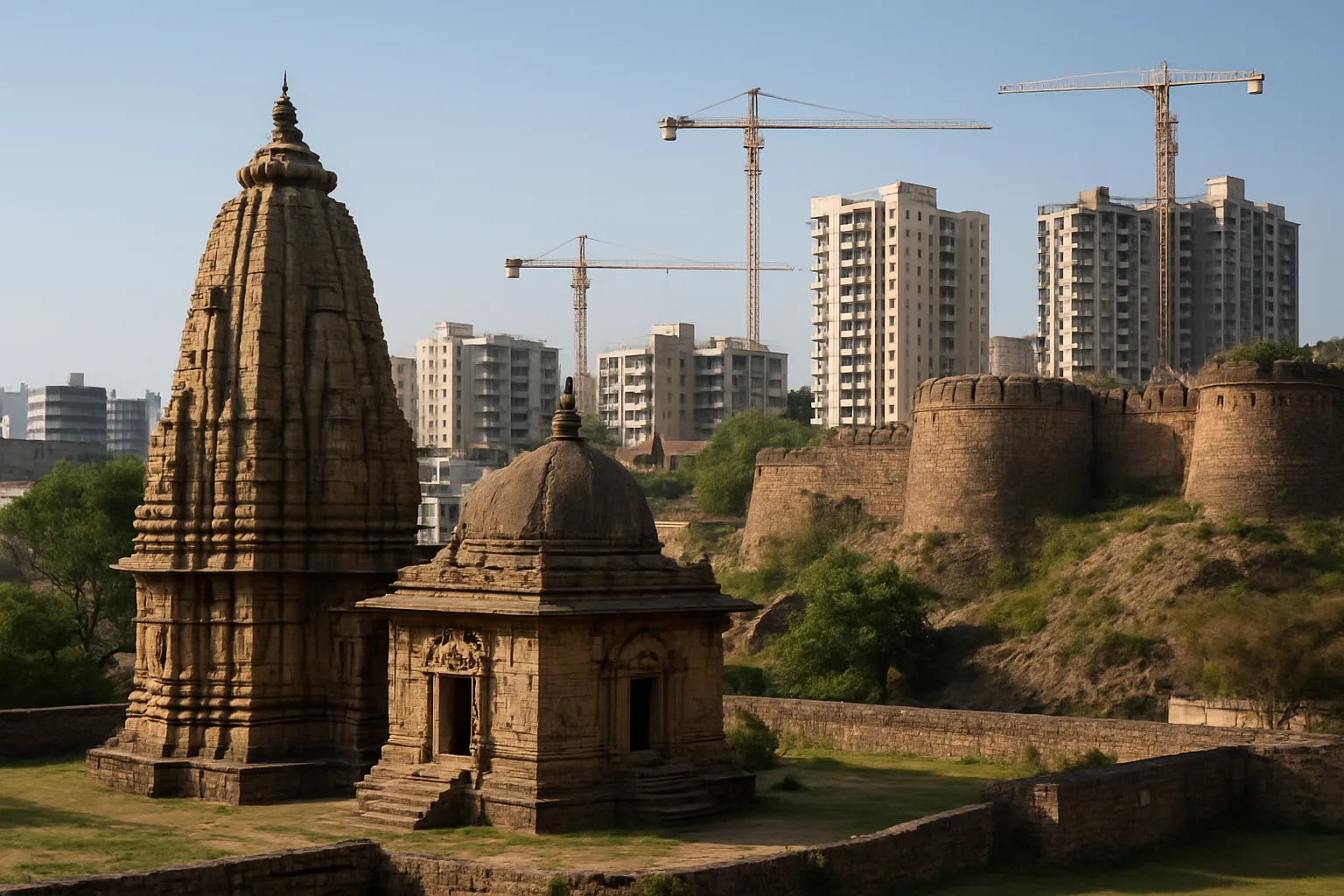
In the decades after Indian independence, Mandi—and Himachal at large—embarked on a journey of modernization. Roads carved through once-remote valleys brought education, healthcare, and new opportunities. Yet, as concrete rose and traditions shifted, questions of identity and memory became urgent.
Local historians, temple caretakers, and artists took up the mantle of preservation. The annual Mandi Shivratri fair, now a major tourist draw, remains at heart a gathering of devtas and devotees, echoing ancient processions. Community-led efforts to record oral histories and restore crumbling shrines have gained momentum, even as younger generations leave for distant cities.
Keeping Memory Alive Amid Change
Preserving Mandi’s history has never been a passive act. It is a living negotiation—between past and present, tradition and innovation, memory and forgetting. Each restored temple stone, every festival procession, is a testament to the city’s resilience. The stories of Mandavya, of Ajbar Sen, of the anonymous artisans who carved river stones into gods, continue to shape how Mandi sees itself.
In a rapidly changing world, these efforts are more than nostalgia—they are acts of identity, anchoring the city to its roots even as it looks outward. As we close this phase of our journey, the next part of the series will explore how Mandi’s cultural legacy is being reimagined for the future, and what it means to belong to a city where memory is both inheritance and responsibility.
Previous: Architectural Heritage of Old Mandi Town