
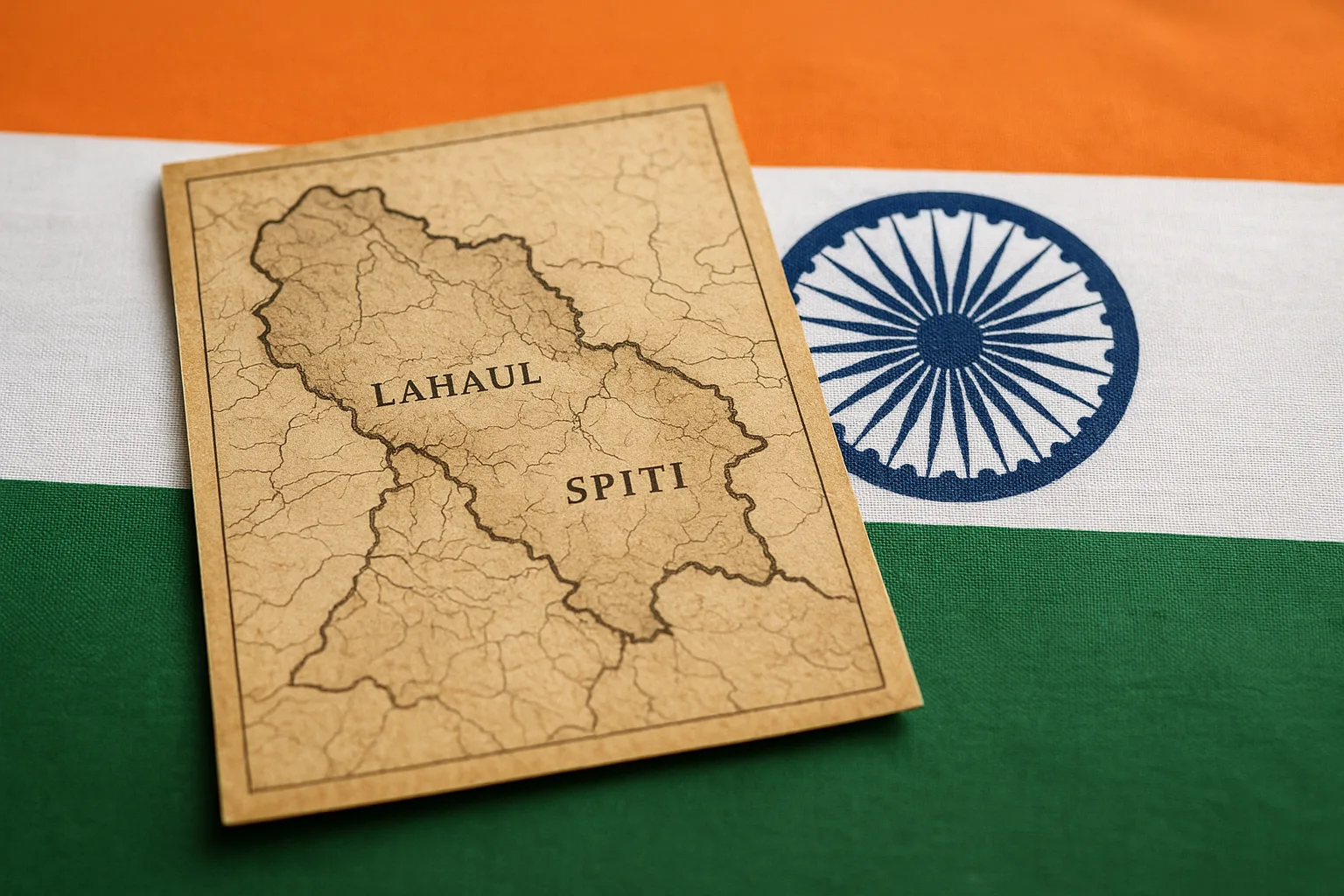
Series: History of Lahaul & Spiti, Himachal Pradesh, India
Phase 5: Modern Era — Part 21 of 30
This article appears within a continuing historical series that follows the western Himalayas into the modern era. With the end of princely rule and the integration into independent India, long-standing social and political patterns were reconfigured. This phase examines how development, state formation, and memory interact with inherited landscapes, shaping contemporary life while carrying forward echoes of the past.
The Dawn Breaks on a New Border
On a crisp August morning in 1947, the monks of Key Monastery peered across the Spiti valley—a silence broken only by prayer wheels and distant yak bells. Far below their ancient walls, the river shimmered, winding toward lands now mapped anew by the Partition of the subcontinent. For centuries, Lahaul and Spiti had existed in the shadow of empires, yet largely at their own pace: bound by the Himalayas, shaped by monasteries, and guided by harsh seasons. Now, word arrived from distant Shimla and Delhi: British India was gone. A new nation demanded allegiance, and the very notion of borders—once fluid and ceremonial—grew suddenly real.
Ancient Valleys at the Crossroads
Long before independence, Lahaul and Spiti had occupied a frontier world. Oral traditions remember the valleys as abodes of mountain spirits and epic wanderers, tales still told in Spitian dialects by elders around winter hearths. Yet historical inference, drawn from early regional chronicles and British gazetteers, reveals an enduring tension between isolation and connection.
Key settlements—Lahaul’s Gondla and Spiti’s Kaza—grew where river valleys permitted barley fields and trade. The Chandra and Bhaga rivers, converging at Tandi, shaped not only the land but also the movements of people, goods, and beliefs. Buddhism, carried by monks from Tibet, mingled with animist practices and indigenous deities. Every village, it seemed, was a world unto itself, yet never entirely cut off from the shifting fortunes of Himalayan polities.
Hill States, Empires, and Overlapping Claims
The 19th century brought new actors. Dogra rulers from Jammu swept into Ladakh and western Tibet, asserting tributary ties over Spiti. The British, wary of Russian ambitions and eager to secure Himalayan passes, formalized their rule through treaties and survey lines. Lahaul, once a fief of the Kullu rajas and later Kangra, became part of the Punjab Hill States Agency. But even as maps were redrawn, the valleys’ daily life changed little. Authority from Shimla or Lahore was remote and often abstract—represented by occasional revenue collectors, visiting officials, and the distant promise of education or infrastructure.
These overlapping claims left Lahaul and Spiti with a distinctive political patchwork: neither fully integrated into the princely states nor entirely under British direct rule. The Gazetteer of the Kangra District (1883-84) documents the unique arrangements for revenue, justice, and local governance—a blend of appointed headmen, monastic councils, and customary law.
1947: The Winds of Change Arrive
When the British departed in August 1947, Himachal’s future was uncertain. Princely states hesitated, some stalling their accession to India. For Lahaul and Spiti, the implications were both immediate and deeply unsettling. The valleys’ Buddhist and tribal identity set them apart from the more populous, Hindu-majority regions to the south. The international border with Tibet—once a line on a surveyor’s map—now became a frontier of national security.
Local leaders gathered, debating their options. Oral accounts recall anxiety and confusion, as well as a pragmatic acceptance of change. The monastic estates, which had long managed local affairs, faced questions about land rights and religious autonomy. Meanwhile, messages from Delhi and Shimla urged unity, promising roads, schools, and protection. The valleys’ remoteness, once a shield, now risked becoming a liability in the rapidly modernizing Indian state.
Forging New Bonds: Administration and Identity
In 1948, Lahaul and Spiti were formally integrated into the Chief Commissioner’s Province of Himachal Pradesh. The change brought new officials, a reorganization of districts, and, crucially, the extension of Indian citizenship and constitutional rights. Yet the process was far from seamless. Spiti’s monasteries negotiated fiercely to maintain their internal autonomy. Lahaul’s headmen, or nambardars, advocated for local customs in land and water management. The Indian state, for its part, recognized the valleys’ strategic importance but struggled to provide consistent infrastructure or connect them to the outside world, especially during the harsh winters when the Rohtang Pass was impassable.
Throughout the 1950s, the state’s presence grew: schools, a few medical clinics, and the beginnings of the Manali–Leh road. Yet, many in Lahaul and Spiti remained wary. Oral histories from this era speak of pride in their distinctiveness but also a dawning realization that isolation was no longer tenable. A new generation, educated in distant towns, brought fresh aspirations—and new questions about what it meant to be both Spitian or Lahauli, and Indian.
Borders, Brotherhood, and the Himalayan Cold War
The 1950s and 1960s brought further upheaval. The Chinese occupation of Tibet in 1950 and the subsequent border tensions had profound repercussions for Spiti, whose kin and spiritual ties reached deep into the plateau. The Indo-China War of 1962 transformed the valleys into sensitive borderlands, restricting movement and increasing the presence of Indian security forces. Trade routes that had linked Spiti to Tibet for centuries were abruptly sealed, fracturing families and economic lifelines.
Yet, in the crucible of crisis, a new sense of belonging emerged. The Indian government invested heavily in roads and communications, both to assert sovereignty and to reassure the local population. Lahaul and Spiti’s people, once on the margins of empire, found themselves at the heart of national narratives about unity and resilience. Local leaders, including women and monks, began to engage more actively with state institutions, advocating for their communities’ rights and resources.
Ancient Roots in a Modern Nation
Today, the valleys of Lahaul and Spiti stand as a testament to the complex process of integration—where ancient rhythms and identities have endured, even as new roads, schools, and governance have transformed daily life. The memory of 1947, and the decades that followed, lingers in stories told by elders and in the continuing importance of village councils and monastic assemblies. The valleys’ Buddhist festivals, oral epics, and fiercely local traditions serve as living reminders of a past never entirely subsumed by the state.
Yet, the journey is far from over. As Himachal Pradesh and India continue to change, Lahaul and Spiti face new questions: how to balance development with tradition, security with openness, and local autonomy with national identity. In the next part of this series, we will follow the region’s post-independence journey—exploring its evolving relationship with the Indian state, the impact of infrastructure and modern governance, and the voices shaping its future.
Previous: End of Princely and Colonial Influence in Lahaul–Spiti
Next: Recognition of Lahaul–Spiti as a Tribal District