
Series: History of Kullu, Himachal Pradesh, India
Phase 1: Ancient & Mythological Roots — Part 3 of 30
This article is part of a broader historical series exploring the earliest layers of human presence in the western Himalayas. Beginning with landscape, belief, and early patterns of movement and settlement, the series traces how communities adapted to mountainous environments long before formal states or written records emerged. These foundational centuries shaped cultural memory, local traditions, and relationships with the land that would endure through later periods of change.
Footprints Along a Timeless River
The morning sun glimmers through alpine mists as it strikes the riverbanks of the Beas. Even today, the valley’s silence is broken only by the rush of water and the distant echoes of shepherds’ calls. But thousands of years ago, these banks were witness to the first tentative steps of human presence in what we now call Kullu—a story written not in ink, but in earth, stone, and memory.
Tracing the Earliest Inhabitants
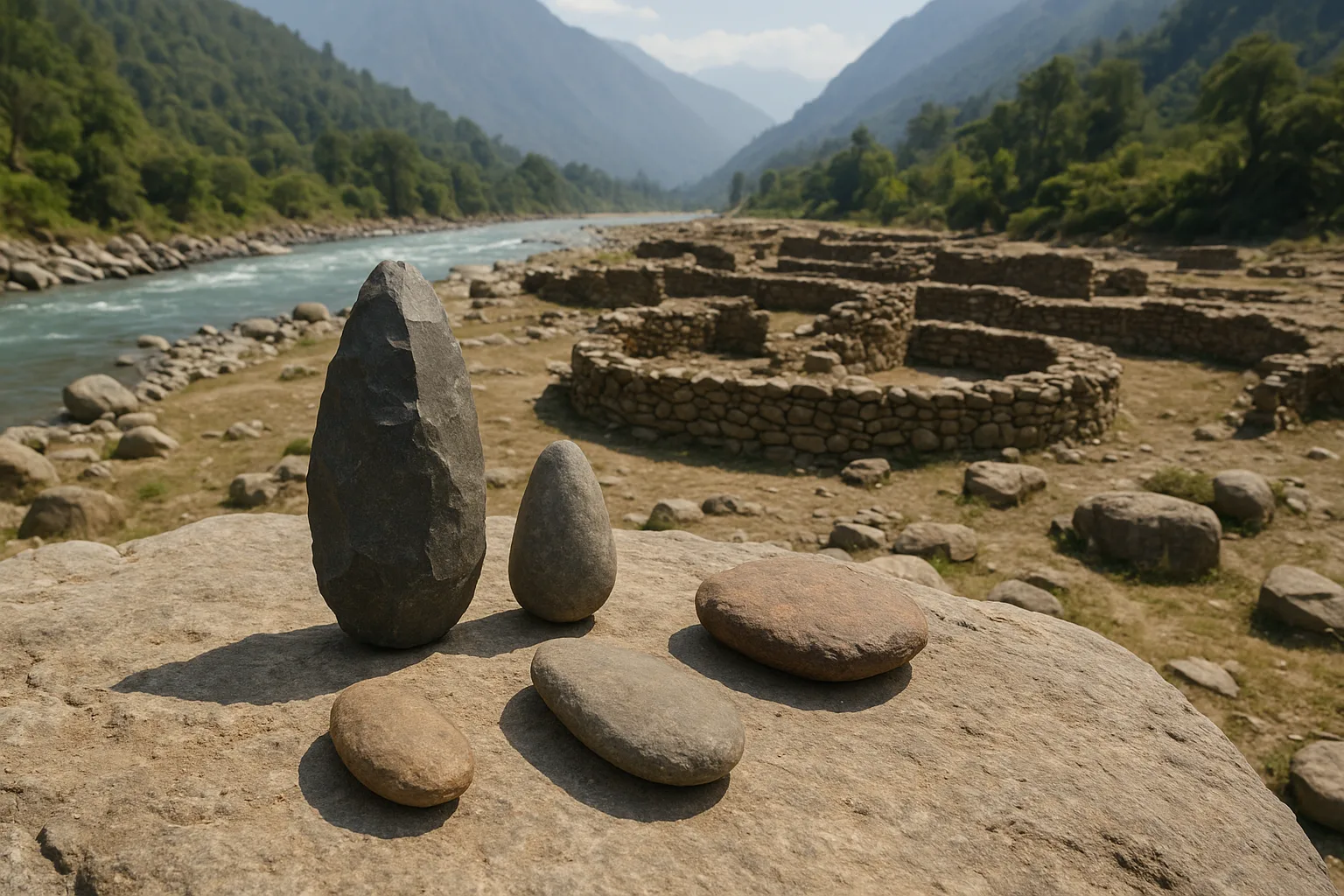
Long before recorded dynasties or the rise of temples, the Beas Valley offered shelter and sustenance to Paleolithic wanderers. Archaeological surveys, including those referenced in regional gazetteers and early Himalayan chronicles, point to evidence of primitive stone tools discovered in the surrounding foothills. These finds—flakes, scrapers, and hand axes—suggest that small bands of hunter-gatherers traversed these forests and river terraces as early as 200,000 to 50,000 years ago.
Though the names and stories of these people are lost to time, the valley’s geography would have shaped their days. Its abundant riverine resources, wild game, and sheltering caves made it a natural corridor for movement and survival, linking the plains of Punjab with the heights of the Trans-Himalaya.
From Nomads to Settlers: The Dawn of Communities
By the end of the Stone Age, the rhythm of life along the Beas had begun to change. Seasonal camps gradually gave way to more permanent settlements as climatic shifts brought about the retreat of glaciers. Oral traditions still spoken in the Kullu hills tell of ancient ancestors—semi-mythical figures who tamed the wilds and founded the first hamlets. While these tales blur history and legend, archaeological inference points to the emergence of proto-agricultural communities by the Neolithic period, around 5,000 to 3,000 BCE.
Simple tools evolved. The earliest Kullu valleys saw the domestication of animals and the cultivation of barley and millet on terraced slopes. Traces of pottery and early hearths have occasionally surfaced in the valley’s alluvial soils, silent witnesses to the birth of settled life.
Belief, Myth, and the Sacred Landscape
In these formative centuries, the people of the Beas Valley looked to the land and sky for meaning. The mountains—looming, unpredictable, awe-inspiring—became the backdrop for a living mythology. Oral traditions recount the exploits of deities such as Rishi Vashishta and the serpent-god Nag Devta, whose shrines still dot the region.
Yet, while these stories evoke the spiritual imagination of the valley, historians must tread carefully. The earliest belief systems of Kullu were likely animistic, shaped by reverence for rivers, rocks, and sacred groves. Over time, these indigenous practices merged with later Vedic and Puranic traditions, creating a uniquely syncretic religious landscape that persists in Kullu’s village festivals and temple rituals to this day.
Paths of Exchange: Kullu and the Ancient World
Far from being an isolated enclave, the Beas Valley’s contours made it a crossroads of Himalayan trade and migration. Long before written records, shepherds, traders, and pilgrims threaded their way through the Kullu pass, linking the valley to Ladakh, Tibet, and the fertile plains of the Sutlej and Indus.
Early routes—later formalized as the famed ‘Silk Road’ arteries—brought not only salt, wool, and metal but new ideas and technologies. The movement of people and goods fostered the rise of proto-urban centers, where local chieftains or clan leaders began to consolidate power and influence, laying the groundwork for the region’s first hill states.
Emergence of Hill States and Social Identities
By the early Iron Age, perhaps around the close of the first millennium BCE, political organization in the Beas Valley took recognizable shape. The annals of the Kullu Valley—preserved in later Rajput chronicles and gazetteers—describe the rise of local principalities led by rajas and thakurs. These early rulers, often claiming descent from legendary ancestors, competed for control over mountain passes and fertile terraces.
Communities like the Khasas, Nagas, and Kiratas—mentioned in both epic literature and local lore—figured prominently in the valley’s social mosaic. Their identities, shaped by centuries of cultural exchange and adaptation, gave rise to the distinct traditions and dialects that mark Kullu’s villages even now.
Tradition, Memory, and the Shaping of Kullu
As the ancient world faded and the era of written records dawned, Kullu’s early settlements left behind more than stones and potshards. They bequeathed a legacy of resilience—a culture that honors both the land and its layered past. The echoes of ancient migration routes resound in the songs sung during the valley’s fairs; the myths of primordial ancestors shape the rituals at every village temple.
In the next chapter of this series, we will journey into the formative centuries of Kullu’s early kingdoms, exploring how alliances, rivalries, and dynastic lineages set the stage for the region’s turbulent medieval history.
Previous: Mythological Legends Associated with Kullu Valley
Next: Tribal Communities That Shaped Early Kullu