
Series: History of Kinnaur, Himachal Pradesh, India
Phase 1: Ancient & Trans-Himalayan Roots — Part 5 of 30
This article is part of a broader historical series exploring the earliest layers of human presence in the western Himalayas. Beginning with landscape, belief, and early patterns of movement and settlement, the series traces how communities adapted to mountainous environments long before formal states or written records emerged. These foundational centuries shaped cultural memory, local traditions, and relationships with the land that would endure through later periods of change.
Footsteps Before Dawn: The High Passes Awaken
Before the first rays of sunlight touch the jagged ridges of the Kinnaur Kailash range, the air is already alive with anticipation. Far below, the Sutlej River carves its restless path through deep gorges, carrying with it the voices and footsteps of generations. In the faint blue of pre-dawn, a caravan stirs—a procession of traders, yak herders, and monks gathering at the edge of a Himalayan trail that will lead them, by perilous switchbacks and wind-scoured passes, from the apple orchards of Kinnaur into the mysterious lands beyond: the ancient plateau of Tibet.
From Myth to Mapping: Kinnaur in Historical Memory
Long before border posts and modern highways, Kinnaur occupied a liminal zone, both geographically and culturally. Oral traditions—preserved in the chants of village bards and the stories told around winter hearths—speak of a land watched over by powerful deities. The Kinnauris themselves trace their ancestry to the mythic Kinners, celestial beings mentioned in the Mahabharata and other early texts. Yet, beneath these legends, the region’s actual history gradually emerges: a crossroads where the Indian subcontinent and the high plateau of Tibet converged, not just in geography, but in the movement of goods, ideas, and beliefs.
As chronicled in regional gazetteers and echoed in the earliest British accounts, Kinnaur was never a remote backwater. Instead, it was a vital artery in the trans-Himalayan world—a fact attested by the remarkable diversity of language, dress, and custom found even today in its villages, from Kalpa to Chitkul. The region’s terrain, forbidding as it may seem, shaped not only its isolation but its special role as a gateway between worlds.
Mapping the Ancient Trails: Sutlej and Beyond
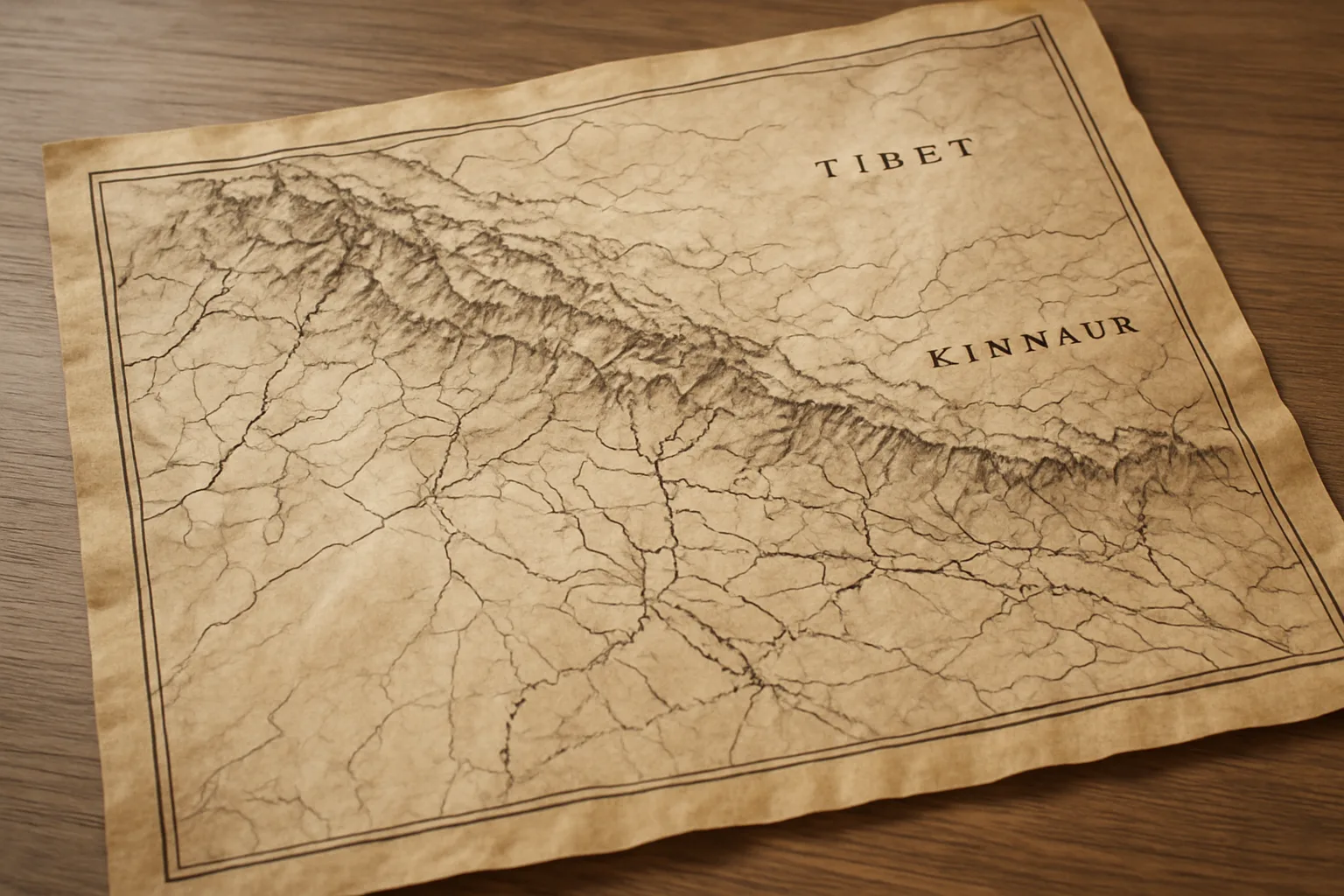
Geography determined destiny. The Sutlej River valley, cutting through the heart of Kinnaur, was more than a formidable obstacle: it was the main thoroughfare for movement northward and eastward. The oldest trade routes hugged the riverbanks, rising steeply along tributaries such as the Spiti and Baspa. The most legendary of these, the Hindustan-Tibet Road, has its origins in paths worn smooth by centuries of feet and hooves, long before British engineers attempted their own daunting surveys in the 19th century.
At the center of this network were the high passes—Shipki La, Nako, and Harsil among them—whose seasonal accessibility governed the rhythm of trade. Each spring, when the snow finally relented, Kinnauri traders loaded their salt-laden yaks and sheep with wool, borax, and precious turquoise from Tibet, returning with Indian grains, cloth, and even dried chillies. The passes were not just physical gateways, but thresholds of trust and negotiation. Each journey was a test of endurance, but also a reaffirmation of ancient agreements between neighboring valleys and distant courts.
Communities and Settlements Along the Route
Archaeological traces, along with the oral testimony of local elders, suggest that the first organized settlements in Kinnaur clustered near trade junctions—places with access to water, arable land, and defensible ground. Kalpa, with its commanding views of the sacred peak Kinnaur Kailash, was an early center of authority and ritual. Villages such as Sangla and Chitkul marked the edge of habitable land, where houses clung to terraced hillsides and Buddhist chortens watched over the paths winding northward.
Distinctive wooden temples, many built in the Kath-Kuni style, reflect the synthesis of Hindu and Buddhist influences brought by centuries of exchange. Here, belief systems mingled as freely as goods: the worship of local deities—Devtas and Devis—sat comfortably alongside Buddhist prayers. The stories of Padmasambhava, the Indian sage who journeyed into Tibet, were retold in Kinnauri villages, blending into local cosmologies and rituals.
Hill States and Political Shifts: The Emergence of Kinnaur’s Identity
By the first millennium CE, the broader Himalayan region saw the rise of small hill principalities, each controlling strategic sections of trade. Kinnaur, then known as Kanawur or Kanaur in Tibetan and Mughal records, was governed by chieftains whose authority rested on control of trade and tribute routes. The chronicles of neighboring Bushahr, and later, British administrative reports, describe a land where local rulers balanced autonomy with the demands of larger empires—Mughal, Sikh, and eventually British.
Yet, throughout these shifting allegiances, Kinnaur’s place as a broker between India and Tibet rarely wavered. Treaties were inked and oaths sworn at mountain shrines, but the deeper bonds were forged in the daily exchanges at markets, the shared hardships of caravan life, and the intermarriage of communities on either side of the passes. The Kinnauris became both guardians and benefactors of Himalayan commerce, their identity shaped as much by what they carried as by where they lived.
Trade, Ritual, and Transformation
The annual trade cycle was marked by ceremony as much as by commerce. As the caravans departed in spring, villagers gathered to invoke the protection of local deities—for the mountain spirits were believed to govern both weather and fortune. On return, the goods were distributed not only through barter but through elaborate festivals, where the boundaries between trader and pilgrim, local and outsider, blurred into shared celebration. The famed Lavi Fair in Rampur, though later in origin, echoes these ancient rhythms—a living testament to the enduring power of trade to shape social bonds.
Over time, the routes themselves became carriers of more than material wealth. Buddhist scriptures, artistic motifs, and even the stone inscriptions found near Nako and Tabo mark the spread of ideas alongside goods. The influence of Tibet’s great monasteries found echoes in Kinnaur’s own religious architecture, just as the Indian plains contributed language and law. The region’s rich oral tradition, full of riddles and epic tales, preserves the memory of these exchanges in forms both subtle and profound.
Legacy of the Passes: Ancient Roots in Modern Kinnaur
Today, the old trade routes are mostly silent, their paths overtaken by roads and the demands of new economies. Yet their legacy remains, woven into the fabric of Kinnauri identity. The festivals, the dialects, the very houses perched above deep valleys—all bear the imprint of centuries spent at the crossroads of worlds. In the faces of elders, in the stories of the firelit winter gatherings, echoes of those ancient journeys linger: reminders that trade was never just about goods, but about connection, adaptation, and the promise of return.
As we continue our exploration of Kinnaur’s layered history, the next chapter will turn to the spiritual traditions that grew from these roots—tracing the journey of faiths and philosophies shaped by the winds and wanderers of the Himalayas.
Previous: Geography and Isolation in Early Kinnaur History
Next: Kinnaur Under the Influence of the Bushahr Kingdom