
Series: History of Kinnaur, Himachal Pradesh, India
Phase 1: Ancient & Trans-Himalayan Roots — Part 3 of 30
This article is part of a broader historical series exploring the earliest layers of human presence in the western Himalayas. Beginning with landscape, belief, and early patterns of movement and settlement, the series traces how communities adapted to mountainous environments long before formal states or written records emerged. These foundational centuries shaped cultural memory, local traditions, and relationships with the land that would endure through later periods of change.
Where Mountains Meet Story: Dawn in Kinnaur
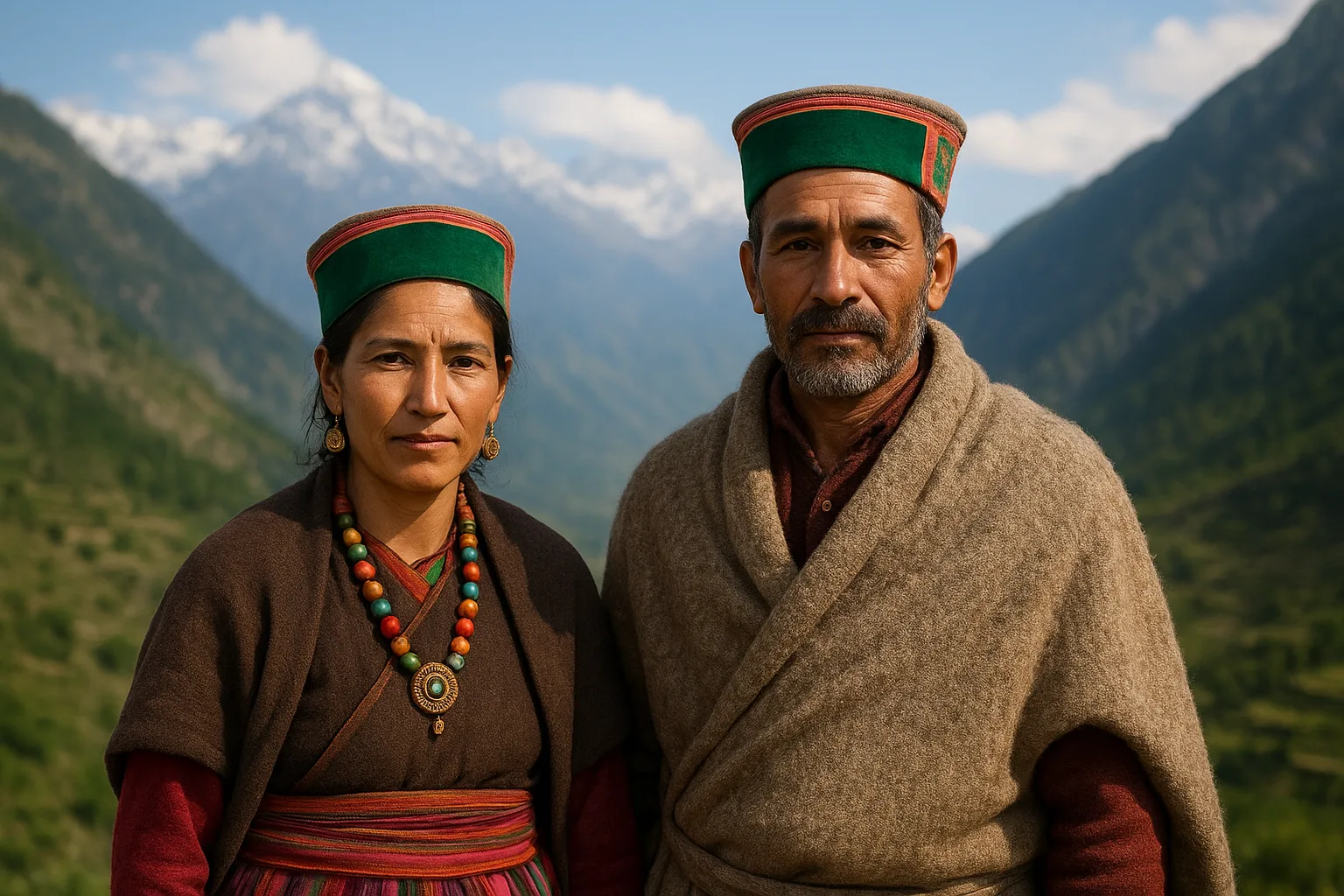
A cold wind curls down from the snowbound ridges as first light touches the valley of the Sutlej. In the high villages of Kinnaur, the thin air is threaded with the scent of deodar and pine, and the day begins as it has for centuries: with the sound of bells, prayers, and distant voices echoing between peaks. Here, on the edge of the Indian Himalaya, the boundary between earth and sky blurs—and with it, the line between history and legend.
For generations, the people who call this land home have been known as the Kinners. Their identity is woven into stories as old as the hills themselves—stories that have traveled wide, echoing in Sanskrit epics and Buddhist scriptures, and yet remain rooted in the soil and stones of Kinnaur.
Ancient Crossroads: Situating Kinnaur in the Historical World
Today, Kinnaur is a district in Himachal Pradesh, but its valleys and passes have long been a threshold between worlds. The earliest factual anchors for the region come from ancient Indian texts: the Mahabharata and the Puranas mention the Kinners as a mystical hill people, neighbors to the Gandharvas and Yakshas. Later, Buddhist sources—like the Lalitavistara—refer to the Kinnauras, placing them at the fringes of the Indo-Tibetan world.
These references, coupled with the region’s geography, hint at Kinnaur’s strategic importance. It lay astride the ancient trade routes linking the Gangetic plains to Tibet’s high plateau. Caravans carried salt, wool, turquoise, and stories along these dangerous trails, and the people of Kinnaur were both gatekeepers and guides. Early explorers, from Chinese pilgrims to Mughal chroniclers, noted the diverse customs and languages found here.
The Kinners in Myth: Half-Human, Half-Divine
Much of what we know about the early identity of the Kinners comes not from written records, but from oral traditions and mythology. In Sanskrit lore, Kinners were depicted as celestial musicians—part human, part bird or horse—dwelling in the high Himalayas, close to the gods. The Mahabharata describes them as witnesses to epic battles and as guardians of the sacred.
Yet, for the people of Kinnaur, these stories were not distant fables. Local oral traditions, still recited at festivals and family gatherings, blend mythic ancestry with lived reality. The Kinners are claimed as forebears—ancestors who could cross between worlds, speak with spirits, and mediate between humans and the divine. It is these stories that shaped a unique sense of self: mountain people both ordinary and extraordinary, set apart by geography and imagination alike.
Such mythic self-fashioning was not unique to Kinnaur, but the persistence of these traditions—preserved in dialect, dress, and ritual—remains a defining feature of the region’s cultural landscape.
Early Settlements and the Fabric of Identity
Archaeological traces in Kinnaur are sparse, but regional gazetteers from the colonial era record ancient stone shrines, terraced fields, and fortified villages perched above river gorges. These settlements, some dating back more than a millennium, were shaped by both necessity and belief. The harsh terrain demanded cooperation and careful stewardship of resources; the spiritual world was never far from mind.
Village kinship networks and clan affiliations provided stability. Oral histories—handed down by bards known as paurhis—tell of legendary founders, great migrations, and ancient feuds. Over time, local chieftains emerged, tracing their legitimacy to both mythic and practical origins. The houses of Kamru and Chini, for example, would later become the seeds of small hill states, but their roots stretch deep into the pre-literate past.
Religious life was equally complex. Animist beliefs thrived alongside early Hindu and Buddhist influences. Every village had its deities—often tied to natural features—whose wrath or favor could determine the fate of crops and kin. Sacred groves, cairns, and springs were places of both worship and negotiation with the unseen world.
Belief Systems at the Crossroads: Animism, Hinduism, Buddhism
The valleys of Kinnaur became a meeting place for ideas as much as for trade. Ancient oral traditions held spirits and ancestors close, but the currents of Hindu and Buddhist thought soon mingled with local belief. The region’s proximity to Tibet ensured an early and enduring Buddhist presence. Monasteries dotted the landscape, and Buddhist festivals punctuated the calendar even as Vedic rituals persisted.
Gazetteers compiled during the British Raj note the syncretic nature of Kinnauri religion: village temples might honor both local deities and pan-Indian gods; priests (deota) and Buddhist lamas often shared ritual authority. The Kinners’ sense of identity, at once fluid and fiercely particular, was shaped by this ongoing negotiation.
This religious landscape was reflected in language, too. The Kinnauri tongue—distinct from neighboring dialects—absorbed words from Sanskrit, Tibetan, and Pahari, reflecting centuries of exchange and adaptation.
Trade, Power, and the Emergence of Hill States
Kinnaur’s rugged trails were lifelines for commerce and cultural contact. The ancient route from Rampur to Shipki La carried salt, barley, and silk across perilous heights. With trade came wealth, and with wealth, the seeds of political power. Early records suggest that by the first millennium CE, Kinnaur’s valleys were loosely organized into clan-based polities, each controlling key passes and resources.
By the time of the Rajatarangini (the 12th-century chronicle of Kashmir) and later Mughal sources, Kinnaur had become a complex patchwork of small hill states. The most prominent was the principality of Bushahr, centered at Kamru, whose rulers claimed descent from both mythic Kinners and Rajput immigrants. These early states owed nominal allegiance to larger powers—Kashmir, Tibet, or the Mughal Empire—but maintained a stubborn autonomy, shaped by geography and tradition alike.
Political boundaries shifted with fortune and disaster, but the Kinners’ sense of identity endured. Their society remained deeply communal, governed by local councils and bound by codes of hospitality and honor that outsiders found both admirable and opaque.
Memory and Continuity: Kinners in Modern Kinnaur
Even today, the legacy of the ancient Kinners runs like a river through the lives of Kinnaur’s people. Festivals such as Phulaich and Losar echo the seasonal rhythms of their ancestors. Rituals blend the animist, the Hindu, and the Buddhist, just as they have for centuries. The stories of half-divine forebears are told to children on winter nights, connecting each generation to the next.
Yet modernity, roads, and migration have brought new challenges and opportunities. The Kinnauri identity—rooted in myth and memory, but open to adaptation—remains resilient. In every village, the overlap of the sacred and the practical, of story and survival, continues to shape what it means to be Kinner in the 21st century.
As our series continues, we will journey deeper into the medieval period, tracing how Kinnaur’s unique traditions weathered the arrival of new powers, religions, and conflicts. The high valleys still whisper with the voices of the past, and the story is far from finished.
Previous: Early Human Settlements in the Sutlej Valley of Kinnaur
Next: Geography and Isolation in Early Kinnaur History