
Series: History of Kinnaur, Himachal Pradesh, India
Phase 1: Ancient & Trans-Himalayan Roots — Part 2 of 30
This article is part of a broader historical series exploring the earliest layers of human presence in the western Himalayas. Beginning with landscape, belief, and early patterns of movement and settlement, the series traces how communities adapted to mountainous environments long before formal states or written records emerged. These foundational centuries shaped cultural memory, local traditions, and relationships with the land that would endure through later periods of change.
Twilight on the Sutlej: The Birth of a Valley Civilization
The first light of dawn creeps over the jagged ridges of Kinnaur, its chill filtered by clouds that drift above the restless Sutlej River. Here, in the shadow of the high Himalayas, history is etched not in stone monuments but in the patient patterns of settlement, legend, and survival. The Sutlej Valley—one of the world’s great mountain corridors—has quietly borne witness to the earliest chapters of human life in this remote corner of Himachal Pradesh.
Ancient Footprints: Tracing the Earliest Inhabitants
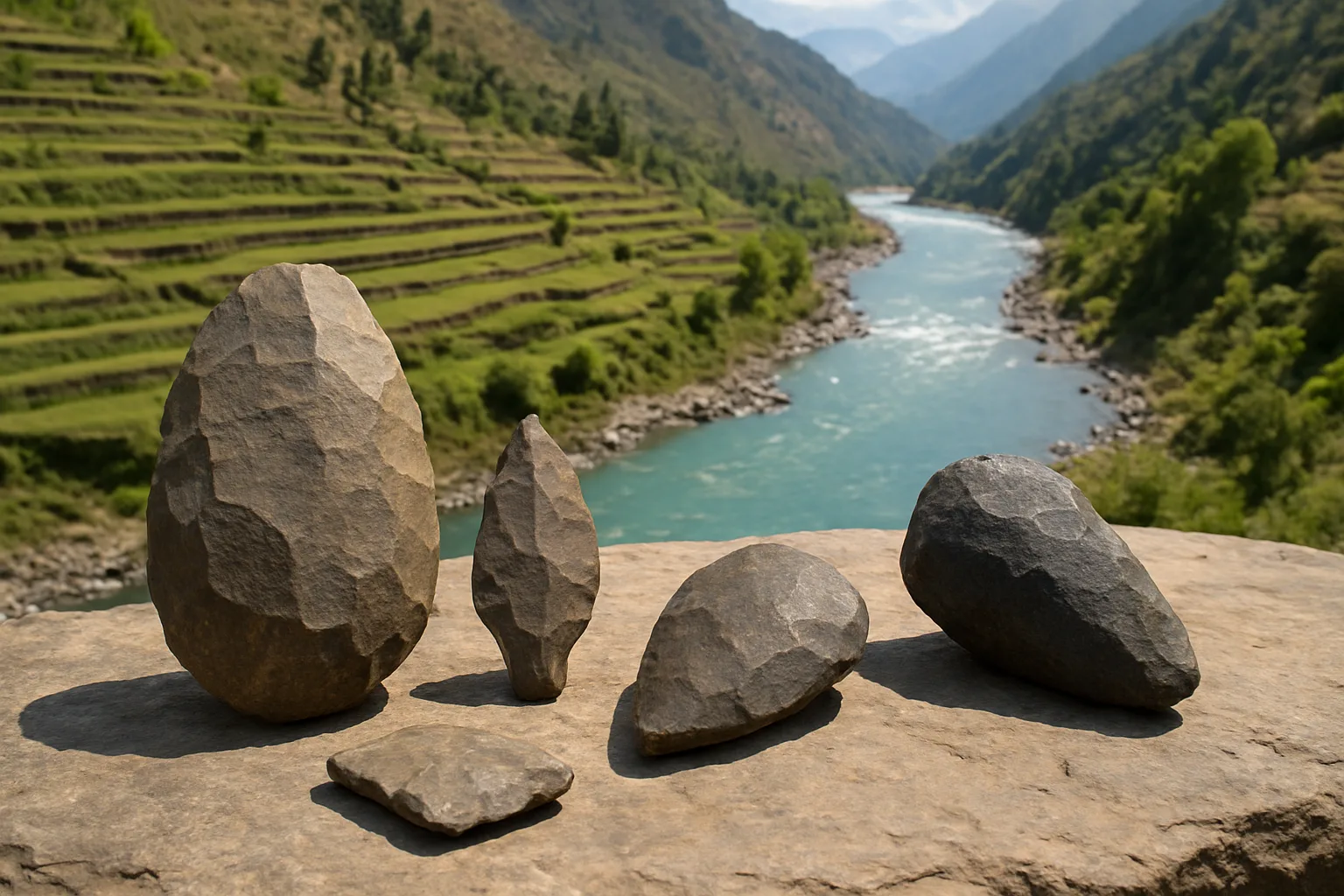
Archaeological evidence for prehistoric settlement in Kinnaur remains scant, a reflection of both the region’s rugged inaccessibility and the preservation challenges of Himalayan environments. Yet, traditions preserved in local lore and early colonial gazetteers suggest human movement through these valleys as far back as the late Stone Age, when nomadic groups followed the river’s course in search of shelter and sustenance. The flint tools occasionally unearthed along the Sutlej’s banks hint at a continuity of habitation stretching back several millennia.
By the early first millennium BCE, the valley’s climate—warmer and wetter than today—supported scattered communities of agropastoralists. They settled on sun-warmed terraces above the river, cultivating barley and millet, tending sheep and goats, and developing techniques to tame the unpredictable mountain waters. These early settlers, who some oral traditions call the Kinners or Hunas, left few permanent structures, but their memory lingers in the place-names and seasonal rhythms of Kinnaur’s villages.
From Myth to Memory: Oral Traditions and the Kinners
Kinnaur’s earliest identity is inseparable from its mythology. The Kinners—described in ancient Indian epics and Buddhist texts as celestial beings, musicians, and guardians of the Himalaya—form the mythic ancestors of the region. Local oral traditions, still narrated around winter hearths, claim descent from these semi-divine beings. In these tales, the mountains are alive, animated by spirits, and the river is both a boundary and a lifeline.
Yet, historical inference suggests that such myths encode deeper truths about migration, kinship, and adaptation to high-altitude life. The blend of Indo-Tibetan cultural markers in Kinnaur’s language, dress, and ritual points to a long process of mingling between Himalayan foragers, incoming Indo-Aryan pastoralists, and later Tibetan-speaking groups. The Sutlej, then as now, was a bridge as much as a border.
Between Empires: Early Trade and the Sutlej Corridor
The strategic location of the Sutlej Valley connected Kinnaur to the ancient trans-Himalayan trade routes. As early as the Mauryan era (circa 3rd century BCE), the valley served as a conduit for salt, wool, turquoise, and grains, linking the Indian plains to the Tibetan plateau. The river’s gorges, while perilous, provided a natural passage for traders, monks, and migrating clans.
Medieval chronicles and Tibetan Buddhist records point to the presence of itinerant traders and wandering ascetics in the valley. Their passage left an indelible mark: shrines to local deities, cairns marking ancient paths, and the fusion of religious motifs visible in Kinnaur’s wood carvings and temple art. These early exchanges seeded the pluralistic and open character that still defines Kinnauri society.
Emergence of Settlements: Villages, Belief, and Early Polities
By the first centuries CE, permanent villages began to crystallize along the Sutlej’s middle reaches. The pattern of clustered stone houses, terraced fields, and communal water channels—still visible today—reflects adaptations honed over generations. Distinct clans and extended families formed the nucleus of each hamlet, governed by elders and bound together by shared rituals honoring the land and local deities (devtas).
These settlements gradually coalesced into proto-political entities, the earliest precursors to Kinnaur’s later hill states. Regional gazetteers mention the rise of petty chieftains and clan leaders who controlled strategic bridges and passes. Their authority rested less on written law than on customary rights, negotiated alliances, and the ability to defend both people and water sources from rivals and raiders.
Spiritual Topographies: Early Belief Systems and Sacred Geography
Long before the arrival of organized Buddhism or Hinduism, Kinnaur’s spiritual life revolved around animist rituals, ancestor worship, and nature cults. Trees, stones, and peaks were venerated as abodes of the divine. The cult of the serpent-god Guga, and reverence for local protectors like Chitkul Devi or Maheshwar, reveal a cosmology rooted in the land’s dangers and gifts.
With time, these indigenous beliefs absorbed and transformed influences from Buddhist missionaries and Hindu reformers traveling the ancient trade routes. The resulting religious syncretism—visible in the unique architecture of Kinnaur’s temples, with their pagoda roofs and intricate wooden facades—underscores how early settlements navigated both spiritual and political frontiers.
From Isolation to Interconnection: The Roots of Kinnauri Identity
Even as the Sutlej Valley remained isolated by geography, its people were never wholly cut off. The interplay of trade, migration, and myth gradually forged a distinctive Kinnauri identity—neither fully Indian nor Tibetan, but a living bridge between worlds. The oral traditions, agricultural cycles, and ritual feasts that began in these early settlements endure, shaping everything from village governance to the music that echoes through mountain festivals today.
As we look ahead to the next chapter in this series, we will trace how the arrival of Buddhism and new waves of migration in the early medieval period transformed the landscape, beliefs, and political fabric of Kinnaur. The ancient roots of the Sutlej Valley are not merely relics—they remain the wellspring of Kinnaur’s resilience, adaptability, and enduring sense of place.
Previous: Ancient References to Kinnaur in Indian and Tibetan Texts
Next: The Kinners: Mythology and Identity of an Ancient People