
Series: History of Kinnaur, Himachal Pradesh, India
Phase 5: Modern Era — Part 28 of 30
This article appears within a continuing historical series that follows the western Himalayas into the modern era. With the end of princely rule and the integration into independent India, long-standing social and political patterns were reconfigured. This phase examines how development, state formation, and memory interact with inherited landscapes, shaping contemporary life while carrying forward echoes of the past.
Daybreak over the Sutlej: Where Past and Present Meet
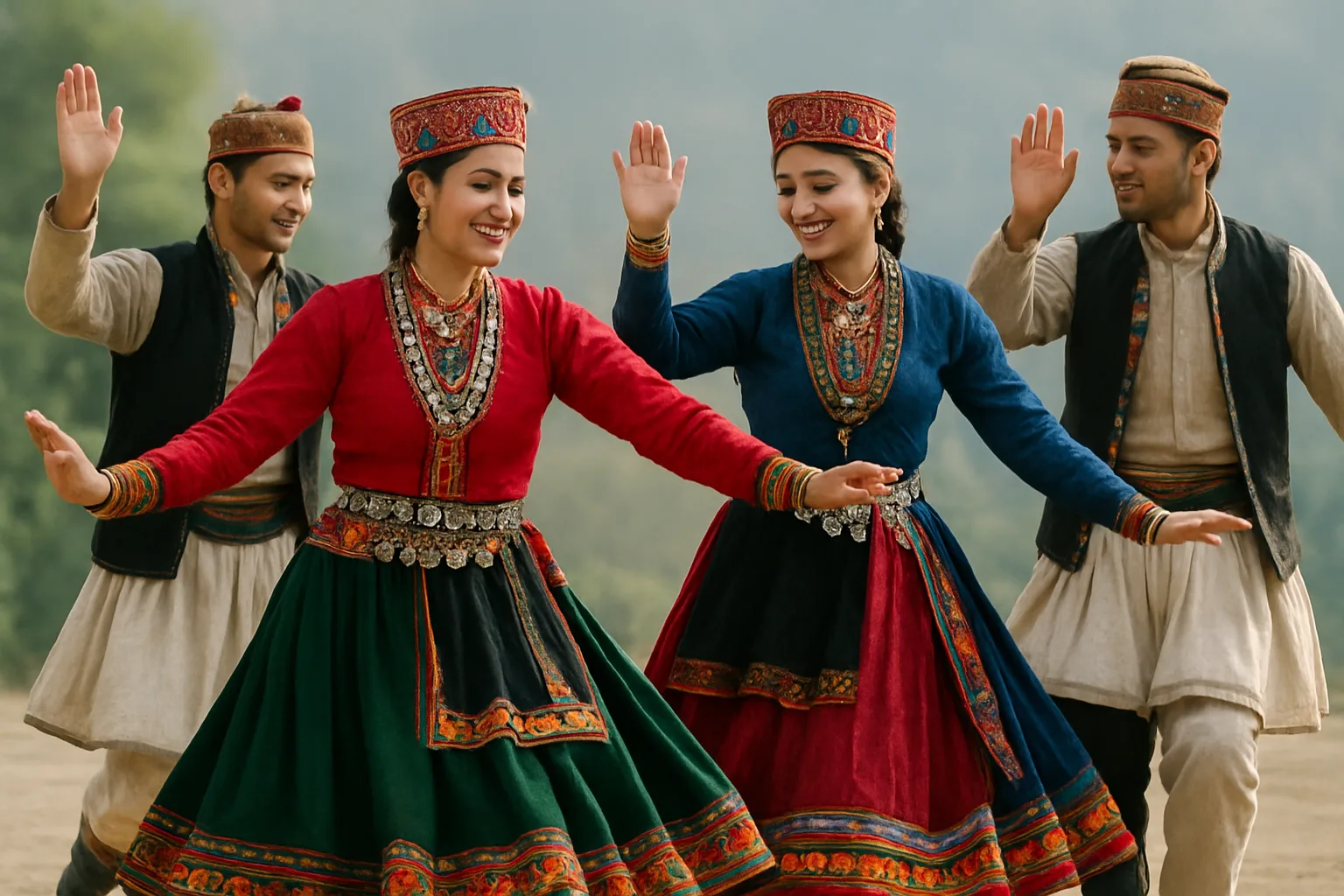
As the first golden light splinters over the snowbound peaks of Kinnaur, a low hum rises from a cluster of mud-and-stone houses. The morning is brisk; smoke from small hearths curls skyward as women in the distinctive chubas and men in woolen pang caps prepare for the day. This high-altitude corner of Himachal Pradesh, cradled between Tibet and the Indian plains, awakens to rituals as old as the mountains themselves. Here, every sunrise is a subtle negotiation between the ancient and the modern, and the very air carries the weight of tribal memory.
Kinnaur’s Historical Setting: Remote, Yet Connected
While Kinnaur’s valleys can seem isolated, they have never been untouched by the world beyond. For centuries, the region served as a bridge between the Indian subcontinent and the trans-Himalayan plateaus. The Sutlej River, Kinnaur’s lifeline, carved not only its valleys but also ancient caravan routes that brought salt, wool, and stories from the west and east. By the time the earliest British gazetteers chronicled these lands in the 19th century, Kinnaur’s tribal culture was already an intricate blend of local tradition and foreign influence.
Yet, it is important to distinguish between the swirling oral myths—where gods, demons, and mortal ancestors mingle freely—and the threads of documented history. In Kinnaur, these two currents often run parallel, sometimes intersecting, sometimes diverging.
Oral Traditions and the World of Myth
Long before the written word found its way into these mountains, Kinnaur’s people preserved their history in song, legend, and ritual. Elders recount tales of the Kinner—semi-divine beings, said to inhabit these valleys, who danced for the gods and guarded the land. Such stories, passed from hearth to hearth, form the bedrock of Kinnauri identity. They are not merely entertainment but living frameworks for understanding kinship, territory, and the rhythms of the natural world.
Many Kinnauri villages trace their founding to mythic ancestors—heroes who tamed rivers, made pacts with mountain spirits, or crossed dangerous passes in search of grazing lands. These oral genealogies, though impossible to verify in the strictest historical sense, reveal much about how the tribal communities saw themselves: as stewards of a sacred landscape, their existence sanctioned by forces both seen and unseen.
Early Settlements and Social Structures
Archaeological findings and comparative linguistics suggest that the ancestors of today’s Kinnauris settled these valleys in waves, likely beginning in the early centuries of the first millennium CE. The earliest communities clustered around river terraces and high pastures, developing sophisticated systems of irrigation and terraced agriculture. They spoke dialects broadly related to the Tibeto-Burman family, distinct from the Indo-Aryan languages of the plains, and organized themselves into extended clans known as rung or khandan.
Life revolved around communal granaries, sacred groves, and the devta institutions—local deities whose oracles still mediate disputes and guide festivals. These structures, rooted in both practicality and belief, fostered a strong sense of collective identity. Even as political boundaries shifted and rulers changed, the internal organization of Kinnauri society remained remarkably resilient.
Beliefs, Faiths, and the Mosaic of Practices
Religious life in Kinnaur is a tapestry woven from many threads. The old animist practices—worship of nature spirits, stones, and rivers—persist alongside more formalized Hindu and Buddhist traditions. The region is renowned for its syncretism: in many villages, the same festival honors both the ancient devtas and Buddhist lamas. Oral traditions recount how Padmasambhava, the legendary Buddhist saint, is said to have crossed these valleys, leaving behind relics and spiritual legacies.
Historical inference suggests that such blended practices emerged over centuries of contact with neighboring kingdoms—Ladakh to the north, the Bashahr state to the south, and, across the passes, the great monasteries of Tibet. Yet, the spiritual autonomy of Kinnaur’s tribes remained intact, with local councils and hereditary priests maintaining authority over both worldly and otherworldly affairs.
Trade, Conflict, and the Emergence of Hill States
Kinnaur’s location on the ancient Hindustan-Tibet Road made it a coveted prize for many regional powers. Caravans laden with salt, wool, borax, and dried apricots traversed perilous routes, stopping at fortified villages that doubled as trading posts. The economic and strategic value of these passes brought Kinnaur into the orbit of powerful neighbors—first the petty chieftains of the western Himalayas, later the expanding Rajput and Mughal polities, and eventually the British colonial administration.
British chronicles, such as the 1883 Gazetteer of the Simla District, describe Kinnaur as a mosaic of semi-autonomous tribal communities, loosely affiliated with the princely state of Bashahr. Political allegiance was often negotiated rather than imposed, with local headmen balancing the demands of external rulers against the prerogatives of their kin groups. It was during the colonial period that the term “tribal” began to acquire new, sometimes pejorative, meanings—yet for Kinnauris themselves, it always signified a proud heritage of independence and adaptability.
Modernity and the Challenge of Identity
The 20th century brought roads, schools, and new religious influences to Kinnaur. With independence, and later the creation of Himachal Pradesh as a state of India, tribal communities found themselves both protected and challenged by new policies. The Scheduled Tribes designation aimed to safeguard their traditional rights, yet the pressures of migration, tourism, and economic change have tested the resilience of old identities.
Younger generations, educated in distant cities, return home with different dreams. Yet, in many hamlets, festivals like Phulaich and Lavi fair still draw the entire community together. The devta temples remain at the heart of village life, and Kinnauri language and dress are cherished markers of belonging.
Echoes of the Past in Today’s Kinnaur
As dusk settles over the valleys, the sound of drums and chanting drifts from a temple courtyard. The world outside moves quickly, but in Kinnaur, the past is never far away. Tribal identity here is not a relic, but a living, evolving force—rooted in story, forged in adversity, and continually reshaped by new realities. The struggle to preserve these ancient ways in a rapidly changing world is ongoing, and it is a story that continues to unfold in the next part of our series, as modernity and tradition converge in unexpected ways.
Previous: Environmental Challenges in a Fragile Himalayan Region
Next: Oral Traditions and Folklore of Kinnaur