
Series: History of Kangra, Himachal Pradesh, India
Phase 4: British Period — Part 17 of 30
This article is part of a wider series tracing the transformation of the western Himalayas under colonial influence. As British authority extended into the hills, existing political systems were restructured through treaties, administration, and new forms of governance. This phase considers how colonial rule reshaped society, economy, and space while leaving lasting imprints on local identity.
The Dawn of a New Order: Kangra, 1846
It is the spring of 1846. In the shadow of the Dhauladhar mountains, the ancient town of Kangra reverberates with a new and unfamiliar rhythm. British officers, their uniforms crisp and speech clipped, convene beneath the looming fort—once the seat of Rajput pride, now a silent witness to another regime’s arrival. Local elders, some in stoic silence, others in hushed negotiation, watch as the Union Jack replaces royal standards. The valley, with its centuries-old customs and layered histories, stands at the threshold of a profound transformation.
From Rajput Rule to British Annexation
Kangra’s legacy as a political and cultural center stretches back centuries, punctuated by the rule of the Katoch dynasty and the rise and fall of neighboring hill states. Oral traditions, passed down in local dialects, speak of legendary heroes and divine interventions, yet the chronicles and regional gazetteers provide a more measured account: Kangra’s fort was besieged and coveted, its rulers both fierce and pragmatic.
The early 19th century brought seismic change. The valley, once a battleground among local chieftains, the Sikh empire, and marauding invaders, found itself swept into the expanding British sphere after the First Anglo-Sikh War. The Treaty of Lahore (1846) signaled not just a shift in borders, but the imposition of a new administrative vision—foreign in language, method, and intent.
The Machinery of Colonial Administration
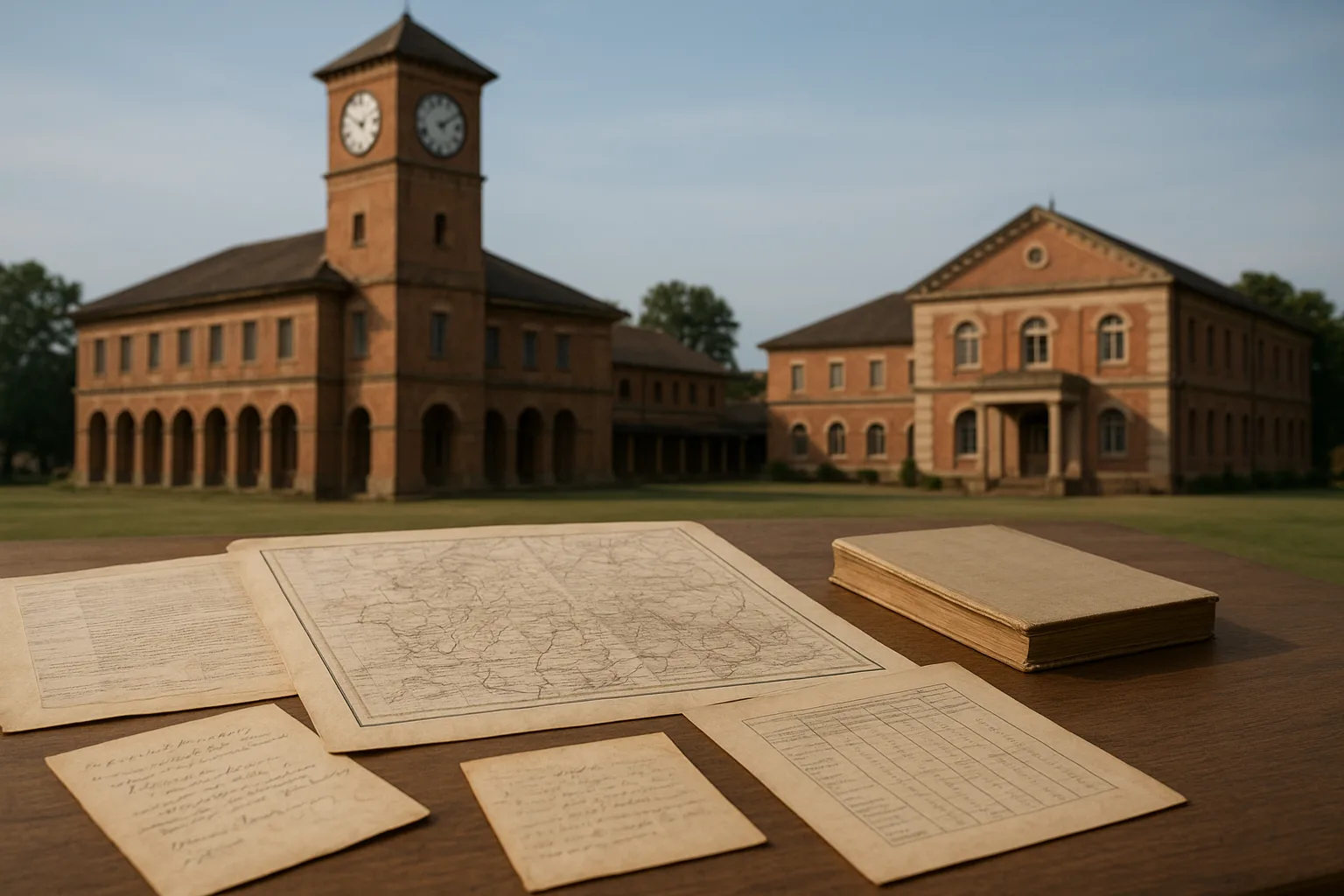
In the months that followed annexation, British officials moved with methodical precision. The region, previously administered through a mosaic of hereditary jagirdars (landholders), village headmen, and princely intermediaries, was now subject to the direct rule of the Punjab Province. The Collector—an unfamiliar figure to most locals—became the face of the new order, his word carrying the distant weight of Calcutta and London.
District boundaries were redrawn, revenue records meticulously compiled. The British introduced the patwari system, deploying village accountants to measure, record, and tax land. Documentation, often in Persian or Urdu scripts, now acquired an English gloss; the old oral bargains gave way to notarized agreements and stamped papers. For many in Kangra, whose ancestral rights were woven into memory and custom, these changes brought both confusion and anxiety.
Law, Order, and the Recasting of Justice
Justice, once dispensed in local assemblies or under the auspices of Rajput rulers (whose legitimacy was grounded in both tradition and spiritual sanction), now passed to magistrates trained in foreign legal codes. The colonial judiciary promoted uniformity, but at the cost of local nuance. While British law promised impartiality, it rarely accounted for the region’s intricate social fabrics or customary practices.
Criminal and civil disputes, once resolved in the panchayat or through mediation, entered new courtrooms built in the administrative center of Dharamshala. The shift was profound: the authority of the village, the council of elders, and the symbolic justice of the Raja gave way to paperwork, witnesses, and the stamp of the colonial state.
Economic Realities: Land, Labor, and Trade
Colonial administration brought new economic challenges and opportunities. The British, keen to maximize revenue, conducted detailed land surveys and reclassified property rights. For some—especially the emergent class of loyal landholders—this meant new avenues for wealth and influence. For others, particularly small cultivators and those who could not substantiate their claims, dispossession and hardship followed.
The region’s famed tea gardens, first planted under British supervision, began to transform Kangra’s landscape and connect it to global markets. Yet these economic shifts were uneven. Traditional crafts and local markets persisted, but the valley’s integration into imperial trade networks introduced both competition and vulnerability. The construction of roads, and later the narrow-gauge railway, further linked Kangra to the wider world while eroding some of its insularity.
Communities in Transition: Everyday Life under the Raj
Beneath the surface of administrative reports and official proclamations, daily life in Kangra adapted in subtle and sometimes contradictory ways. The region’s diverse communities—Brahmins, Rajputs, artisans, traders, and pastoralists—each navigated the new order differently. Some families sent their sons to English-medium schools, hoping to secure positions in the colonial bureaucracy. Others clung fiercely to local customs, wary of outsiders and the erosion of ancestral authority.
Religious institutions, too, adjusted. Ancient temples remained centers of devotion, but the arrival of Christian missionaries and new educational institutions altered the social landscape. Oral traditions persisted, but now coexisted with printed books, government notices, and the distant echo of imperial policies.
Resistance, Accommodation, and the Limits of Empire
British rule in Kangra was never uncontested. While open rebellion was rare after the initial annexation, subtle acts of resistance persisted—from tax protests to the slow, deliberate preservation of local languages and festivals. The devastating 1905 earthquake, which destroyed much of Kangra town, exposed both the reach and the limits of colonial administration: British relief was swift, but so too was the community’s reliance on age-old networks of aid and solidarity.
By the early 20th century, nationalist ideas began to circulate, carried by educated youth and itinerant preachers. The valley, once remote, was now implicated in the wider currents of Indian awakening. The colonial administration, for all its power, could not erase the deep memory of the land or the pride of its people.
Enduring Legacies: Kangra’s Colonial Past and Modern Identity
The imprint of colonial administration remains etched in Kangra’s institutions, architecture, and collective memory. The district headquarters, the layout of roads, and the prominence of certain families all bear traces of British rule. Yet the valley’s resilience—its capacity to adapt, resist, and reassert its identity—endures.
As Kangra navigates the complexities of the present, its colonial past is neither a distant shadow nor a faded relic. It is a living legacy, shaping debates over land, justice, and governance. In the next installment, we will trace the currents of early reform and resistance in Kangra—exploring how the seeds of modern political consciousness first took root in these storied hills.
Previous: British Annexation of Kangra
Next: The 1905 Kangra Earthquake