
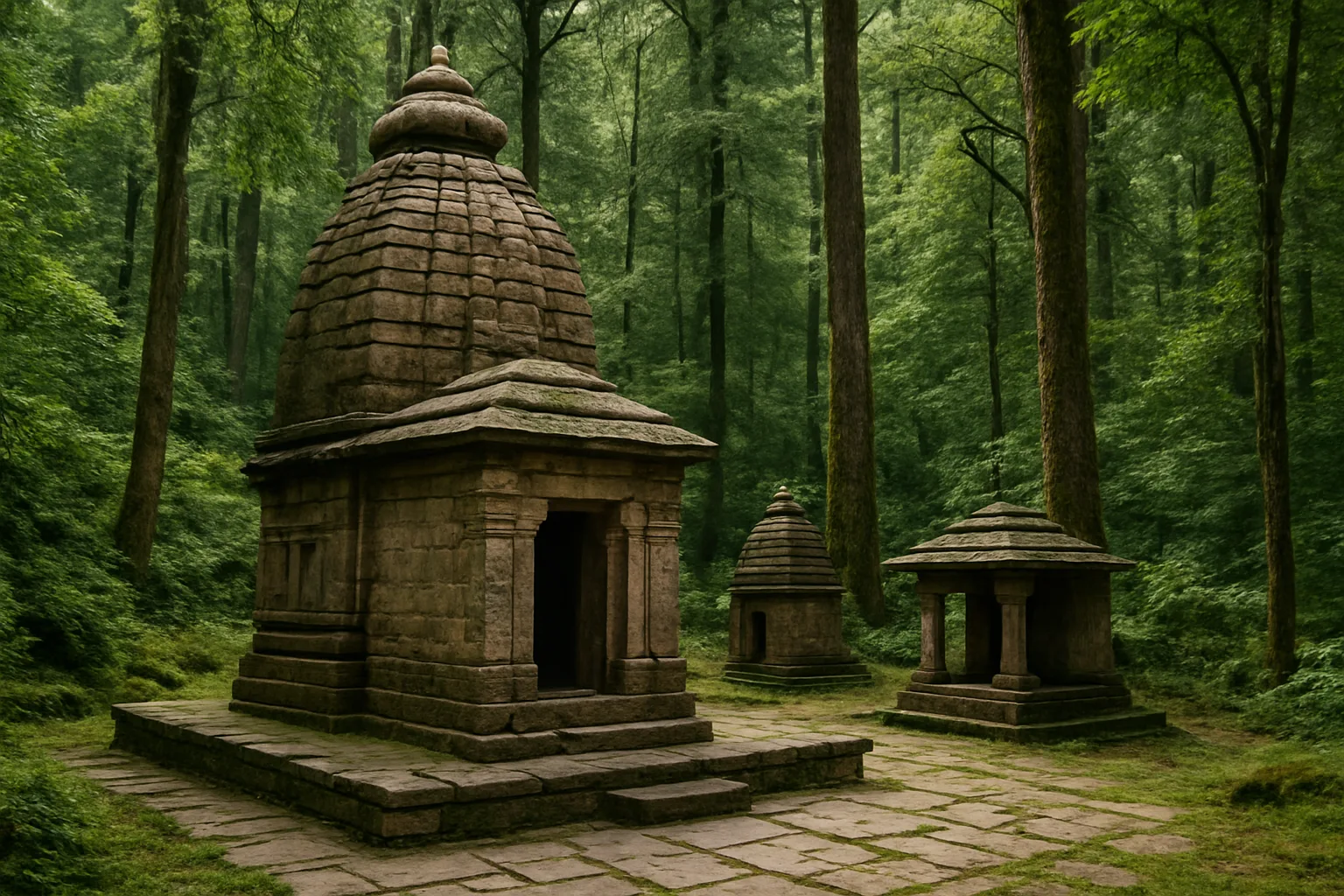
Series: History of Hamirpur, Himachal Pradesh, India
Phase 1: Ancient & Early Roots — Part 5 of 30
This article is part of a broader historical series exploring the earliest layers of human presence in the western Himalayas. Beginning with landscape, belief, and early patterns of movement and settlement, the series traces how communities adapted to mountainous environments long before formal states or written records emerged. These foundational centuries shaped cultural memory, local traditions, and relationships with the land that would endure through later periods of change.
At Dawn in the Mist: An Ancient Hilltop Gathering
Imagine a brisk dawn centuries ago, the air heavy with mist rolling off the Shivalik foothills. On a narrow ridge above the Sutlej’s tributaries, a small group gathers around a cluster of stones. Their hands raise offerings of millet, honey, and wildflowers. The silence breaks only for a soft incantation, words carried across generations, echoing the hopes and fears of a people whose world is shaped by river, forest, and stone.
This is not just a scene from distant memory. It’s the spiritual heartbeat of early Hamirpur—a region whose religious practices were inseparable from its land, its tribal roots, and the slow emergence of communities destined to leave their mark on the Himalayan foothills.
Cradle of Cultures: Hamirpur’s Early Settlements
Before Hamirpur became the administrative center recognized today, its hills were home to early settlers drawn by fertile valleys and strategic ridges. Archaeological finds across Himachal Pradesh hint at human presence here as early as the Neolithic age. While direct evidence within modern Hamirpur’s boundaries is sparse, nearby sites and oral traditions suggest that by the first millennium BCE, pastoral and agricultural communities thrived along the Beas and its tributaries.
These groups—often identified in local lore as descendants of the Koli, Gaddi, and Dagi communities—built their lives around the rhythms of the seasons. Their settlements clustered near springs and sacred groves, where the boundaries between daily life and the spiritual world blurred. Myths and regional tales, preserved in the dialects of Hamirpur’s villages, recall a landscape alive with ancestral spirits and supernatural forces.
Oral Traditions and the World of the Divine
Distinct from later temple-based religions, the earliest spiritual practices here were animistic and local. Oral traditions—passed quietly from grandmother to child—describe deotas: guardian spirits believed to dwell in stones, trees, and streams. Each hamlet had its own tutelary deity, honored at simple altars made of unhewn rock or beneath the oldest tree in the village.
Folklore speaks of ritual dances, animal sacrifices, and seasonal festivals marking sowing and harvest. These ceremonies were less about dogma and more about forging a connection with the land and its unseen powers. The stories collected in the Himachal Pradesh State Gazetteer often reference these early practices as the spiritual bedrock of the hill people, distinct from the formal Vedic traditions spreading in the plains.
Influences from the Plains: Trade, Travel, and Syncretism
Hamirpur never existed in isolation. By the first centuries BCE and CE, trade routes threaded through the valleys—linking the region to the prosperous centers of Kangra, Una, and the riverine markets further south. Traders brought not only salt, grain, and cloth, but also new ideas.
With these exchanges, the region saw the slow introduction of Vedic and later Hindu practices. Carved stones with early Brahmi inscriptions, found in adjacent districts, hint at the presence of wandering ascetics and mendicants. Over generations, the local deotas were woven into the expanding Hindu pantheon. Shrines that began as weathered stones gradually became sites for more elaborate worship, a process chronicled in regional histories and echoed in temple legends recounted by the bards of Hamirpur.
Emergence of Hill States and Political Patronage
By the medieval period, as nascent hill states like Sujanpur and Nadaun took form, religious practices began to reflect the shifting political landscape. Local rulers, seeking legitimacy, endowed shrines and patronized festivals that linked their authority to the divine. These acts are documented in early chronicles and copper plate inscriptions preserved in Himachal’s archives.
The line between religion and politics blurred. State-sponsored temples, often dedicated to Shiva or local goddesses, rose alongside ancient deota sites. Yet, even as formal rituals became the norm among the elite, village traditions held stubbornly to their roots. The annual fairs and seasonal rites, described in the Imperial Gazetteer of India, reveal a region negotiating between ancient customs and emerging statecraft.
Continuity and Change: Sacred Spaces Endure
Despite centuries of change, the spiritual geography of Hamirpur retains deep echoes of its earliest past. Many contemporary temples stand on ground long considered sacred, their annual melas and processions recalling rituals far older than the structures themselves. Oral epics—sung during night vigils—still invoke local spirits alongside the great gods of Hinduism, a testament to the enduring dialogue between memory and faith.
Families who trace their lineage to the first hill settlers continue to honor ancestral deities with offerings of grain and milk. In the village squares, elders recount tales of miracles at nameless stones and mysterious trees—a living thread connecting today’s Hamirpur to the spiritual imagination of its forebears.
Reflections: Ancient Roots in Modern Hamirpur
The religious tapestry of Hamirpur is woven as much from silence and shadow as from temple bells and festival drums. The region’s early practices—shaped by geography, migration, and the slow pulse of history—still shape how communities understand their place in the world. In every prayer whispered at a roadside shrine, in every story told beside the hearth, the memory of those first hilltop gatherings endures.
As we turn to the next chapter in this series, we will explore how the rise of powerful regional kingdoms and the arrival of new faiths transformed the social and political fabric of Hamirpur, leaving legacies that reach far beyond religion alone.
Previous: Hamirpur in Ancient Trade and Migration Routes
Next: Rise of Local Hill Chieftains in Medieval Hamirpur