
Series: History of Solan, Himachal Pradesh, India
Phase 1: Ancient & Early Roots — Part 5 of 30
This article is part of a broader historical series exploring the earliest layers of human presence in the western Himalayas. Beginning with landscape, belief, and early patterns of movement and settlement, the series traces how communities adapted to mountainous environments long before formal states or written records emerged. These foundational centuries shaped cultural memory, local traditions, and relationships with the land that would endure through later periods of change.
Mist in the Valleys: Dawn Rituals Among the Hills
As the sun pierced through the rolling mists above Solan’s forested slopes thousands of years ago, a small gathering of villagers stood in silent reverence. This was not yet a kingdom—no palaces crowned the hills, nor had dynasties carved their stories into stone. Instead, the people of these valleys turned to the earth, the sky, and the ancient trees. With hands cupped, they offered grains, flowers, and water to unseen forces, their voices blending with the calls of birds. The world here was animated by spirits, ancestors, and the rhythms of the land itself.
The Ancient Landscape: Solan Before Borders
Before Solan was mapped or named, its terrain was dense with cedar and pine, nourished by the monsoon and scored by rivers like the Giri and Ashwani. Archaeological surveys suggest that people have dwelled in this region since the Neolithic era, drawn by its sheltering forests and abundant springs. The earliest settlers left few permanent marks, but their legacy lies buried beneath layers of soil: stone tools, ash pits, and fragments of pottery. These traces hint at a society deeply attuned to its environment, whose rituals were shaped by the cycles of weather, harvest, and migration.
Nature Worship: Spirits of Earth and Sky
For the earliest inhabitants of what would become Solan, the world was alive with unseen forces. Mountains were not just landforms; they were guardians. Rivers carried blessings and warnings. Trees—especially the ancient deodar and oak—stood as living bridges between humans and the divine.
At the center of their spiritual life was animism: the belief that every rock, tree, and stream possessed a spirit. Seasonal festivals marked the changing of the rains, the ripening of fruit, and the passage of wild herds. Villagers gathered at sacred groves, where elders recited stories of the land’s origins. Offerings of wild honey, grain, and flowers were left at the roots of towering trees or beside bubbling springs. In these acts, the people sought harmony with forces far greater than themselves.
The Rise of Sacred Spaces: Groves, Stones, and Springs
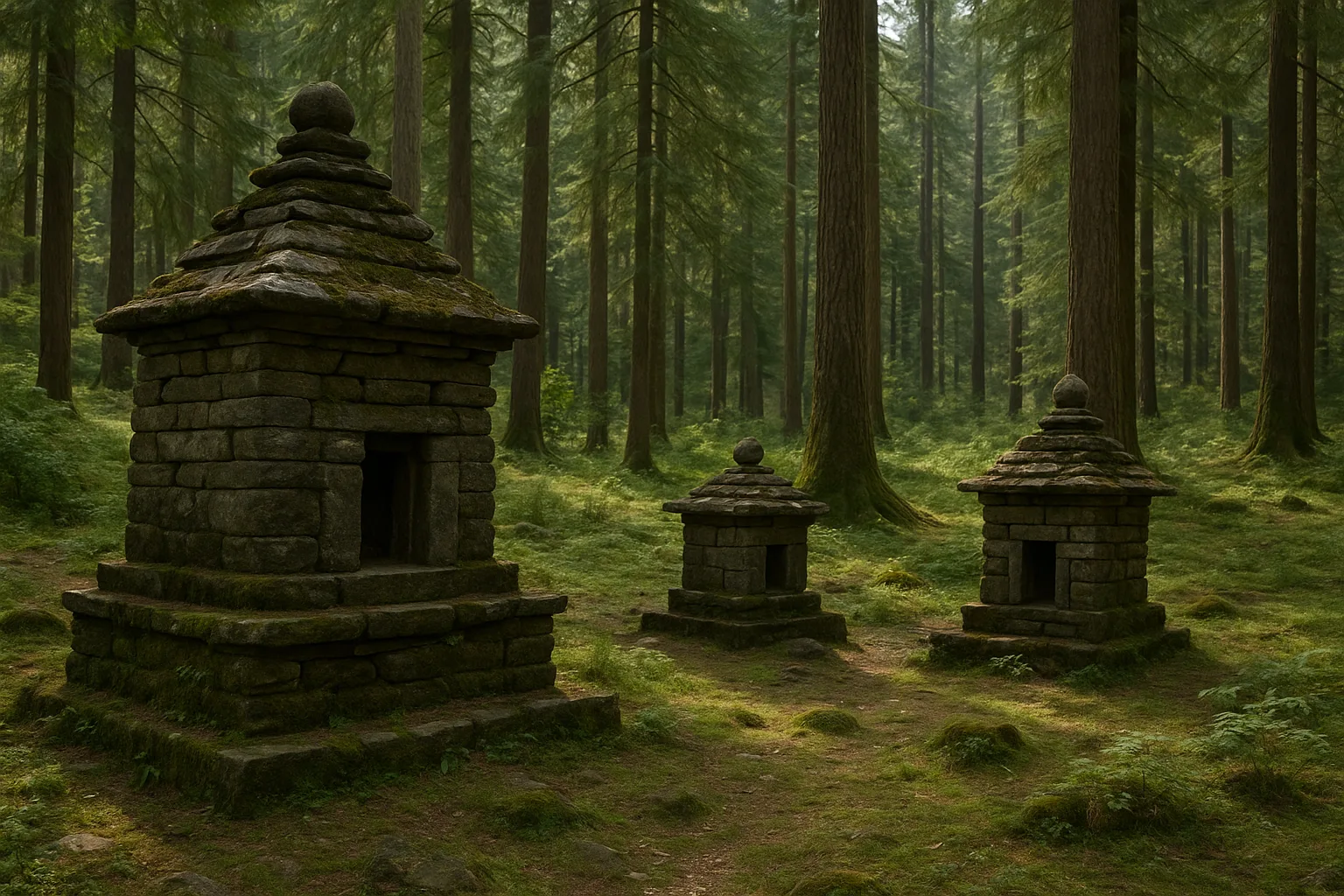
Even before temples dotted Solan’s hills, certain places drew people again and again. These were not grand structures, but natural sites considered holy by generations. A solitary boulder on a high ridge, a clearing where lightning had split an ancient tree, a spring that never ran dry—these became centers for ritual and community decisions.
Oral traditions recall how these sites were chosen: sometimes through dreams, sometimes after rare natural events. Over time, stones were arranged in circles, and simple wooden totems marked the boundaries of the sacred. The deodar groves above present-day Kandaghat and the perennial springs near Barog became gathering points for neighboring settlements, places where disputes were settled and alliances forged in the presence of the spirits.
The Role of Shamans and Healers
In these early communities, certain individuals stood out for their perceived closeness to the supernatural: shamans and healers. These men and women were keepers of knowledge—of herbs, of omens, and of the rituals that bound people to place. When illness struck or the rains failed, it was to these figures that villagers turned. Using chants, rhythmic drumming, and herbal smoke, shamans sought to drive away misfortune or seek guidance from ancestors.
Sometimes, their rituals included trance dances that lasted through the night, the participants’ movements echoing the turning of the stars above. Stories tell of healers who could interpret the patterns of moss on rocks or the calls of jungle birds, seeing in them signs from the unseen world. Their authority was not inherited, but earned through years of apprenticeship and visions.
Arrival of Early Vedic Influences
By the late second millennium BCE, new ideas began filtering into the hills from the plains below. The spread of early Vedic culture brought hymns, fire rituals, and a pantheon of deities. While the people of Solan did not abandon their old ways, they gradually adapted to these influences. Local gods and spirits were woven into the tapestry of Vedic worship, their shrines sometimes coexisting with the new fire altars (yajnas).
Priests—sometimes itinerant, sometimes settled—began to appear alongside traditional shamans. Sanskrit chants mingled with older songs, and the rituals marking birth, marriage, and death assumed new forms. Yet, even as Vedic practices took root, the reverence for sacred groves and springs persisted, creating a unique spiritual synthesis that set Solan apart from both the plains and the higher Himalayas.
Women, Ritual, and Everyday Spirituality
Much of early religious life in Solan unfolded within homes and hearths, guided by women. From teaching children to respect the spirits of hearth and field to leading daily offerings, women shaped the spiritual landscape in countless subtle ways. They wove garlands for sacred trees, recited lullabies that carried ancestral memories, and marked the seasons with household rituals. Some oral traditions remember wise women who, during times of crisis, led entire villages in rites for rain, fertility, or protection.
These practices ensured that spirituality was not confined to public gatherings but lived and breathed in the rhythms of daily life. The sense of kinship with the land, and the moral codes it inspired, endured even as new religious forms arrived.
Festivals and Communal Bonds
Seasonal festivals anchored the early calendar. The arrival of the monsoon was met with dances, storytelling, and feasting. Harvest time brought thanks to the spirits of field and forest, with communal meals and the sharing of grain. These gatherings reinforced social bonds, resolved disputes, and reaffirmed the connection between people and place.
Some of these ancient festivals survived, in altered form, into the modern era—echoes of a time when the sacred and everyday were inseparable. The memory of these communal rites lingers in Solan’s contemporary fairs and rituals, even as their meanings have shifted.
Lasting Imprints: The Spiritual Heritage of Solan
The early religious practices of Solan—shaped by landscape, climate, and memory—laid the groundwork for the region’s distinctive identity. As later kingdoms rose and fell, as temples replaced groves and written texts supplanted oral lore, the spirit of those first rituals remained. Even today, the people of Solan honor sacred springs, gather beneath ancient trees for festivals, and remember the stories of their land’s oldest inhabitants.
This living heritage reminds us that before there were borders or kings, there was reverence for the land—a reverence that continues to shape Solan’s sense of community, resilience, and belonging. The rituals of the distant past still echo in the rhythm of the hills, inviting each new generation to listen, remember, and give thanks.
Previous: Solan’s Position in Ancient Trade and Migration Routes
Next: Hill Chiefs and Local Rule in Medieval Solan