
Series: Finance for Kids
Phase 13: Resources, Environment & Society — Part 150 of 166
Understanding Donations and Waste
Donations are a wonderful way to help others while taking care of our planet. When we donate things we no longer need, we can reduce waste and give items a second life. This helps our environment and supports people in need.
How Donations Reduce Waste
When we throw away items like clothes, toys, or furniture, they often end up in landfills. Landfills can be harmful to the environment because they take up space and can produce harmful gases. By donating instead of throwing away, we can:
- Keep items out of landfills.
- Help people who may not have the money to buy new items.
- Encourage others to donate as well.
Step-by-Step Tips for Donating
Here are some easy ways to get started with donations:
- Sort Your Items: Go through your belongings and find things you don’t use anymore. This can include clothes, toys, books, or kitchen items.
- Check the Condition: Make sure the items are in good shape. If they are broken or damaged, consider repairing them or recycling instead.
- Find a Donation Centre: Look for local charities, shelters, or community groups that accept donations. Many places have specific needs, so it’s good to check what they are looking for.
- Make a Plan: Set a date to drop off your donations or see if the charity offers pick-up services. Mark it on your calendar!
- Spread the Word: Encourage friends and family to donate too! You can make it a fun activity to do together.
Benefits of Donating
Donating has many benefits for both the community and the environment. Here are a few:
- Helping Others: Your donations can help families who need clothes, food, or other essentials.
- Creating a Sense of Community: When we donate, we show we care about our neighbours and our community.
- Reducing Waste: Fewer items in landfills mean a healthier planet for everyone.
Common Myths About Donations
There are some common myths about donations that can make people hesitant. Let’s clear those up!
- Myth 1: Donations are only for old or damaged items. Truth: You can donate gently used items that are still in good condition!
- Myth 2: Donations don’t really help anyone. Truth: Donations make a big difference in people’s lives, providing them with resources they need.
- Myth 3: Donating is too much work. Truth: Donating can be as simple as setting aside items in a box and dropping them off at a local charity.
Involving Kids in the Donation Process
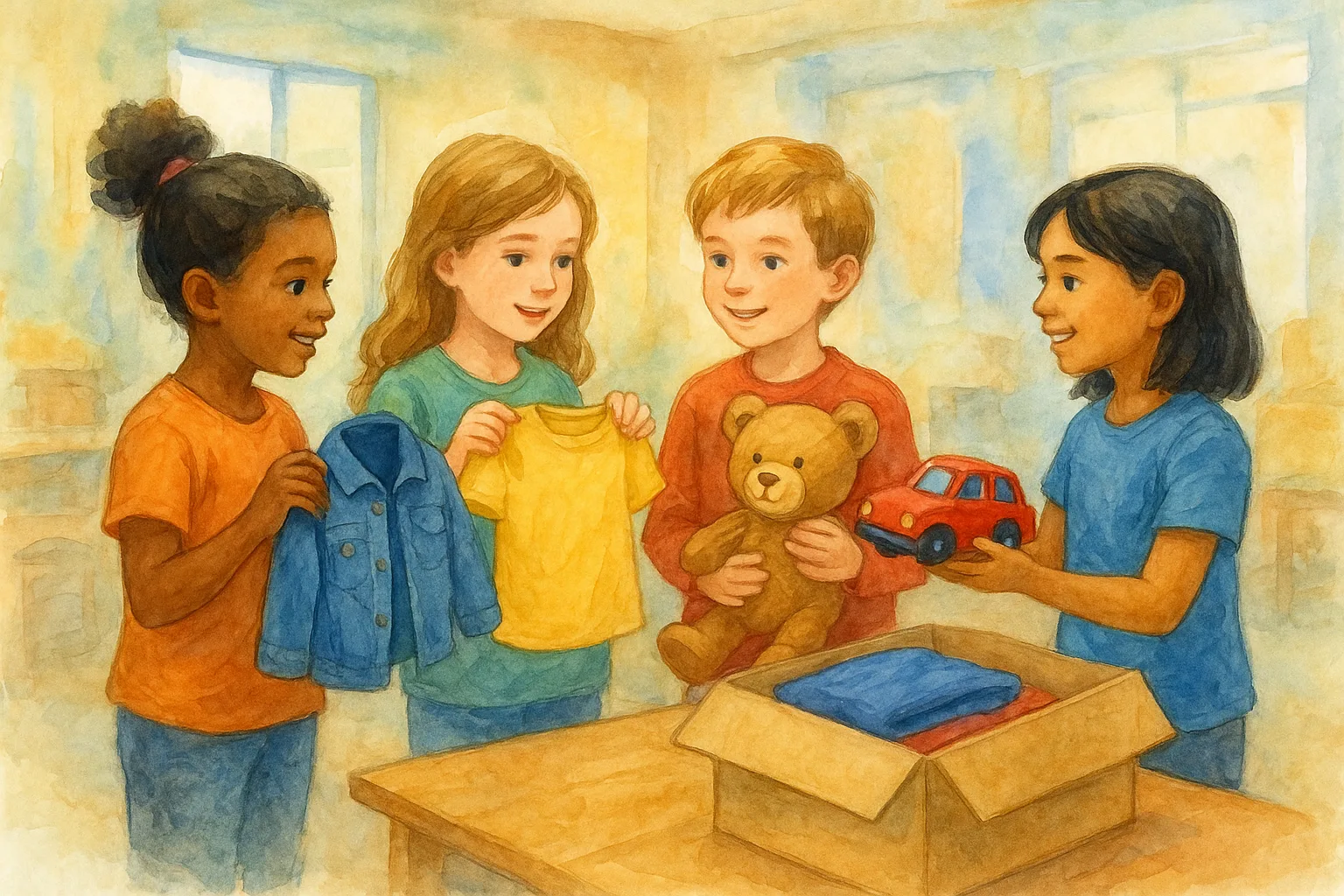
Getting kids involved in the donation process is a great way to teach them about generosity and the importance of caring for the planet. Here are some fun ways to do this:
- Make it a Family Activity: Set a day for the whole family to go through their items together. This can also be a great time to discuss why donating is important.
- Set Goals: Create a goal of how many items you want to donate. Kids will enjoy working towards a target!
- Share Stories: Talk about how donations can change lives. Sharing stories of people who have benefited from donations can inspire kids to get involved.
Conclusion
Donations are a simple yet powerful way to reduce waste and help our communities. By teaching children about donating, we can instil values of kindness and responsibility towards the environment. Remember, every little bit counts!
This article provides general educational information only and is not financial advice. Always seek guidance from a qualified professional for personal financial decisions.
Previous: Teaching Kids to Repair Instead of Replace Items
Next: Connecting Minimalism to Financial Wellbeing