
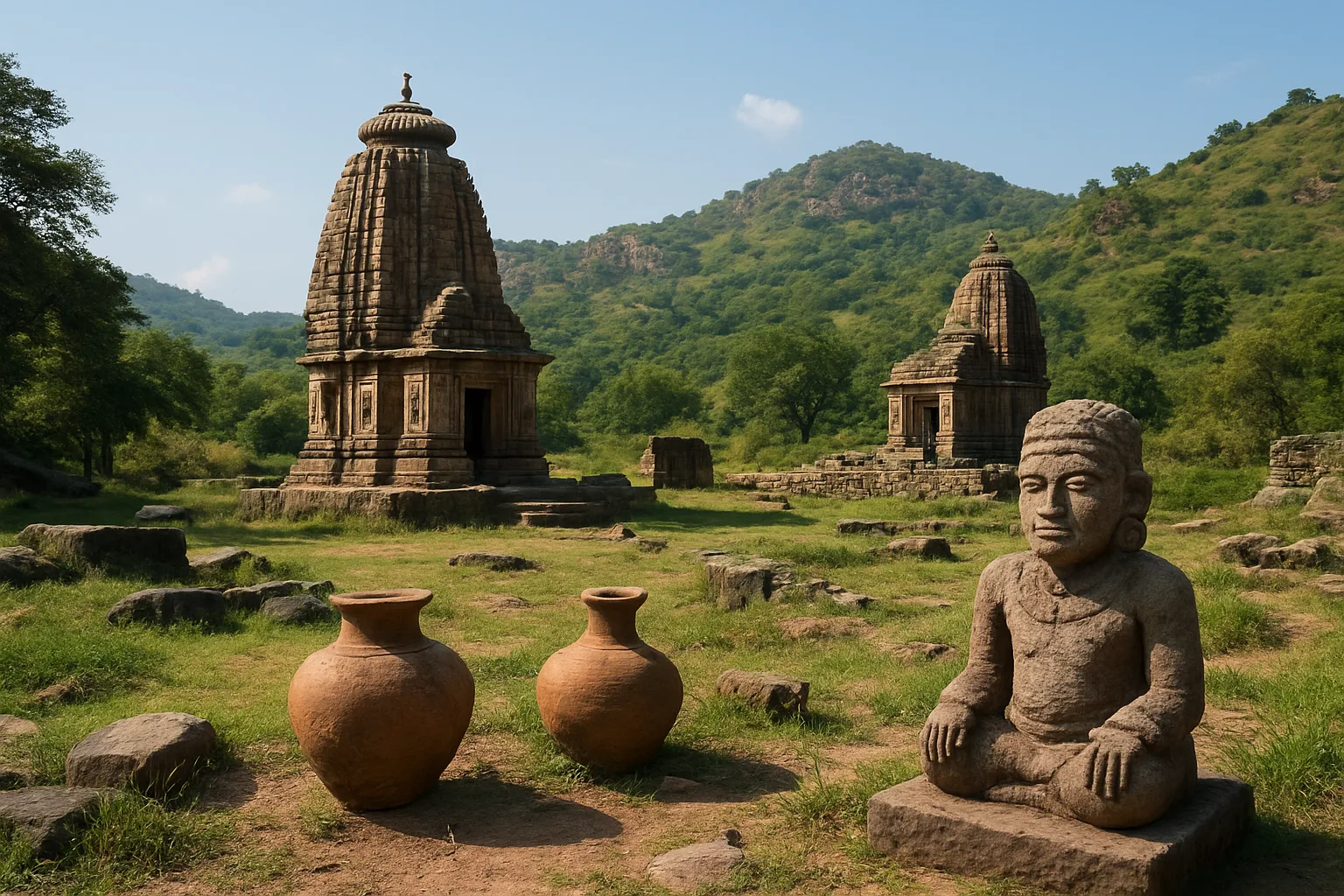
Series: Bilaspur Himachal History
Phase 1: Ancient & Early History — Part 2 of 29
Long before the highways and hydel dams, Bilaspur was a tapestry of dense forests, wandering sages, and hilltop fortresses. Imagine: a dusk centuries ago, when the mists clung to the Satluj gorge and the call of a temple bell echoed across the valleys. In the flicker of a fireside, the elders would whisper stories—of legendary ancestors, of battles lost to the river, and of a destiny tied to the great currents of ancient India. The hills, it was said, remembered everything, even if people forgot.
The Land Before Names
Before Bilaspur had its name, the region was a patchwork of wild woods and scattered hamlets, home to early communities who hunted, gathered, and, in time, farmed the riverbanks. Archaeological traces—microlithic tools, pottery shards, and burial mounds—hint at continuous habitation for thousands of years. These clues suggest that by the second millennium BCE, the hills above the Satluj were no blank slate, but a crossroads for tribes and travelers journeying between the high Himalayas and the plains below.
Echoes of Vedic India
By the time Vedic civilization flourished on the northern plains, the hills of Bilaspur were already woven into wider networks. Ancient hymns and later epics speak of the Kiratas and other hill peoples—sometimes as mysterious others, sometimes as allies or rivals. The forests above the Satluj, thick with sal and chir pine, sheltered ascetics and small clans. As the Vedic age gave way to the Mahajanapada period (6th century BCE onward), neighboring regions like Trigarta and Kuluta (later Kullu) emerged as polities. Bilaspur, then, was a liminal zone—its people shaped by the great faiths and fears moving through the subcontinent, but never quite subsumed by them.
Chieftains and the Early Hill Kingdoms
The early centuries CE saw the hills organize under local rajas—warrior-chieftains whose legitimacy rested on both lineage and the ability to defend their people. Oral tradition speaks of the Chandel Rajputs, said to have migrated from Chanderi in central India, establishing roots in the rugged terrain. They built mud-fortresses and simple shrines, and the future Bilaspur would grow from one such stronghold. It was an age of shifting alliances, as hill rulers paid tribute to, or resisted, the great empires rising in the plains—from the Mauryas and Guptas to the Kushans whose sway extended deep into the Himalayan foothills.
The Satluj: Lifeline and Barrier
The Satluj river was the region’s great divider and unifier. Its unpredictable floods both nourished the fertile banks and claimed entire settlements. For centuries, its swirling waters formed the southern boundary of the hill kingdoms, a natural defense against incursions from the Punjab plains. Local lore tells of rajas who, unable to cross the river in monsoon, watched helplessly as rivals raided their lands. The river was feared and revered in equal measure—a force that shaped every aspect of life in ancient Bilaspur.
Encounters with Empires
Though often beyond the direct control of imperial dynasties, the hills of Bilaspur felt the tremors of distant power struggles. As the Gupta Empire (4th–6th centuries CE) expanded, its influence touched the outer rim of the Western Himalayas. Gupta coins and inscriptions have been found across Himachal, evidence of trade, tribute, or perhaps brief subjugation. Later, the region witnessed the rise of Harsha’s northern campaigns and the passage of Buddhist pilgrims—Xuanzang’s travelogue notes the vibrant, if fractious, polities of the Himalayan foothills. Yet throughout, Bilaspur’s rajas maintained a stubborn autonomy, their authority rooted in the loyalty of their clans and the secrecy of their valleys.
Faith and Folklore Across the Hills
Religion in ancient Bilaspur was a tapestry of Vedic rituals, local deities, and later Buddhist and Jain influences. Hilltop shrines, some still standing today, were sanctuaries for wandering sadhus and local villagers alike. The goddess Naina Devi, venerated in Bilaspur’s sacred forests, became a powerful symbol of the region’s spiritual life. As faith traditions mingled, new legends were born—of snake gods, miracle-workers, and mountain spirits who guarded the land.
“These hills are not idle. They keep their secrets in their stones, their forests, and their rivers.”
—Traditional Himachali saying
Bilaspur’s Emergence: From Myth to Memory
By the early medieval period (roughly 8th–10th centuries CE), the outlines of Bilaspur as a kingdom began to emerge. The Chandel dynasty is credited in later chronicles with consolidating the scattered hill territories and founding the city of Bilaspur—originally called Vyaspur, in honor of sage Vyasa. The city’s position, perched above the Satluj, allowed its rajas to control river crossings and trade routes, collecting tribute from merchants and travelers. The first stone temples and palaces rose during this era, their architecture blending plains and hill styles.
Royal Houses and Rivalries
The story of Bilaspur is also the story of its rivals and neighbors. To the east lay Kullu and Mandi, each with its own proud lineage and ambitions. To the south, the plains kingdoms eyed the hill passes as gateways for trade—or conquest. Periodic wars, shifting marriages, and alliances marked the political map. Yet, compared to the devastation wrought by imperial armies on the plains, the hills offered a degree of isolation and resilience. The Chandel rulers learned to balance diplomacy with defense, their courts becoming centers of both intrigue and culture.
The Living Past: How Ancient Bilaspur Shapes Today
Even as modern Bilaspur pulses with the rhythms of a 21st-century Himachal, the ancient stories remain—etched in place names, local festivals, and the reverence for the Satluj’s waters. The ruins of old forts dot the hillsides, and the songs of wandering bards echo legends of rajas and river gods. The spirit of stubborn autonomy, born in centuries of hilltop resistance, still colors local politics and pride. When the mists rise over Bilaspur, it is easy to imagine the ancient world stirring just beyond sight—a reminder that these hills have always been more than a map’s border, but a living memory of India’s past.
Previous: Before History Books: How Ancient Tribes Shaped Bilaspur’s Identity
Next: Mahabharata Legends Linked to Bilaspur You’ve Never Heard