
Series: Bilaspur Himachal History
Phase 1: Ancient & Early History — Part 3 of 29
On a mist-laden morning, as the Sutlej River carves its restless path through the Himalayan foothills, elders in Bilaspur still whisper tales from a time when gods and heroes walked the land. The stones, the forests, and the worn temple steps all seem to remember. For this is not just any terrain—it is a landscape layered with ancient memory, much of it entwined with the epic Mahabharata. Yet, outside these valleys, few know how deeply Bilaspur’s roots run into that mythic age.
The Arrival of Sages: Vyas and the Founding Myths
Long before Bilaspur became a town, it was a realm of dense forests and untamed rivers. According to oral traditions, the sage Vyasa—compiler of the Mahabharata—wandered northwards in search of solitude and inspiration. Local legend claims that Vyasa meditated in a cave near the Satluj, a site now revered as Vyas Gufa. The cave, still visited by pilgrims, is said to have witnessed the birth of verses that would shape Indian civilization.
Villagers recall stories of Vyasa’s disciples founding settlements nearby, setting in motion a chain of mythic events. The river itself, seen as a witness, is called ‘Satadru’ in ancient texts. They say its waters carried the echoes of Vyasa’s chants downstream, blessing the valley with sacred resonance.
Markandeya’s Retreat: A Hermit’s Sanctuary
As empires rose and fell, the forests around present-day Bilaspur became a haven for ascetics. Markandeya, the immortal sage of Mahabharata fame, is said to have retreated here to escape the chaos of the world. The Markandeya temple, perched on a tranquil hill, is built on the site where the sage is believed to have performed penance.
Families in nearby hamlets still perform rituals at the temple, believing that Markandeya’s blessings protect them from untimely death. The annual fair draws hundreds, a living testament to the endurance of these ancient tales.
Rivers of Destiny: The Satluj and Saraswati Connection
In the Mahabharata, rivers are more than mere waterways—they are witnesses, sometimes even arbiters, of fate. Scholars have long debated the identity of the ‘Saraswati’ river, a vanished watercourse central to Vedic and epic lore. Some traditions suggest that the Satluj, which flows past Bilaspur, once joined with Saraswati before both rivers changed course, shaping the destiny of civilizations along their banks.
“The rivers remember, even when men forget.”
—Local proverb, retold by Bilaspur elders
This confluence, real or imagined, has given rise to stories of lost towns and submerged temples beneath the Satluj’s modern surface, especially after the construction of the Bhakra Dam. These tales reflect a longing for connection with a vanished golden age when gods, heroes, and ordinary folk shared the same soil.
Pandavas in the Hills: Exile and Encounters
Bilaspur’s hills are dotted with shrines and stones bearing the names of the Pandavas, the exiled princes of the Mahabharata. Local lore holds that during their years in hiding, the Pandavas traversed these forests, seeking refuge from their cousins’ wrath. A particularly revered spot is the ‘Pandava Cave’ near Swarghat, where villagers claim the brothers rested and prayed.
- Bhima’s Stone: A large boulder, said to have been lifted by Bhima himself, stands near the cave entrance.
- Arjuna’s Spring: A small, perennial spring is believed to have emerged when Arjuna shot an arrow into the ground to quench his brothers’ thirst.
These sites serve as both pilgrimage spots and playgrounds for local children, blurring the line between history and living legend.
Hidden Battles: The Suni and Rukmani Story
Beyond the familiar tales of kings and sages lies a lesser-known legend: the saga of Suni and Rukmani. Suni, an ancient settlement near Bilaspur, is said to have been the site of a dramatic encounter between a local princess and a Mahabharata-era warrior. According to the story, Rukmani, renowned for her wisdom, aided a wounded soldier fleeing the aftermath of Kurukshetra.
Though absent from canonical texts, this legend persists in village storytelling. The tale reflects the ways in which local memory absorbs and reinterprets the grand narratives of the epics, embedding them in the everyday landscape.
Vanished Temples and Submerged Heritage
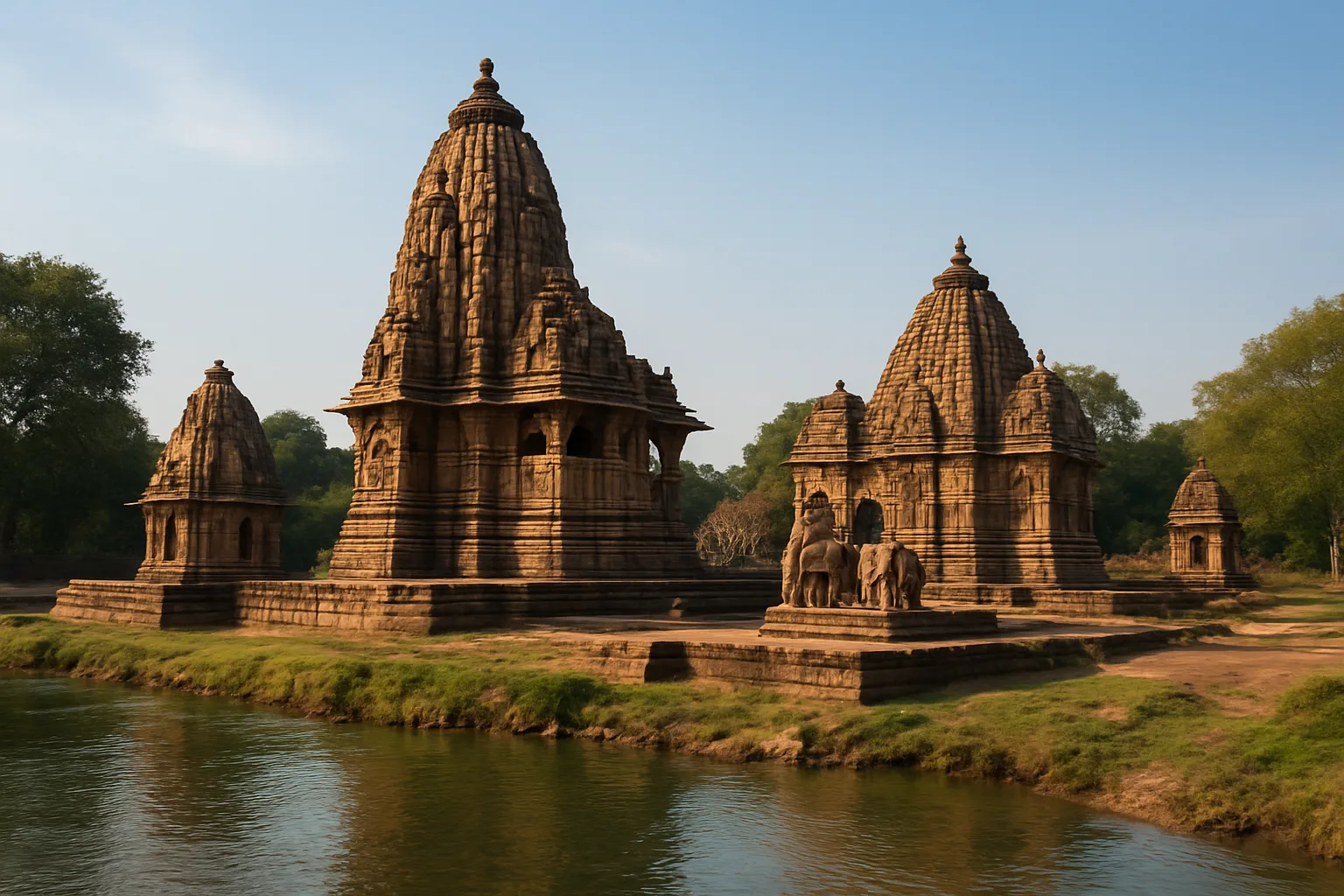
The construction of the Bhakra Dam in the 20th century transformed both the geography and the memory of Bilaspur. As the old town was submerged, stories of ancient temples—some said to date to the Mahabharata era—grew in poignancy. Among them, the Bilas Mahadev temple was reputedly built on the spot where a Mahabharata sage meditated. Though the original structure now lies underwater, its sanctity endures in the hearts of the displaced families who rebuilt their lives on higher ground.
Each year, rituals are performed along the new riverbanks, invoking the lost shrines and the ancestors who once worshipped there. The act of remembrance itself has become part of the region’s living history, a bridge between past and present.
Echoes in Modern Bilaspur
Today, as the sun sets over Bilaspur’s hills, the old and new town alike resonate with these ancient echoes. Schoolchildren recite Mahabharata verses at festivals; elders recount legends beside the river; and pilgrims still climb the same hills once trodden by sages and exiles. In a world that often forgets, Bilaspur remembers—not just through stones and shrines, but through the stories that shape its collective soul.
These Mahabharata-linked legends, woven into the very fabric of Bilaspur, continue to inform its identity. They remind residents and visitors alike that history here is not a distant past, but a living dialogue between myth and memory—a legacy as enduring and mysterious as the river itself.
Previous: When Bilaspur Entered Ancient India: Forgotten Stories of the Hills
Next: The Tribal Roots of Bilaspur: Communities That Pre-Date Kingdoms