
Series: History of Kullu, Himachal Pradesh, India
Phase 5: Modern Era — Part 30 of 30
This article appears within a continuing historical series that follows the western Himalayas into the modern era. With the end of princely rule and the integration into independent India, long-standing social and political patterns were reconfigured. This phase examines how development, state formation, and memory interact with inherited landscapes, shaping contemporary life while carrying forward echoes of the past.
The Valley Awakens: Dawn in Kullu
The first light of day splashes softly against the high ridges of the Pir Panjal, mist curling through pine forests and over the river Beas. Below, the valley of Kullu stirs—a landscape shaped as much by legend as by geology. For millennia, these slopes have sheltered human hopes, fears, and ambitions. Here, in the cradle of northwestern Himalaya, Kullu’s story begins—not in the pages of a single dusty chronicle, but as a living memory, layered in the land and whispered by the wind.
From Legends to Land: Myths and Early Memory
Oral tradition in Kullu is rich and resonant. The valley’s own folk etymology speaks of its name deriving from “Kulantapitha”, the end of the habitable world. Local stories tell of Manu, the progenitor of mankind in Hindu cosmology, who is said to have rested here after the great deluge. Such narratives, echoed in the Skanda Purana and local ballads, have intertwined with daily life for centuries. They are not mere flights of imagination, but explanations for the valley’s isolation and its sacred geography.
Yet, if one seeks the handprints of history—traces left by real people rather than gods—one must look to the region’s earliest settlements. Archaeological surveys, though limited, suggest continuous human presence in the upper Beas basin since at least the Iron Age. Stone tools, burial mounds, and remnants of terraced fields hint at a population adept at surviving in this dramatic terrain, long before the great empires of the plains cast their shadow northward.
Ancient Crossroads: Trade, Migration, and Culture
Kullu’s geography—enclosed by high passes yet threaded by the river Beas—made it both refuge and corridor. Long before the rise of formal hill kingdoms, migrant groups journeyed through these valleys. Indigenous communities such as the Koli and Kanet established settlements along river terraces, cultivating barley and millet, and practicing animist traditions that have survived in local festivals and rituals.
The valley’s position at the head of the old trans-Himalayan trade routes brought outsiders too: traders from Ladakh, pilgrims from Tibet, and, later, emissaries from the plains. The famed Lahul-Spiti-Kullu route, described in regional gazetteers, carried not only salt and wool but also ideas, religious icons, and news from distant lands. By the first millennium CE, Buddhism and Shaivism had left their mark, visible still in the region’s shrines and the iconography of the famed Kullu Dussehra festival.
Emergence of Hill States: From Clan Chiefs to Kings
While the origins of Kullu’s first organized polity lie shrouded in legend, regional chronicles like the Kullu Gazetteer recount the gradual emergence of rajas from among tribal chieftains. By the 6th century CE, according to these traditions, Vihangamani Pal is believed to have founded the earliest Kullu dynasty. The Pal kings, ruling from their fortified capital at Naggar, balanced the demands of local clans, Buddhist monasteries, and expanding Hindu cults.
Political power in Kullu was rarely absolute. The rajas—often more primus inter pares than autocrats—maintained authority through ritual, land grants, and alliances with local priestly lineages. As waves of Rajput and Tibetan influence swept the western Himalaya, Kullu’s rulers adapted, importing new forms of temple architecture and courtly etiquette while fiercely guarding their autonomy. The valley’s relative remoteness shielded it from the early invasions that roiled the plains, allowing a distinctive hill culture to flourish.
Encounters with Empire: Mughals, Sikhs, and the British
By the late medieval period, the ripples of larger Indian history reached the valley. The Mughal emperors, absorbed with their campaigns in Kashmir and Kangra, left only faint traces—occasional tribute and fleeting alliances. The Sikh empire under Ranjit Singh posed a greater threat, briefly asserting suzerainty over Kullu in the early 19th century. But it was the British, arriving in the wake of the First Anglo-Sikh War (1846), who most profoundly altered the region’s destiny.
The transfer of Kullu to British control brought new administrators, surveys, and roads. The valley, once a world apart, was now catalogued and mapped, its forests and orchards taxed and regulated. Colonial gazetteers documented not only the lineages of its rulers, but also the lives of weavers, shepherds, and traders whose labor underpinned the region’s economy. Yet, even as British rule brought change, it also preserved aspects of the past—most notably, the hereditary rights of local deities and the autonomy of village panchayats.
Independence and Integration: Kullu in Modern India
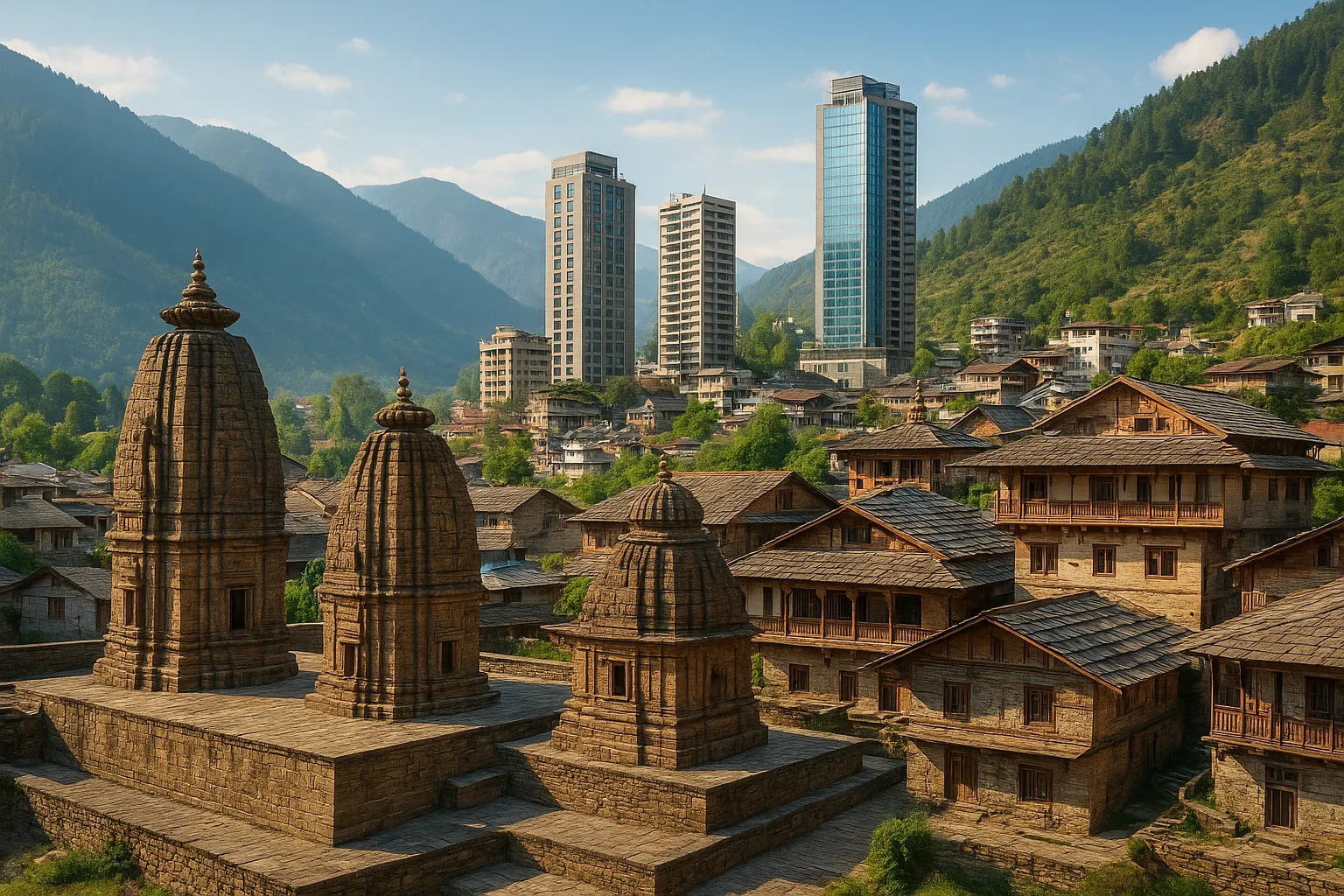
The end of princely rule came with Indian independence. Kullu, like much of Himachal Pradesh, was integrated into the new democratic framework, its rajas’ powers dissolved but their legacy lingering in ritual and memory. The valley’s people, long accustomed to negotiating between rival powers, now adapted to new forms of governance and development. Roads and hydroelectric projects brought unprecedented connectivity—and, with it, challenges of environmental change and cultural adaptation.
In the decades since, Kullu has emerged as both a site of pilgrimage and a magnet for tourism. Its ancient temples, vibrant festivals, and living traditions draw visitors from across the world. Yet beneath the surface, debates continue over land, identity, and the preservation of the valley’s fragile ecosystem. The enduring authority of village gods, the rhythms of seasonal migration, and the collective memory of past hardships still shape the valley’s social fabric.
Reflections: The Living Heritage of Kullu
Kullu’s story is neither a simple arc nor a closed chapter. Its ancient roots—mythical, archaeological, and historical—continue to inform the choices of its people. In the chants of festival processions, the architecture of mountain temples, and the collective stewardship of land and water, echoes of the past guide the present. Kullu’s future, as always, will be shaped by dialogue between tradition and change, between memory and aspiration.
As our series concludes, we reflect on the enduring interplay of myth and history in Kullu’s identity. The next journey, for those who wish to continue, will explore how other Himalayan communities have navigated the currents of modernity while sustaining their own unique legacies.
Previous: Balancing Development and Ecology in Kullu