
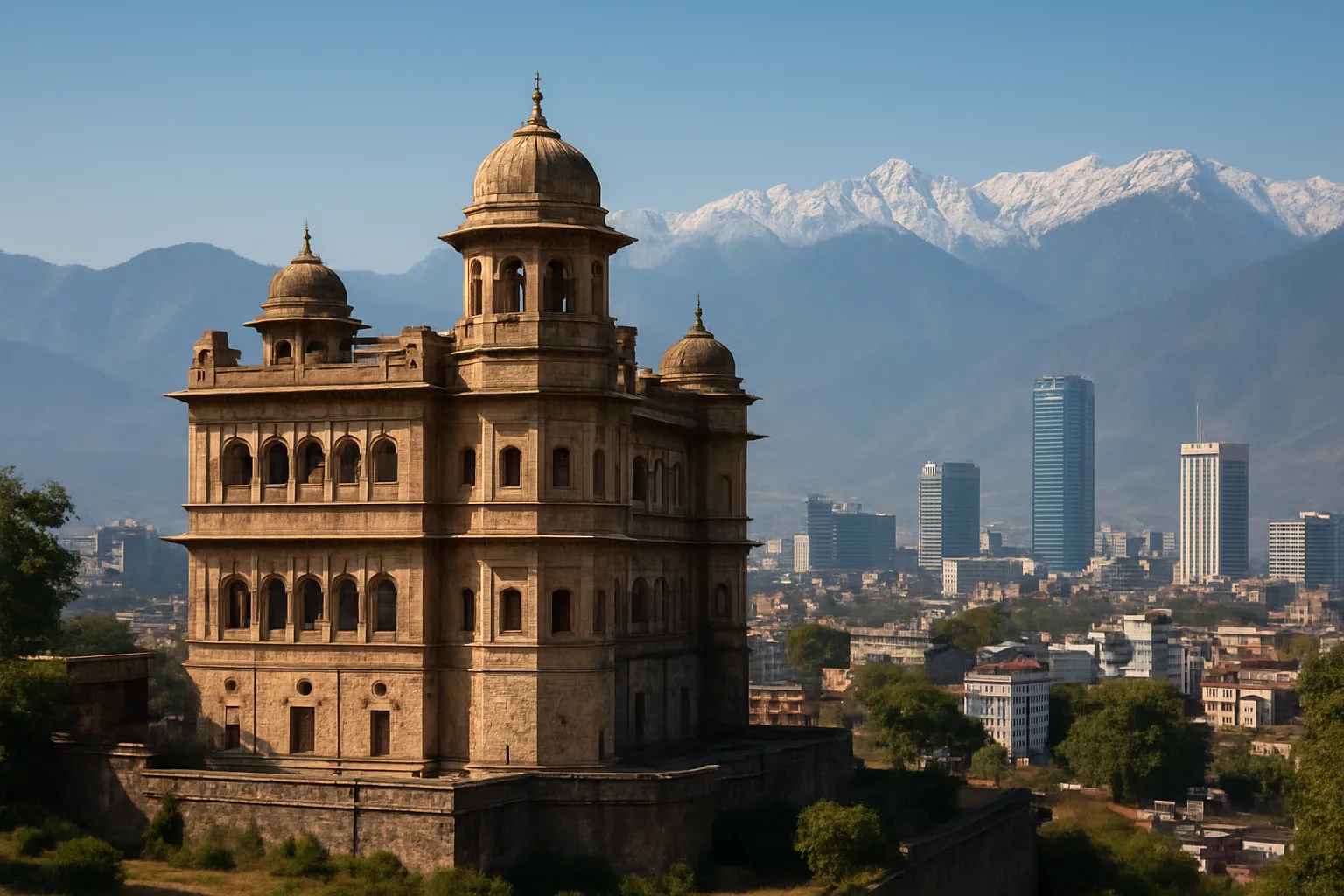
Series: History of Chamba, Himachal Pradesh, India
Phase 5: Modern Era — Part 30 of 30
This article appears within a continuing historical series that follows the western Himalayas into the modern era. With the end of princely rule and the integration into independent India, long-standing social and political patterns were reconfigured. This phase examines how development, state formation, and memory interact with inherited landscapes, shaping contemporary life while carrying forward echoes of the past.
At Dawn in the Ravi Valley
Mist clings to the terraces as the first light spills over the Dhauladhar range. The air—sharp, fragrant with pine—carries the faint clang of a temple bell. Below, the Ravi River cuts a silver path through the heart of Chamba. Here, time feels layered: every stone, every winding street, is the residue of centuries. To stand on Chamba’s ancient Chaugan—the vast common ground at the town’s center—is to sense the silent weight of stories that have shaped this Himalayan enclave.
Myth and Memory: The Roots Beneath the Surface
Chamba’s origin is often traced through the oral traditions of the region’s Gaddi and Brahmin communities. Local lore speaks of the goddess Champavati, daughter of Raja Sahil Varman, whose presence is believed to sanctify the land. Such stories, passed down in song and festival, anchor Chamba’s spiritual geography—yet they remain in the realm of reverence rather than verifiable record.
The significance of these myths, however, should not be underestimated. For centuries, belief has guided the rhythms of life here, weaving a communal identity that persists through change. The annual Minjar festival, for instance, is as much a living echo of these ancient narratives as it is a celebration of harvest and unity.
Early Settlements and the Ties That Bound
Beyond the veil of mythology, the facts of early Chamba emerge through archaeological hints and careful inference. The region’s earliest known settlements clustered around fertile valleys and defensible hills. Stone tools and pottery fragments unearthed near Bharmour suggest human habitation dating back over a millennium. Bharmour itself—once known as Brahmapura—served as the original seat of power for the ruling family before the establishment of Chamba town in the 10th century CE.
The people of this era were not isolated. Trade routes snaked through the mountains, linking Chamba with Kashmir to the northwest and the plains of Punjab to the south. Salt, wool, and hand-forged iron passed along these trails, as did ideas, faiths, and artistic motifs. The Ravi valley, far from a remote backwater, participated in a vivid tapestry of Himalayan commerce and culture.
From Fragmented Tribes to Emerging Hill States
As the centuries unfolded, Chamba’s landscape of clans and semi-nomadic groups gradually gave way to more structured polities. The rise of the Rajput dynasties—documented in the region’s copper-plate inscriptions and early chronicles—marked a decisive shift. By the 6th to 9th centuries CE, local rulers had begun to consolidate their authority, building small forts and temples to assert legitimacy and safeguard trade.
The founding of Chamba town by Raja Sahil Varman around 920 CE stands as a watershed moment in the documented political history of the region. According to the regional gazetteers, Sahil Varman moved his capital from Bharmour to the more accessible and agriculturally promising Chamba valley. This act was both practical and symbolic—a declaration of permanence and ambition.
Belief, Devotion, and Artistic Expression
Chamba’s religious landscape is as ancient as its hills. Early settlements revolved around shrines dedicated to indigenous deities, later joined by Shaivite and Vaishnavite traditions as Hinduism deepened its roots. The town’s temples—such as the Lakshmi Narayan group, whose earliest sanctuaries date to the 10th century—remain among the finest expressions of Himalayan stone architecture.
These sanctuaries, along with the region’s distinctive pahari painting and metalwork, reflect a remarkable fusion of local and pan-Indian influences. Patronized by the ruling family, Chamba’s artists drew inspiration from the courts of Kashmir, the Mughal ateliers, and even distant Tibet. Each image, each carving, is a testament to centuries of cultural exchange—layered, adaptive, and enduring.
Chamba in the Modern Imagination
Today, the old and the new coexist in Chamba with a curious energy. The Chaugan hosts cricket matches and festivals; the ancient temples stand sentinel beside bustling markets. Memories of princely processions and colonial encounters linger in the town’s architecture and in the stories told by elders on quiet evenings. The Gaddis still drive their flocks through high pastures, even as their younger generations seek education and opportunity in distant cities.
Yet beneath the surface, the past continues to shape Chamba’s present in ways both subtle and profound. The rhythms of the Ravi valley, the resilience of its communities, and the pride in heritage remain central to the region’s identity. In a time of accelerating change, these ancient roots offer both anchor and compass.
Looking Ahead: Chamba’s Future in Context
As Chamba navigates the challenges of the 21st century—balancing preservation with progress, tradition with transformation—the lessons of its long history resonate deeply. The same river valleys that once drew early settlers now attract visitors from across the world. Its temples and festivals, once markers of dynastic power, have become emblems of a shared heritage that unites its people across faiths and generations.
In the next and final post of this series, we will turn our gaze to the present-day realities and the emerging future of Chamba: its evolving economy, its environmental challenges, and the ongoing conversation between innovation and tradition that defines life in this remarkable Himalayan town.
Previous: Oral Histories of Chamba’s Elders