
Series: History of Una, Himachal Pradesh, India
Phase 5: Modern Era — Part 28 of 30
This article appears within a continuing historical series that follows the western Himalayas into the modern era. With the end of princely rule and the integration into independent India, long-standing social and political patterns were reconfigured. This phase examines how development, state formation, and memory interact with inherited landscapes, shaping contemporary life while carrying forward echoes of the past.
The Night Before the Festival: A Scene of Continuity and Change
The night air in Una is thick with anticipation. In the shadow of the revered Chintpurni Temple, an elderly storyteller, Amar Singh, sits surrounded by children and neighbors. He weaves tales of ancestors who once crossed the Sutlej River, their voices echoing in the valleys and hills that cradle this region of Himachal Pradesh. The moonlight glimmers off the temple bells, just as it did centuries ago. Yet, beyond the laughter and the scent of incense, the distant hum of traffic signals a world in transition. In this moment, the fragile thread between past and present is palpable—a testament to Una’s ongoing struggle to preserve its cultural identity amid the tides of modernity.
From Borderland to Crossroads: Una’s Historical Foundations
To understand Una’s present, one must first travel back to its earliest days as a borderland—a region sitting at the intersection of Punjab’s plains and Himachal’s hills. For centuries, Una was a meeting point. Ancient traders passed through, carrying salt, grain, and silk, leaving behind not only goods but stories and customs. Under the rule of princely states like Kangra and Jaswan, Una’s villages flourished as centers of local governance and ritual, their identities shaped by both autonomy and external influences.
The late 18th and early 19th centuries marked turning points. Figures like Raja Sansar Chand of Kangra left their imprint through patronage of temples and crafts, while British administrators in the 1840s redrew boundaries, integrating Una into the colonial map. This administrative shift redefined Una’s place in the region—and laid the groundwork for the questions of identity that would emerge in the decades to come.
Temples, Festivals, and the Fabric of Community
Even as political boundaries shifted, Una’s people anchored themselves in rituals passed down through generations. Temples like Chintpurni, Dera Baba Barbhag Singh, and Baba Rudranand’s ashram became more than religious sites—they were the heart of communal life.
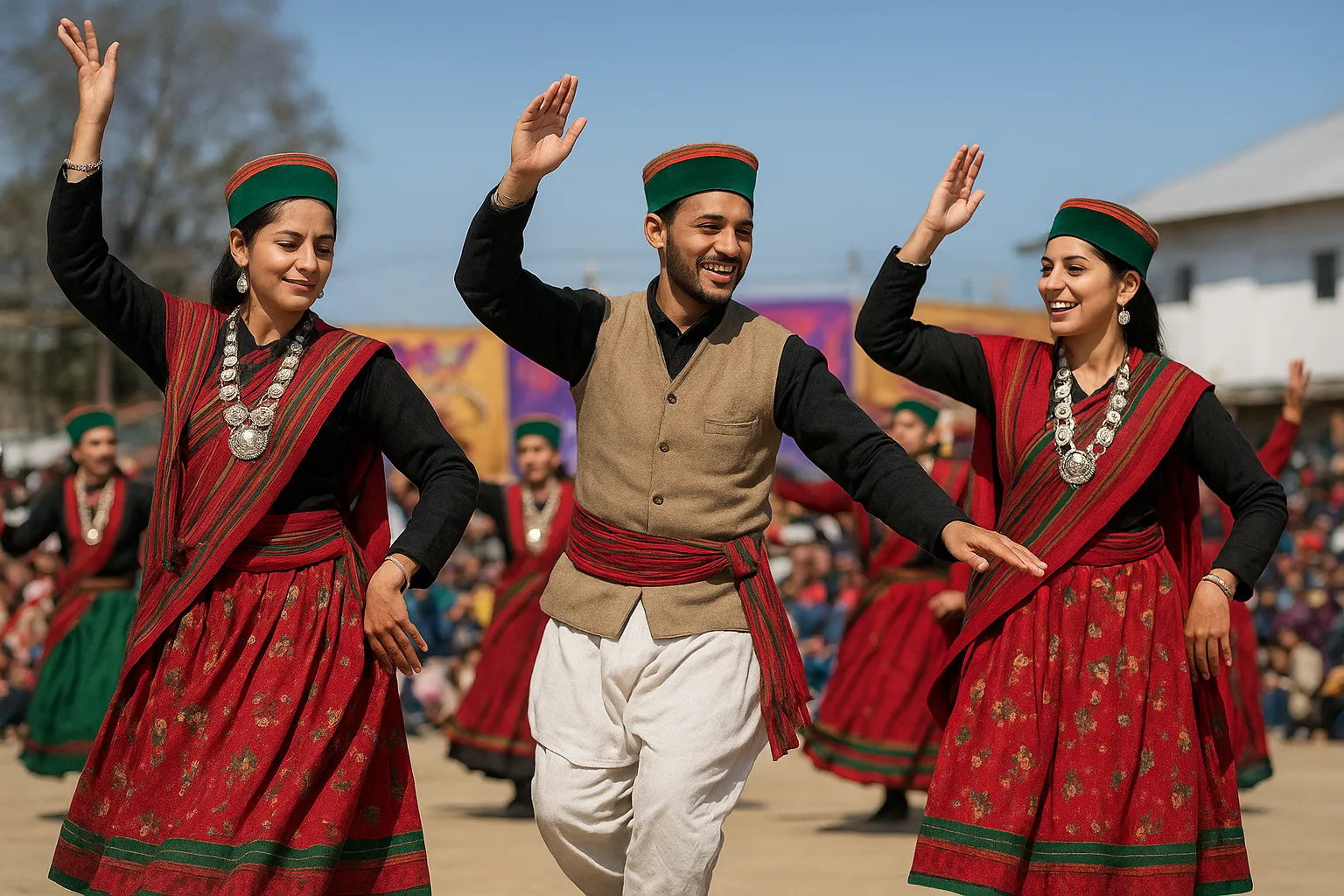
Annual festivals—such as the Chintpurni Mela and Lohri—drew villagers from miles around. During these gatherings, songs in dialects unique to Una mingled with the aroma of traditional foods. The Gaddi and Saini communities performed folk dances that told stories of migration, harvest, and resilience. These celebrations were not merely entertainment; they reinforced a shared sense of belonging, even as roads and railways brought new faces and ideas to Una’s markets.
Partition, Migration, and the Search for Belonging
The mid-20th century brought profound upheaval. The Partition of India in 1947 transformed Una overnight. Refugees streamed across the new border, bringing with them memories of lost homes and unfamiliar customs. Local leaders, including the respected Pandit Sohan Lal, organized relief camps and mediated disputes as communities grappled with loss and adaptation.
This influx forced Una to redefine itself. New neighborhoods sprang up, with gurdwaras and temples built by migrant families. Older residents wondered if the rhythms of their festivals would survive these demographic shifts. But over time, a remarkable blending unfolded. Wedding songs borrowed verses from both sides of the border; market days now featured spices and crafts from distant Punjab and Haryana. Una’s sense of self became at once more diverse and more resilient, forged in the crucible of shared hardship and hospitality.
Education and Modernization: Challenges to Tradition
The decades following independence ushered in roads, electricity, and schools, transforming village life. The opening of local colleges and the arrival of mass media introduced new aspirations—and new anxieties. Young people, inspired by the example of figures like Dr. Meena Sharma, the first woman from Una to earn a doctorate, began to dream of opportunities beyond the valleys. Yet, as students left for cities, elders worried about the erosion of dialects, crafts, and communal rituals.
Modernization brought prosperity but also a subtle estrangement. Traditional crafts like phulkari embroidery and woodwork, once handed down in family workshops, faced competition from factory-made goods. Local dialects—Dogri, Pahari, and Punjabi—became less common as Hindi and English dominated classrooms and television screens. The tension between progress and preservation became a defining feature of daily life in Una.
Revival and Adaptation: Culture in the Digital Age
In recent decades, a new generation has begun to reclaim and reinterpret Una’s heritage. Cultural associations, such as the Una Sanskritik Manch, now organize language workshops and folk music competitions. Teachers like Sunil Kumar have introduced local history into school curricula, ensuring that stories of figures like Raja Jaswant Singh and Amma Lalita Devi remain alive for children growing up with smartphones and social media.
Festivals have adapted as well. The Chintpurni Mela now streams performances online, reaching Una’s diaspora in Canada, the United States, and the Gulf. Artisans collaborate with NGOs to market traditional crafts to urban consumers, reviving skills once thought lost. Even culinary traditions—like the making of siddu and babru—find new life in local cafes that blend heritage with modern tastes.
This revival is not nostalgia, but a dynamic process. It reflects a community’s determination to shape its future without forgetting its roots.
Holding the Thread: Identity in a Changing Landscape
Standing at the heart of Una today, it is easy to see both the marks of history and the signs of transformation. Schoolchildren recite folk tales alongside lessons in science. Temples buzz with both ancient chants and the ring of mobile phones. The main bazaar, once a cluster of mud-brick shops, now boasts internet cafés and showrooms, yet street vendors still call out in dialects their ancestors spoke.
The effort to preserve cultural identity in modern Una is ongoing—a balancing act played out in homes, schools, and public squares. It is a story of adaptation, resilience, and pride. As elders gather each year to tell stories under the temple eaves, and as young people document those stories on digital platforms, Una’s heritage endures, not as a relic, but as a living, breathing force.
A Legacy for Tomorrow
History’s imprint is unmistakable in Una’s daily rhythms. The challenges of migration, modernization, and cultural change have not erased the community’s sense of self. Instead, they have deepened it. Today, Una stands as both a crossroads and a home—where the past is honored, the present is negotiated, and the future is imagined with hope. Its people continue to preserve their identity not just through ritual, but through an unwavering commitment to belonging, memory, and renewal. In the enduring dance between tradition and change, Una’s story remains unfinished—and profoundly human.
Previous: Environmental Challenges in a Rapidly Developing District
Next: Oral Histories and Memories of Una’s Elders