
Series: History of Hamirpur, Himachal Pradesh, India
Phase 5: Modern Era — Part 28 of 30
This article appears within a continuing historical series that follows the western Himalayas into the modern era. With the end of princely rule and the integration into independent India, long-standing social and political patterns were reconfigured. This phase examines how development, state formation, and memory interact with inherited landscapes, shaping contemporary life while carrying forward echoes of the past.
A Valley at Dawn: Echoes of the Past
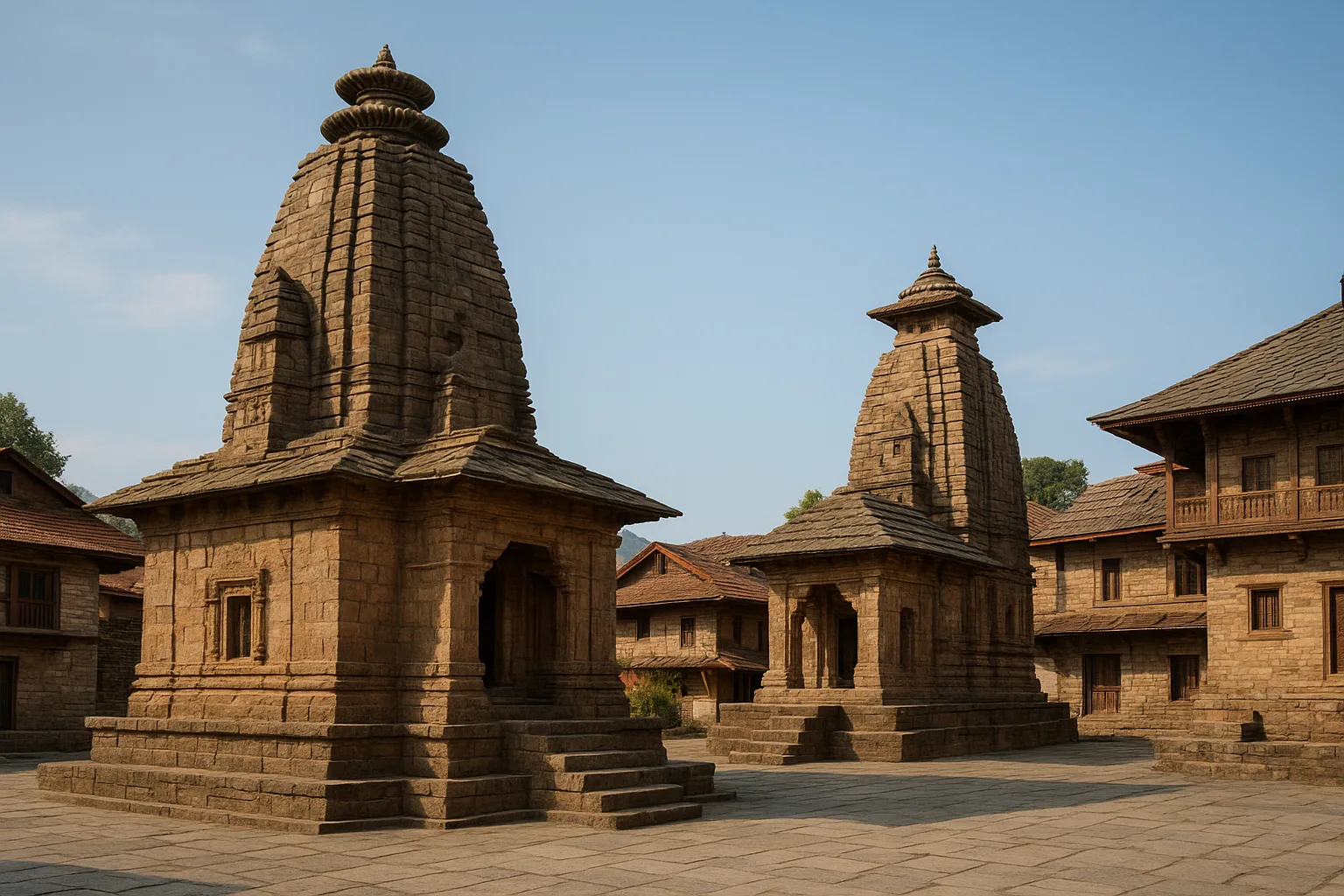
The first rays of morning light creep over the undulating hills of Hamirpur, awakening a landscape both ancient and ever-renewed. Mist clings to old temple spires and the scattered rooftops of villages that have watched centuries pass. Here, in these valleys shaped by the River Beas and its tributaries, history is not only written in stone but spoken in the cadence of daily life—preserved in memory, custom, and the quiet persistence of tradition.
Anchoring Hamirpur: Geography and Origins
Hamirpur, now a vibrant district in Himachal Pradesh, sits at a crossroads of both geography and history. Its gentle hills and river valleys formed a natural corridor between the fertile plains and the rugged Himalayan interior. Long before the British drew district boundaries, this region was known for its fertile soils, forested ridges, and strategic location—making it a coveted prize for emerging hill states and a haven for communities seeking continuity amid change.
The earliest traces of settled life in and around Hamirpur can be inferred from the region’s archaeological finds: terracotta shards, copper tools, and remnants of ancient shrine sites. Oral traditions speak of migrations from the north and east, where families sought shelter from invading armies or the vagaries of weather. Such tales, passed down in the local dialects, blend myth and memory—evoking a time when gods and ancestors walked the land, and every grove or hilltop had its guardian spirit.
Oral Traditions and Myth: The Living Memory
To walk through Hamirpur’s rural heartlands is to move through a tapestry woven with legend. Many families can recount the exploits of mythical warriors, sages, and local deities—stories often tied to specific stones, streams, or ancient trees. The tale of Hamir Chand, the princely founder whose name the district bears, is one such legend: part family lore, part historical memory, carried in song and story by generations.
These oral traditions, while not always verifiable by modern historical method, serve as vessels of collective identity. They inform local festivals, ritual practices, and social norms. In the absence of early written records, such stories filled the silence—preserving a sense of belonging and continuity. Yet the historian’s task is to gently distinguish where myth shades into memory, and where memory, in turn, meets the evidence of chronicled events.
First Settlements and Communities
The oldest documented communities in Hamirpur emerged at the intersection of river trade and agrarian opportunity. Hill Brahmins, Rajputs, artisan castes, and indigenous tribes like the Gaddis made their homes on terraced slopes and in the sheltered valleys. Gazettes from the colonial era record a mosaic of hamlets, each with its own lineage of headmen and hereditary priests.
Trade routes connecting the Punjab plains with the Himalayan interior passed near present-day Hamirpur, bringing new goods—and ideas. With the movement of traders and pilgrims came Buddhist, Shaivite, and later Vaishnavite influences. Remnants of ancient temples and shrines, many now lost to time or rebuilt in later centuries, signal the syncretic nature of belief here. The rhythms of agrarian life were punctuated by seasonal fairs, some of whose origins stretch back to the region’s earliest days.
Emergence of Hill States and Political Power
By the medieval period, the greater region of Hamirpur found itself under the sway of numerous small hill principalities. Chief among these was the Katoch dynasty of Kangra, whose influence extended into the valleys of modern-day Hamirpur. The rise of the Jaswan and Guler states further shaped local identities, as did the persistent shadow of neighboring kingdoms in Chamba and Mandi.
Historical chronicles and Persian-language court records from the Mughal era reveal a landscape of shifting alliances and frequent conflict. Hill chieftains defended their autonomy fiercely, leveraging the difficult terrain and local loyalties. The arrival of Sikh and later British authority in the nineteenth century marked a new chapter, but local governance—rooted in panchayats and clan councils—continued to shape daily life and decision-making.
Documented Heritage and Early Chronicles
From the late eighteenth century onwards, the documentation of Hamirpur’s history became more systematic. British administrators compiled gazetteers, collecting local lore, genealogies, and records of temples and land grants. These documents, though inevitably shaped by colonial priorities, preserved invaluable details about the social fabric, economy, and religious landscape of the region.
Notable among these is the Kangra Gazetteer of 1883, which describes Hamirpur’s villages, the customs of its people, and the enduring role of oral bards. Early Indian chroniclers, both religious and secular, added their voices—recording the acts of rulers, the building of temples, and the festivals that marked the agricultural calendar. Together, these sources offer a patchwork of perspectives: some grounded in direct observation, others echoing the age-old stories recited in village squares.
Preservation Efforts: From Collective Memory to Living Heritage
As Hamirpur entered the era of modern India, the challenge shifted from mere survival to preservation and renewal. Local initiatives—heritage societies, temple trusts, and cultural festivals—have sought to safeguard ancient manuscripts, preserve traditional arts, and pass on oral histories before they slip away. Schools now teach not only the national past but also the distinctive history of the hills, ensuring that the voices of elders find a place beside the lessons of textbooks.
Yet the truest preservation lies in the daily life of Hamirpur’s people: in the songs sung at weddings, the rituals performed at harvest, and the respect shown to sacred groves. These living traditions, adapted but unbroken, anchor the community amid the swirl of change. The memory of ancestors and the spirit of the land remain entwined, guiding the present as surely as they shaped the past.
Enduring Roots and the Road Ahead
The story of Hamirpur is not merely a tale of kings and wars, but of resilience—of communities that have navigated centuries of upheaval by holding fast to memory and meaning. Today, as highways and modernity thread through the valleys, the old rhythms persist, quietly asserting their place in the world. The roots of Hamirpur’s history run deep, nourishing a sense of identity that endures in the face of transformation.
In the next part of this series, we will explore how Hamirpur’s heritage has been shaped and reinterpreted in the decades following independence, as new generations redefine what it means to remember and belong in this storied land.
Previous: Traditional Culture in Today’s Hamirpur
Next: Voices of the People: Oral Histories from Hamirpur