
Series: History of Hamirpur, Himachal Pradesh, India
Phase 5: Modern Era — Part 27 of 30
This article appears within a continuing historical series that follows the western Himalayas into the modern era. With the end of princely rule and the integration into independent India, long-standing social and political patterns were reconfigured. This phase examines how development, state formation, and memory interact with inherited landscapes, shaping contemporary life while carrying forward echoes of the past.
First Light on the Ridge: Living with Tradition
In the hush before sunrise, the sound of conch shells echoes through a small hamlet near Hamirpur’s Sujanpur Tira. The air is cool, tinged with wood smoke and the promise of another market day. Beneath the distant snowcaps, villagers gather at a centuries-old temple, their breath visible in the crisp air. Here, tradition is not a relic: it is lived, woven into the daily rhythm. Even as concrete lanes and mobile towers mark the present, Hamirpur’s soul remains anchored in ancient ways—a landscape where memory and ritual still shape identity.
Hamirpur in the Tapestry of the Western Himalaya
Nestled between the roaring Beas and the gentle Sutlej, Hamirpur sits at the crossroads of old Himachal’s hill states. For millennia, these undulating ridges formed a cultural corridor between Punjab’s plains and the higher mountains. By the 11th century CE, the region was already a patchwork of small chieftaincies and clan territories—each with its own customs, dialects, and sacred sites. Early British gazetteers, like the 1883 Kangra District report, describe Hamirpur as a land of hardy cultivators, deeply attached to ancestral deities and fiercely independent in spirit, even as outside influences began to press in.
The boundary between history and legend is often porous here. Oral traditions recall migrations, battles, and the supernatural with equal conviction. Yet, archaeological finds—ancient coins, inscribed stones, terracotta seals—hint at a region shaped by real trade, governance, and belief, not just myth.
Oral Traditions and the Power of Story
In Hamirpur, the past endures not only in stones but in stories. Night gatherings around oil lamps still echo with kathas—epic tales of Pandavas, local heroes, and the gods who once walked these hills. These oral traditions, passed from grandparent to child, serve more than entertainment. They preserve genealogies, encode lessons about kinship, and reinforce the unwritten rules of communal life.
Many such tales recount the exploits of legendary rulers: Rana Hamir Chand, who gave his name to the district; the shadowy Katoch dynasty, whose influence radiated from nearby Kangra; and the mythical serpent kings said to guard hidden springs. Where documentary evidence is thin, these stories fill the gaps—not as literal history, but as a living archive of collective memory.
Belief, Ritual, and the Sacred Landscape
Religion in Hamirpur has always been deeply local, even as broader Hindu traditions took root. The landscape itself is alive with sacred meaning: hilltop shrines to deotas (local deities), village groves where spirits are said to dwell, and annual fairs (melas) that draw together disparate communities. Notably, the worship of gram devtas—protective village gods—remains central. Each settlement maintains its own pantheon, with rituals and festivals marking the agricultural calendar and life’s milestones.
Unlike the grand temples of the plains, Hamirpur’s shrines are modest, often fashioned from rough stone and wood. The annual Chaitra Navratri and Maghi festivals blend Vedic rites with animist practices, a testament to the region’s syncretic ethos. Oral chronicles frequently cite miraculous interventions by local saints and holy men, reflecting a worldview where the sacred and the everyday intertwine.
Communities, Clans, and Early Settlements
Hamirpur’s social fabric is shaped by its earliest settlers: Rajput clans tracing ancestry to the Katoch and Jaswal rulers; Brahmins who served as priests and chroniclers; and a mosaic of artisan castes, shepherds, and traders. Over centuries, these groups forged a complex network of alliances, marriages, and rivalries—recorded in genealogical scrolls as well as family lore.
Historic routes crisscrossed the region, linking it to the wider world. The old Sarkaghat road, for instance, brought itinerant traders and pilgrims from the plains, while shepherds led their flocks between seasonal pastures. Early chronicles—such as the Himalayan Gazetteer—describe bustling markets in Sujanpur and Nadaun, where goods, news, and customs flowed as freely as the rivers.
From Hill States to Modern Identity
By the eighteenth century, Hamirpur found itself caught between powerful neighbors. The rise of the Katoch rulers in Kangra, the encroachment of Gorkha invaders, and later, the steady advance of the British Raj, each left their mark. Yet despite shifting frontiers, local traditions endured. Village councils (panchayats) mediated disputes, managed water and forests, and upheld customary law. Even the British, keen to catalog every custom, recognized the resilience of local identities.
Partition and the formation of Himachal Pradesh in the twentieth century brought new challenges and opportunities. Migration, education, and the spread of mass media altered the cultural landscape—but did not erase it. Instead, Hamirpur’s people adapted, blending old and new with remarkable resourcefulness.
The Enduring Roots of Hamirpur’s Culture
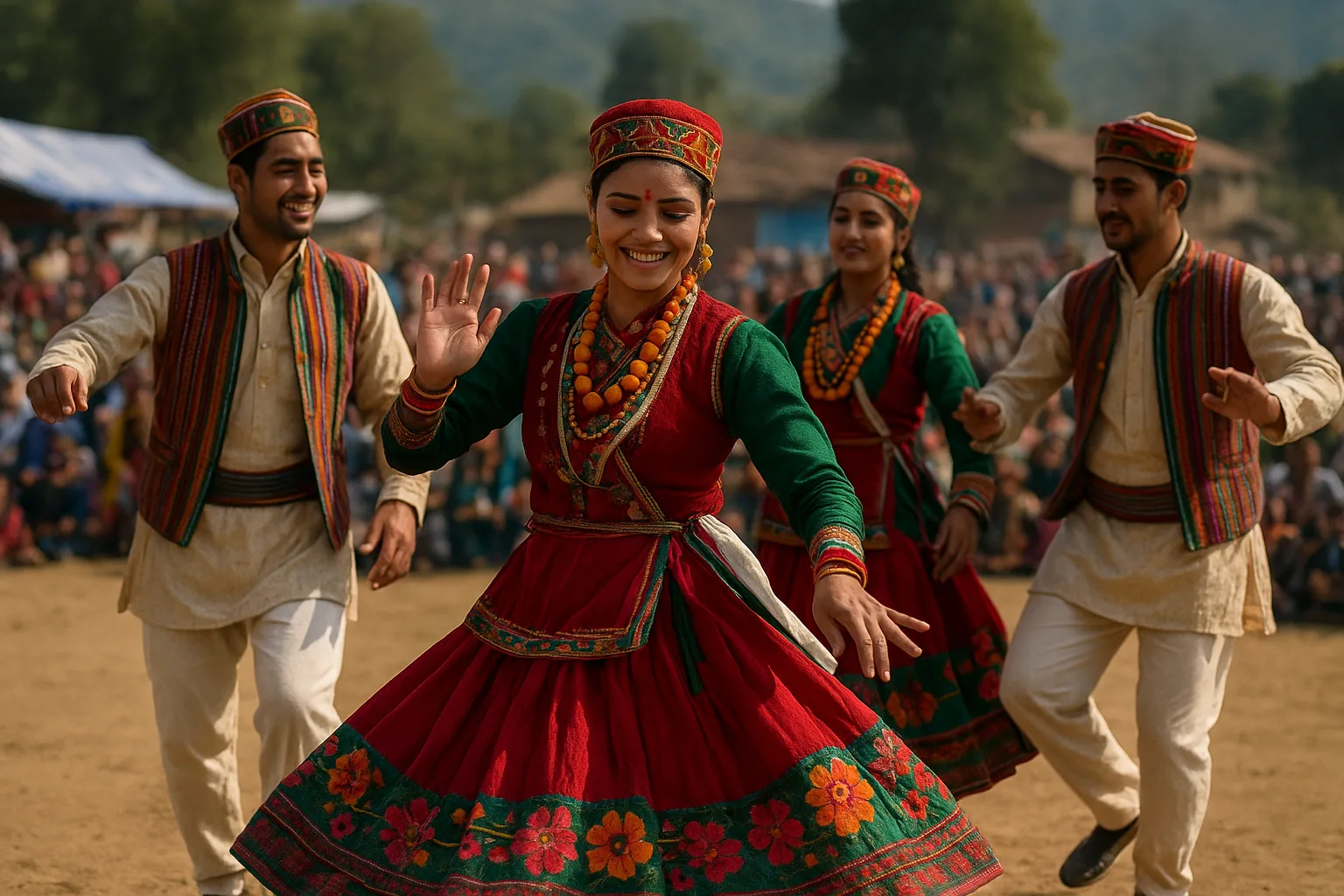
Today, the echoes of ancient Hamirpur persist—in the rhythms of folk music, in the slow dance of harvest festivals, in the reverence for sacred trees and rivers. Young people leave for distant cities, yet return for ancestral fairs; WhatsApp groups buzz with the same surnames that fill the region’s oral histories. The past remains palpably present, a foundation on which modern Hamirpur continues to build its sense of self.
As we move forward in this series, the next chapter will trace how Hamirpur’s traditional culture has responded to the pressures and promises of the modern era—exploring education, migration, and the reimagining of heritage in everyday life.
Previous: Urban Growth and Changing Lifestyles in Hamirpur Town
Next: Preserving Hamirpur’s Local History and Heritage