
Series: History of Shimla, Himachal Pradesh, India
Phase 5: Modern Era — Part 30 of 30
This article appears within a continuing historical series that follows the western Himalayas into the modern era. With the end of princely rule and the integration into independent India, long-standing social and political patterns were reconfigured. This phase examines how development, state formation, and memory interact with inherited landscapes, shaping contemporary life while carrying forward echoes of the past.
In the Shadow of the Deodar: A City at the Edge of Time
On a late monsoon evening, when the mists drift low over the ridges and the ancient deodar forests stand motionless along the Mall, Shimla appears caught between worlds. The clang of temple bells from Jakhoo Hill mingles with the distant echo of church chimes, while the brisk mountain air carries the memory of centuries—some whispered in legend, others etched in stone and record.
From Sacred Grove to Hill Settlements: Early Foundations
Long before Shimla’s slopes bore the mark of British architecture, these hills were a domain of dense forests and scattered hamlets. Oral traditions of the region, passed down in the Pahari dialects, recount how local deities and spirits were believed to inhabit groves and springs, with Jakhoo Hill revered as the abode of Hanuman. Such mythic associations, while not verifiable, reveal an ancient relationship between people and landscape—a reverence that shaped early settlement patterns.
By the early centuries CE, the southern Himalayas formed a patchwork of small villages and clan-based communities. Archaeological evidence from surrounding districts—though sparse within Shimla itself—suggests a continuity of habitation characterized by terraced agriculture, animal husbandry, and seasonal transhumance. The ridges offered both strategic refuge and a vantage for trade, connecting the Satluj Valley with the routes descending toward the plains.
Hill States and the Shifting Map of Power
Historical records, including regional gazetteers and chronicles from neighboring kingdoms, indicate that by the medieval period, the area now known as Shimla lay on the margins of several small hill states. The Keonthal and Bushahr principalities, among others, vied for influence in these uplands, their boundaries in constant flux with the fortunes of war, marriage, and alliance.
While Shimla itself did not emerge as a political capital in these centuries, its ridges served as summer grazing grounds and, in times of unrest, as shelter for local peasantry. The broader region’s strategic value grew with the rise of trade routes linking Tibet with the Punjab plains—routes that brought not only goods but also ideas, artisans, and occasional conflict.
Myth, Memory, and the Colonial Encounter
Local legend holds that the Pandavas, heroes of the Mahabharata, once wandered these hills in exile. Such oral traditions, though rooted in collective memory rather than documentation, have long lent the landscape a sense of sanctity and belonging. By the early 19th century, however, a new force entered the scene: the expanding British East India Company, drawn first by geo-strategic necessity, later by climate and curiosity.
The documented transformation began in 1815, in the aftermath of the Anglo-Gurkha War. The Treaty of Sugauli transferred control of the surrounding hills from the Gurkha kingdom to the British, who soon recognized the temperate climate and commanding views of the Shimla ridge. What had been a seasonal settlement of a few dozen dwellings was, within decades, reimagined as the summer capital of British India—a place where colonial administrators sought respite from the plains, and where the rhythms of local life were irrevocably altered.
The Colonial City: Transformation and Tensions
The British era remade Shimla’s landscape as much with stone and timber as with policy and culture. Grand institutions—Christ Church, the Viceregal Lodge, the Gaiety Theatre—rose on ground once circled by forest trails. A new social order was imposed: one part imperial pageant, one part hill station idyll, and one part administrative nerve center. The railway’s arrival in 1903 stitched Shimla ever tighter into the colonial web, accelerating migration and commerce.
Yet the city’s transformation was never total. Beneath the colonnades and avenues, local communities—traders, artisans, priests, and laborers—sustained their own traditions and networks. The bazaar quarter remained a place of vernacular exchange, while temples and shrines continued to anchor communal life. The city’s dual character, part colonial, part indigenous, would shape both its allure and its contradictions in the decades to follow.
Independence, Adaptation, and the Modern Challenge
The events of 1947 brought both jubilation and uncertainty. Shimla, briefly the seat of government negotiations preceding Partition, soon became the capital of the newly formed Himachal Pradesh. The city’s population swelled, its institutions adapted, and its identity shifted from imperial outpost to regional center. Yet the legacies of prior centuries—fragmented landholdings, environmental pressures, and the persistent pull of migration—remained embedded in the city’s fabric.
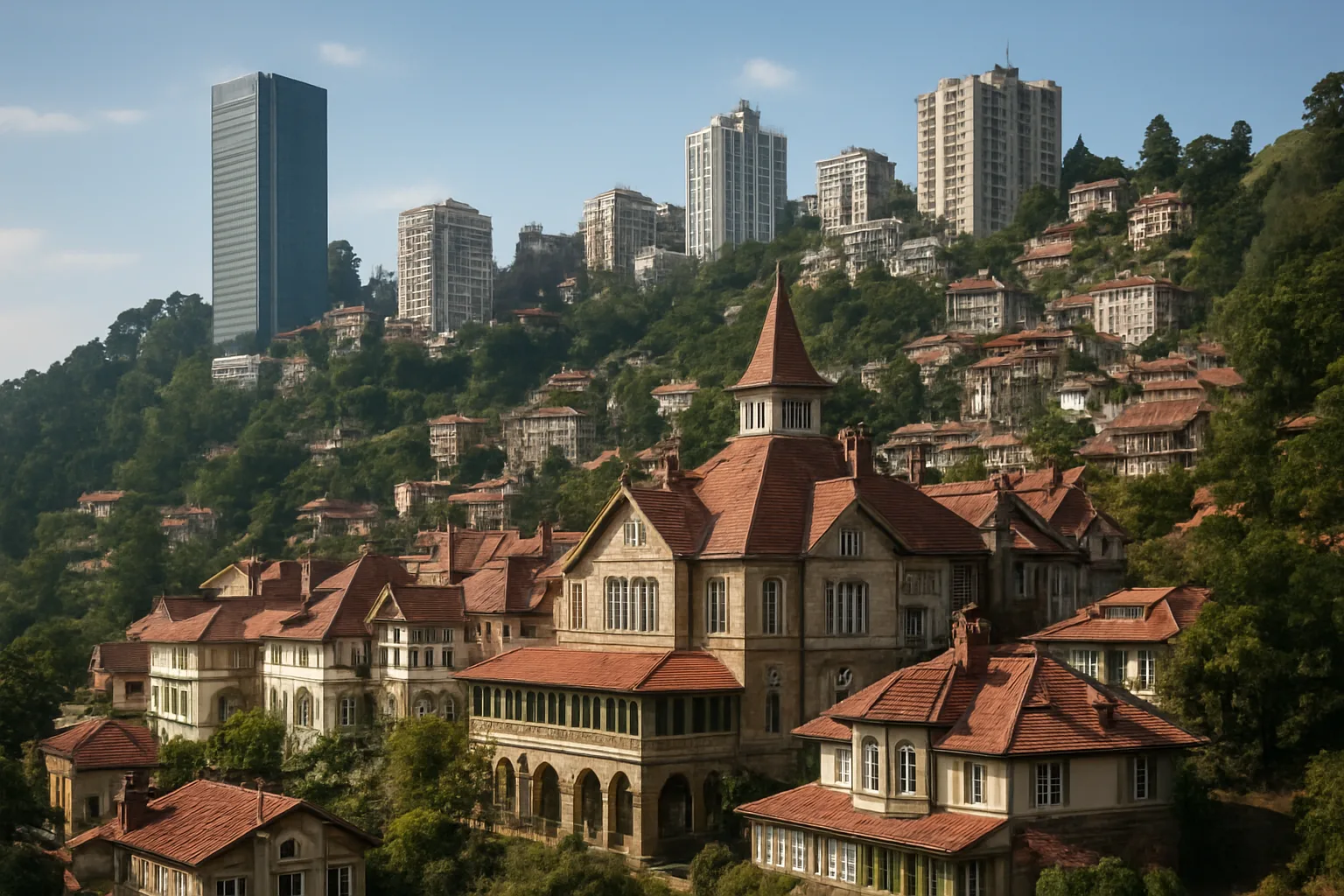
By the late 20th and early 21st centuries, Shimla faced the paradox of many historic hill towns: the weight of its past, the allure of its climate, and the burden of modern aspirations. Unplanned growth strained water resources and infrastructure. Tourism, once a gentle current, became a tidal force. The city’s forests, so vital to its mythic and ecological identity, receded before expanding suburbs and roads. Even as Shimla’s schools, courts, and markets continued to draw people from across the hills, the question of sustainability became ever more pressing.
Echoes of the Past in the Present Moment
Today, as dusk falls over Scandal Point and the last light catches the spires of Christ Church, Shimla remains a city of layers. Its ancient beliefs, colonial imprints, and contemporary challenges coexist—sometimes in harmony, sometimes in tension. The stories of the earliest settlers, the ambitions of princely states, the echoes of British imperial ambition, and the realities of modern administration are all present, woven into the rhythms of daily life.
Shimla’s uncertain future—shaped by climate, demography, and the choices of its citizens—cannot be disentangled from these deep historical roots. The city’s enduring appeal lies not only in its scenery, but in its capacity to adapt, absorb, and endure. In the next part of this series, we will turn to the cultural movements and civic initiatives that seek to reconcile heritage with change, and to the voices shaping Shimla’s path forward.
Previous: Balancing Governance and Heritage in the Capital City