
Series: History of Chamba, Himachal Pradesh, India
Phase 5: Modern Era — Part 26 of 30
This article appears within a continuing historical series that follows the western Himalayas into the modern era. With the end of princely rule and the integration into independent India, long-standing social and political patterns were reconfigured. This phase examines how development, state formation, and memory interact with inherited landscapes, shaping contemporary life while carrying forward echoes of the past.
First Light Over Chamba: The Temple Valley Awakens
In the crisp morning air, Chamba’s valley stirs awake. The faint golden glow catches on slate rooftops and the ornate shikhara of Lakshmi Narayan Temple, its silhouette unwavering against the Dhauladhar’s snowbound horizon. Temple bells ring—clear, measured, and ancient—echoing across the Ravi River. Here, centuries of faith have been carved into stone and timber, as enduring as the mountains themselves. Yet, beneath this serene ritual lies a turbulent history: conquests, earthquakes, and slow decay threatening these sacred sites. Today, Chamba’s temples stand as both relics and living sanctuaries, their survival hinging on a fragile balance of reverence and vigilance.
Chamba’s Beginnings: Where Myth Meets Memory
Chamba’s earliest stories are woven from a tapestry of oral traditions and mythic memory. Villagers still whisper of Sahil Varman, the legendary king credited with founding Chamba around the late 10th century CE. Local lore recounts his daughter Champavati’s spiritual legacy, believed to have inspired the location of the capital itself. Such tales, passed through generations, shape a cultural identity but remain distinct from the scant written records of the time.
Historical inference, drawn from surviving temple inscriptions and regional gazetteers, suggests that Chamba’s roots as a settlement stretch deeper. The valley’s strategic location—nestled between Kashmir and the plains of Punjab—made it a crossroads for early trading communities and a melting pot of Pahari, Rajput, and Dardic influences. The earliest temples, like the Lakshmi Narayan complex, reveal a blend of North Indian Nagara and indigenous wooden architecture, signaling a synthesis of belief systems and building traditions long before Chamba emerged as a political power.
Belief Systems, Pilgrims, and the Sacred Geography
By the 11th century, Chamba had become a vital node in the Himalayan sacred landscape. The rise of Shaivism and Vaishnavism is evident in the dedication of its grandest temples. The Lakshmi Narayan Temple, completed in the mid-10th century, was not merely a house of worship but a statement of legitimacy for the ruling Varman dynasty. Smaller shrines to Shiva, Devi, and local deities crowd the valley, each a marker of the complex spiritual ecology that shaped everyday life.
Oral tradition venerates these shrines as abodes of divine presence, places where pilgrimage routes converged and local hill communities gathered for seasonal festivals. Indeed, the interplay of popular devotion and royal patronage was crucial: Chamba’s temples were built not just for gods, but for people—anchors of community life, repositories of art, and symbols of the state’s endurance through centuries of upheaval.
Threats Through Time: Raiders, Earthquakes, and Changing Empires
The survival of Chamba’s temples was never guaranteed. Political chronicles, such as those referenced in the Imperial Gazetteer of India, recount repeated incursions: the Ghaznavid raids in the 11th century, Mughal campaigns in the 16th and 17th centuries, and later Sikh and British interventions. Each wave of invasion brought not only violence but periods of neglect, when temple maintenance faltered and artisans fled or perished.
Equally destructive were the forces of nature. The Himalayan arc is no stranger to earthquakes, and Chamba’s timber-framed sanctuaries often bore the brunt. Oral histories speak of the great quake of 1905, when tremors cracked ancient walls and sent statues tumbling. Yet, the resilience of local craftsmanship—especially the interlocking deodar woodwork—meant that many structures could be repaired or rebuilt, often with subtle changes reflecting new artistic influences or the practicalities of post-disaster reconstruction.
Guardians of Stone and Wood: Communities and Conservation
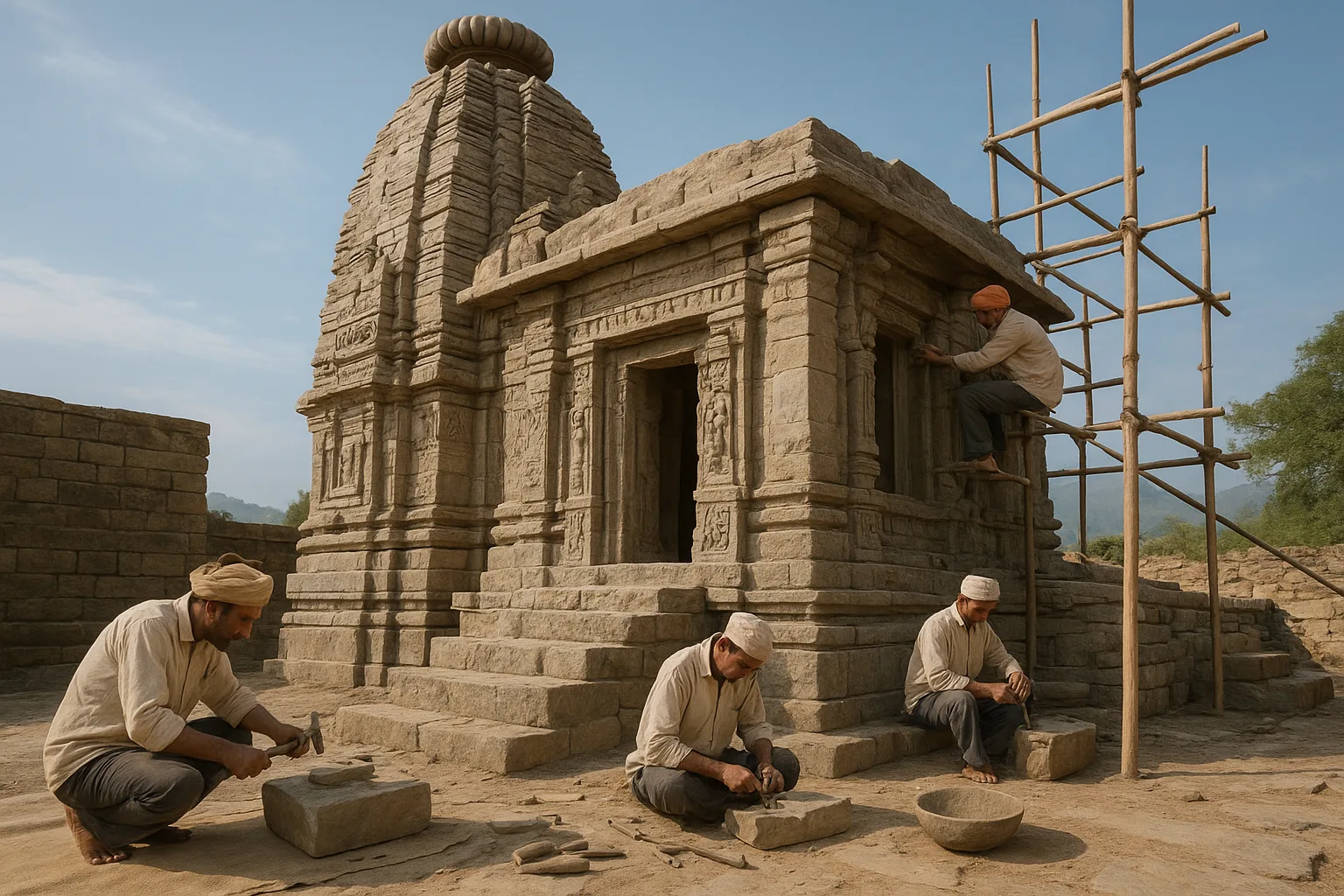
Throughout Chamba’s history, the task of protecting temple heritage has never fallen solely to kings or priests. Village guilds, hereditary masons, and custodial families—all played roles as guardians. These communities passed down not just building techniques but also ritual knowledge: how to cleanse and re-consecrate a damaged shrine, how to interpret omens in the wake of a disaster, and when to seek the support of the raja for urgent repairs.
By the late 19th century, British administrators began to take notice of Chamba’s unique temple architecture. The Chamba State Gazetteer (1904) documented the region’s religious sites in detail, both as monuments of interest and as markers of a distinct local identity. Such records were double-edged—inviting both admiration and, at times, insensitive interventions. The preservation of Chamba’s temples increasingly became a matter of public concern, as growing awareness of their cultural and historical value spread beyond the valley.
Modern Challenges: Tourism, Development, and the Weight of History
In the past century, Chamba’s temples have faced a new wave of threats. The opening of mountain roads and an influx of visitors have brought economic opportunities—and unprecedented pressures. Foot traffic erodes ancient courtyards, pollution blackens stonework, and the spread of concrete construction threatens the visual harmony of temple precincts.
Local conservation efforts have tried to adapt: community groups organize annual cleaning festivals, artisans are commissioned to restore faded carvings, and legal protections have been enacted to prevent encroachment. Yet, the tension between heritage and modernization lingers, as many families weigh the benefits of tourism against the risk of losing what makes Chamba unique.
Recent years have also seen a resurgence of pride in Chamba’s living heritage. School groups tour the temples, learning not just stories but the skills to protect them; young architects document forgotten shrines in remote hamlets, and festivals like Minjar become platforms for heritage awareness. The valley’s temples are once again at the heart of debate—not simply relics to be admired, but living testaments to survival and adaptation.
Echoes of the Past: Chamba’s Heritage in the Present
As dusk falls, the temple bells ring out once more. Their sound, unchanged for centuries, is a reminder of continuity amidst change. Chamba’s temples endure because of the shared resolve of its people—villagers and priests, masons and monarchs—who have guarded their sacred spaces against time and turmoil alike. In their weathered stone and fragrant cedar, one finds the living memory of devotion, resilience, and renewal.
Even now, debates over conservation and development echo the dilemmas faced by earlier generations. The challenge is not just to preserve old stones, but to honor the values and skills that built them. As Chamba stands on the threshold of a new era, its temple heritage remains a source of identity and inspiration—a legacy to be defended, cherished, and reimagined by each generation.
In the next part of our series, we journey into the heart of Chamba’s artistic renaissance, exploring the painters, poets, and artisans who transformed the valley into a cradle of Himalayan culture.
Previous: Challenges of Development in Chamba
Next: Traditional Crafts in Today’s Chamba