
Series: History of Kinnaur, Himachal Pradesh, India
Phase 5: Modern Era — Part 22 of 30
This article appears within a continuing historical series that follows the western Himalayas into the modern era. With the end of princely rule and the integration into independent India, long-standing social and political patterns were reconfigured. This phase examines how development, state formation, and memory interact with inherited landscapes, shaping contemporary life while carrying forward echoes of the past.
The Winter Morning in Reckong Peo
It was a biting morning in January 1960 when elders from across Kinnaur gathered in the market square of Reckong Peo, the new district headquarters. Snow crowned the deodars, and the Sutlej River moved sluggishly in the shadowed gorge below. The air carried a sense of anticipation—Kinnaur, long an overlooked borderland, was about to be recognized as a district with a distinct tribal character. For many who stood there, the moment felt both historic and deeply personal, rooted in centuries of tradition, hardship, and collective memory.
Ancient Roots: Kinnaur’s Place in Himalayan History
Long before district boundaries or census reports, Kinnaur existed as a world apart. Nestled between the Greater Himalaya and the trans-Himalayan arid highlands, this region was shaped by its geography—a land of steep valleys, daunting passes, and rivers that both connected and divided. Oral traditions, still recounted in village gatherings today, speak of the ‘Kinners,’ a people believed in mythology to be celestial musicians, half-human and half-divine. These stories are woven into the daily lives of Kinnauris, blending spirituality with a keen awareness of their environment.
Yet when we move from mythology to historical inference, the region emerges as a vital crossroads. Early trade routes—linking the plains of Hindustan to the high plateau of Tibet—snaked through Kinnaur’s ridges and hamlets. In the records of the Chinese pilgrim Xuanzang (7th century CE), the area is referred to as part of the ‘Kiu-lu-to’ country, suggesting an established polity with its own customs and rulers. The ancient texts and regional chronicles describe Kinnaur not as an isolated enclave, but as a borderland where diverse cultures met, mingled, and sometimes clashed.
Communities and Belief Systems: Layers of Identity
The people of Kinnaur—known as Kinnauras—maintained a complex social fabric, distinct from neighboring regions. They spoke dialects of Kinnauri, a Sino-Tibetan language, and practiced customs shaped by both ancient animist beliefs and later waves of Hindu and Buddhist influence. The worship of local deities, called ‘devtas,’ continued alongside the reverence for Buddhist lamas and Hindu gods, creating a syncretic religious landscape unique to these valleys.
Families traced their lineages to legendary ancestors, often linking themselves to the Pandavas of the Mahabharata or the early Buddhist kings of Tibet. While such stories are cherished as part of oral tradition, administrative records—like the ‘Ain-i-Akbari’ from the Mughal era or British gazetteers of the 19th century—offer glimpses of a region governed by its own chiefs and councils, often negotiating autonomy with distant empires. The village system, with its intricate rules and collective rituals, fostered resilience and a sense of belonging that endures to this day.
Trade, Transition, and the Lure of the Hills
Kinnaur’s valleys, though remote, were never truly cut off. For centuries, traders carried wool, salt, and precious stones on mule-back between India and Tibet, braving blizzards and bandits alike. The Hindustan-Tibet Road, begun under the British in the 1850s, transformed the pace and pattern of these exchanges, though the spirit of self-reliance persisted. The villages, perched on cliff-sides or nestled by terraced fields, became hubs of both commerce and culture.
By the early 20th century, Kinnaur was administratively folded into the larger Chini tehsil of Mahasu district. British officials, such as those chronicled in the “Himachal Pradesh District Gazetteers,” described the people as ‘tribal,’ yet also noted their sophisticated systems of land tenure, justice, and forest management. The label ‘tribal’—though bureaucratic—only hinted at the region’s deeper identity, forged through centuries of adaptation and negotiation with the outside world.
The Tides of Independence and the Tribal Awakening
The closing of the Indo-Tibetan border in 1962, following the Sino-Indian conflict, marked a dramatic rupture in Kinnaur’s history. Communities that had looked to both Shimla and Lhasa found themselves suddenly more isolated, their trade ties severed. Yet this period of uncertainty also sparked a new sense of urgency and self-definition. As India’s new constitution recognized the need to protect the interests of its indigenous peoples, local leaders and activists in Kinnaur began to articulate their unique claims—emphasizing language, custom, and historical continuity.
It was within this ferment of postcolonial nation-building that the movement for Kinnaur’s separate tribal status gathered momentum. The case was built not only on the region’s ‘backwardness’ as defined by government reports, but on the enduring traditions and social structures that set it apart. The Himachal Pradesh government, drawing on anthropological surveys and the testimony of local elders, pressed for official recognition. This was not merely a technical designation, but a bid to preserve a way of life at risk from rapid change.
1960: The Formal Designation of Kinnaur District
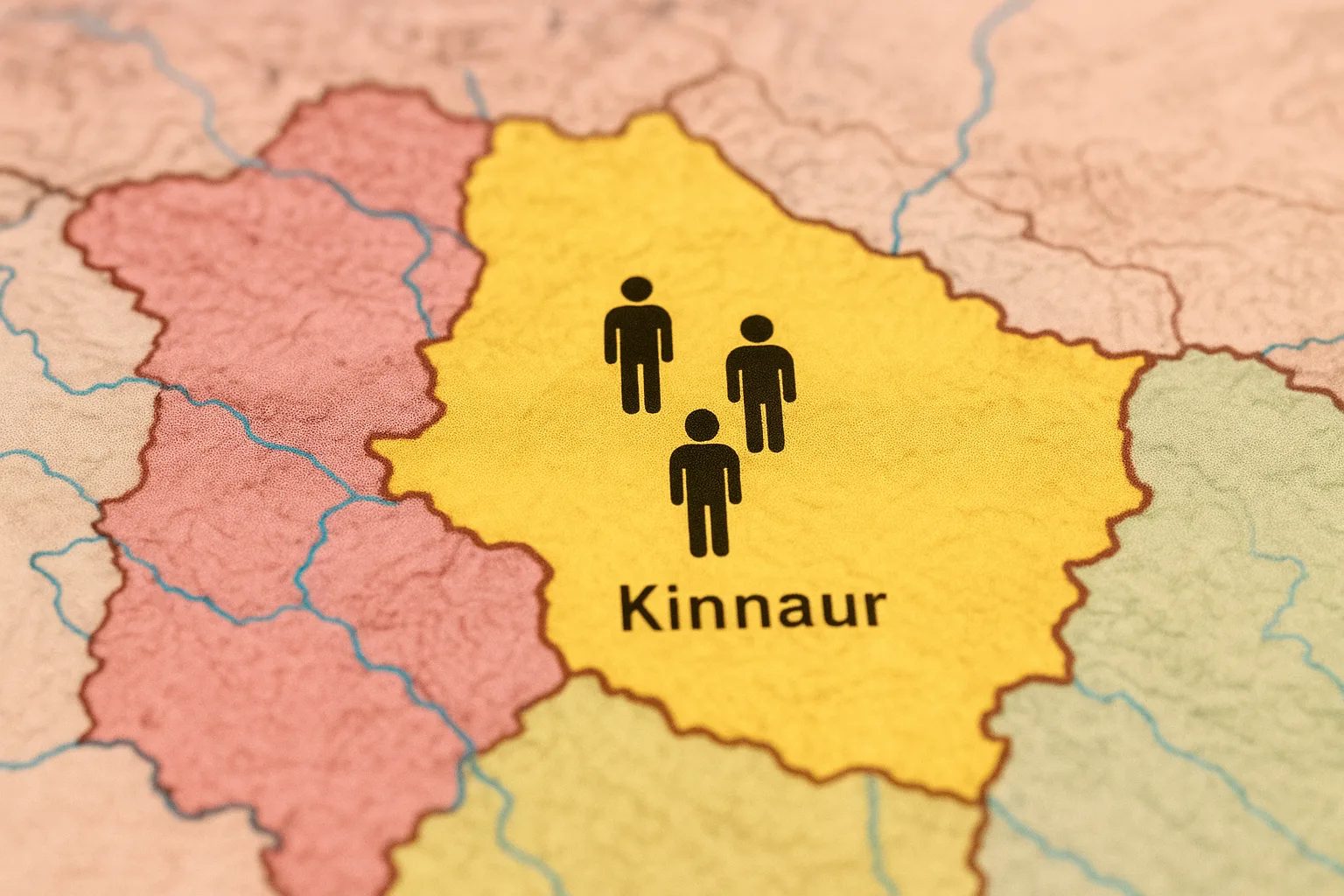
On 1 May 1960, Kinnaur was carved out as a distinct district within Himachal Pradesh, with Reckong Peo as its administrative center. Crucially, it was also designated a ‘Scheduled Area’ under the Indian Constitution, recognizing its predominantly tribal population and unique cultural heritage. This status brought with it special protections: reserved representation in local governance, safeguards for land ownership, and targeted development schemes meant to balance preservation with progress.
The moment was both administrative and deeply symbolic. For the first time, Kinnaur’s ancient boundaries and identity were reflected in the political map of modern India. The voices of its people—echoing from the stone temples of Kalpa to the windswept pastures of Chitkul—were now part of a larger national conversation about diversity, rights, and belonging.
Continuity and Change: Kinnaur’s Tribal Identity Today
More than six decades after that winter morning in Reckong Peo, the designation of Kinnaur as a tribal district continues to shape the region’s destiny. The protections enshrined in law have helped Kinnauris defend their land, language, and customs against the pressures of migration and commercialization. Yet the challenges are real—climate change, outmigration, and the tensions between modernity and tradition test the resilience of old institutions.
Still, the echoes of myth, memory, and history endure in every festival, every village council, and every prayer offered to the mountain gods. Kinnaur’s story, rooted in ancient crossroads and the struggle for recognition, remains a living testament to the power of place and community.
In the next part of our series, we will explore how Kinnaur’s tribal status has influenced its development path since the 1960s, shaping education, infrastructure, and the everyday lives of its people.
Previous: Kinnaur’s Integration into Independent India
Next: Border Sensitivity and Strategic Importance of Kinnaur