
Series: History of Shimla, Himachal Pradesh, India
Phase 5: Modern Era — Part 25 of 30
This article appears within a continuing historical series that follows the western Himalayas into the modern era. With the end of princely rule and the integration into independent India, long-standing social and political patterns were reconfigured. This phase examines how development, state formation, and memory interact with inherited landscapes, shaping contemporary life while carrying forward echoes of the past.
Arrival of the Summer Capital
In the waning days of May, when the plains of northern India shimmered beneath an unrelenting sun, a slow procession of horses, palanquins, and British carriages wound its way up the steep, forested ridges of the lesser Himalayas. The route, arduous and winding, ended at a cluster of clearings and modest hamlets perched atop a ridge: Shimla. It was the mid-nineteenth century, and the British colonial government had just begun the annual migration of its administrative machinery to what would soon be called the ‘Summer Capital of India.’
This seasonal exodus marked a profound shift for the region. Shimla, once a modest settlement known in local parlance as Shyamala, had for centuries lain quietly within the forested folds of the hills, its history shaped by regional hill states, scattered trade, and the rhythms of indigenous communities. The arrival of colonial administrators, and with them a growing retinue of service providers, marked the beginning of Shimla’s transformation into a destination—and, eventually, a symbol of tourism’s promise and peril.
Ancient Roots and Early Pathways
Long before the arrival of the British, the high ridges and valleys of what is now Shimla district echoed with the footsteps and voices of diverse communities. Oral traditions among the region’s Pahari people recall beliefs in forest deities and local goddesses, with the temple of Shyamala Devi lending its name to the settlement. The area was part of a mosaic of small principalities in the Himalayan foothills, with the Keonthal and Bushahr states exerting influence at different times.
Historical records from regional gazetteers and chronicles situate Shimla within well-established trade and pilgrimage routes. These paths linked the highlands to the fertile plains below, facilitating the movement of salt, wool, grains, and stories. The forests, streams, and upland meadows supported a subsistence economy; local fairs and seasonal markets brought together traders, shepherds, and hill farmers from across the region. Yet, even as these early networks shaped the cultural landscape, the area remained largely insulated from large-scale outside influence, its remoteness both a shield and a limitation.
The Colonial Gaze and the Birth of Hill Station Culture
By the early 1800s, the political map of North India was shifting rapidly. The Anglo-Gurkha wars and the subsequent consolidation of British power in the hills brought Shimla to the attention of colonial officers seeking relief from the heat and illness of the plains. In 1819, Lieutenant Ross of the Bengal Engineers built the first British house in Shimla. Within two decades, the settlement had grown into a bustling seasonal capital, its population swelling each summer as civil servants, merchants, and their families arrived in search of cool air and social diversions.
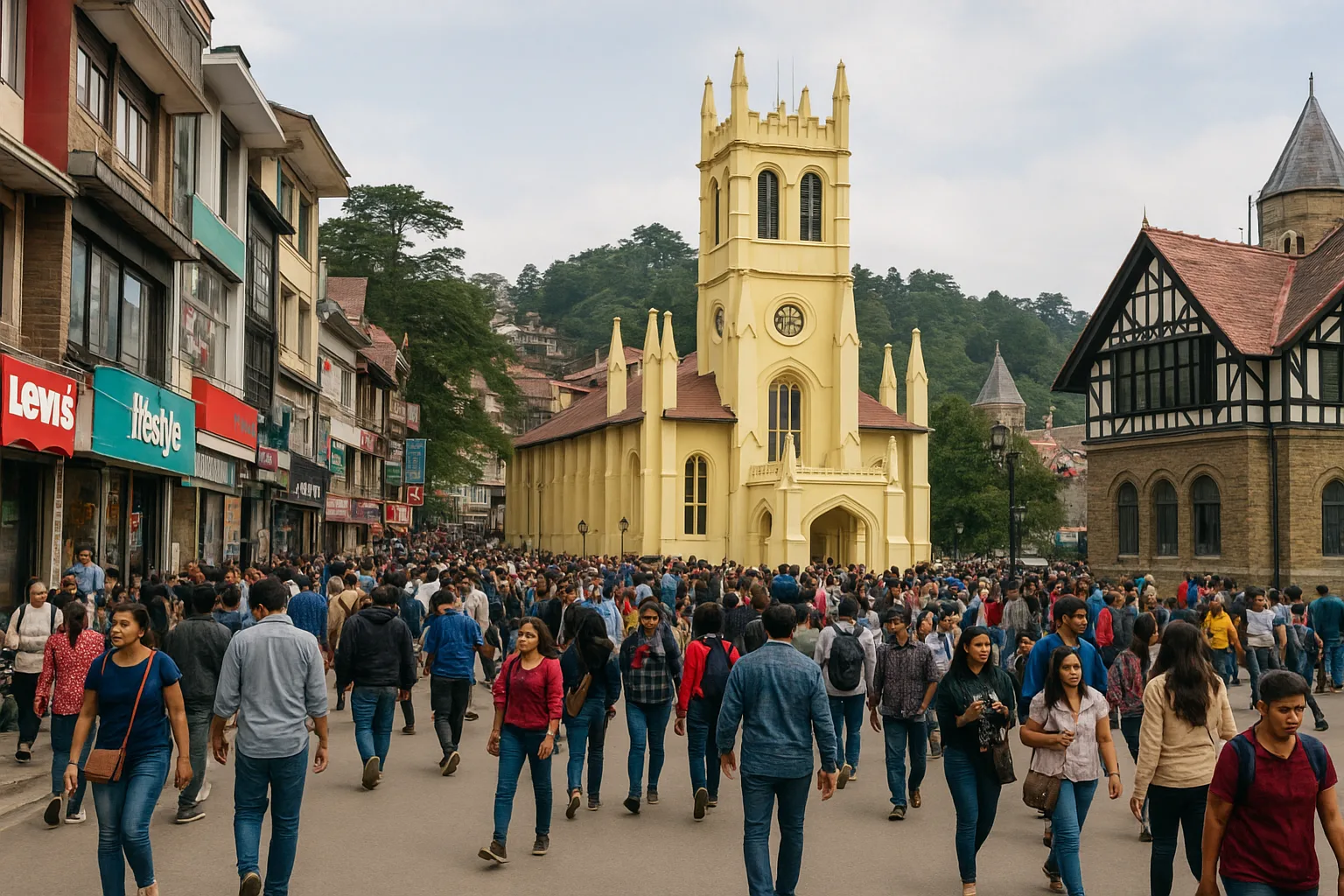
Shimla’s transformation was swift. The construction of the iconic Mall Road, the grand Viceregal Lodge, and a host of churches, clubs, and hotels created a distinctly European urban landscape in the heart of the Himalayas. The Kalka-Shimla railway, completed in 1903, made access easier and further opened the region to visitors. Tourism, in its colonial guise, became both an economic lifeline and a force for cultural change. Local artisans found new markets for their crafts, while cooks, porters, and guides adapted traditional knowledge to serve an increasingly cosmopolitan clientele. Yet, the new order also marginalized some local practices and reshaped land use in ways that would have lasting consequences.
Tourism in the Age of Independence
The end of British rule in 1947 brought a new era. Shimla ceased to be the summer capital but retained its allure as a retreat for Indian administrators, artists, and travelers. The decades after independence saw a steady increase in domestic tourism, with trainloads of visitors arriving from Punjab, Delhi, and beyond. Hotels and guesthouses multiplied, and the town’s institutions—its schools, theaters, and libraries—continued to draw those seeking respite from urban India.
By the 1970s and 1980s, tourism had become central to the town’s economy. The growth was not without challenges. The infrastructure, designed for a smaller, seasonal population, was often stretched thin. Roads, water supplies, and waste management systems creaked under the strain. Yet, for many local families, tourism offered livelihoods in hotels, transport, handicrafts, and hospitality. The unique blend of colonial architecture and Himalayan scenery cemented Shimla’s status as a premier hill station, even as its character underwent subtle changes with every passing season.
The Double-Edged Sword: Benefits and Challenges in the Modern Era
In the present day, Shimla’s relationship with tourism is as complex as the terrain that surrounds it. On one hand, tourism is an engine of economic opportunity. It sustains thousands of jobs, supports schools and medical services, and keeps alive many traditional crafts. The influx of visitors each year brings vibrancy, investment, and a spirit of cosmopolitan exchange to this mountain town.
On the other hand, the very popularity that sustains Shimla has brought mounting pressures. Seasonal surges in visitors strain water resources, create traffic congestion, and generate waste that is difficult to manage on steep hillsides. The fragile forests and watercourses, already vulnerable to climate change, bear the brunt of unchecked development. Longtime residents sometimes lament the loss of old neighborhoods and the fading of communal festivals that once defined the town’s annual rhythm.
Efforts to balance these competing interests have taken many forms. Local and state authorities, often drawing on lessons from the past, have introduced policies to regulate construction, conserve heritage sites, and promote responsible tourism. Community organizations have revived fairs, restored temples, and championed the preservation of forest corridors. The debates that animate Shimla today—how to welcome visitors without eroding the very qualities that make the town unique—echo similar conversations that have played out here for generations.
Cultural Continuity and the Changing Face of Shimla
Despite rapid change, the deeper cultural rhythms of Shimla endure. The annual ritual of the summer influx, though transformed in scale, has its antecedents in the centuries-old migrations of shepherds, traders, and pilgrims who once traversed these hills. The pride that residents take in their heritage—whether expressed through the restoration of colonial buildings, celebration of local deities, or the preservation of Pahari language and crafts—reflects a continuity that links the present to a layered past.
Tourism, for all its contradictions, has made Shimla a meeting place of cultures and histories. It remains a crossroads: between the high Himalayas and the Indian plains, between the rhythms of the seasons and the demands of the modern world. The challenge, as ever, is to ensure that the blessings of tourism do not become burdens too heavy for the hills to bear.
Looking Forward: Shimla’s Future in the Balance
As the series continues, we will turn to the evolving civic life of Shimla in the late twentieth and early twenty-first centuries—exploring how local voices, environmental movements, and new generations are redefining what it means to belong in this storied hill town. The legacy of tourism, with its mix of promise and peril, will remain at the heart of that story.
Previous: Challenges of Infrastructure in a Hill Capital
Next: Preserving Colonial Heritage in a Growing City