
Series: History of Kinnaur, Himachal Pradesh, India
Phase 4: British Period — Part 20 of 30
This article is part of a wider series tracing the transformation of the western Himalayas under colonial influence. As British authority extended into the hills, existing political systems were restructured through treaties, administration, and new forms of governance. This phase considers how colonial rule reshaped society, economy, and space while leaving lasting imprints on local identity.
Twilight on the Sutlej: 1947 in Chini
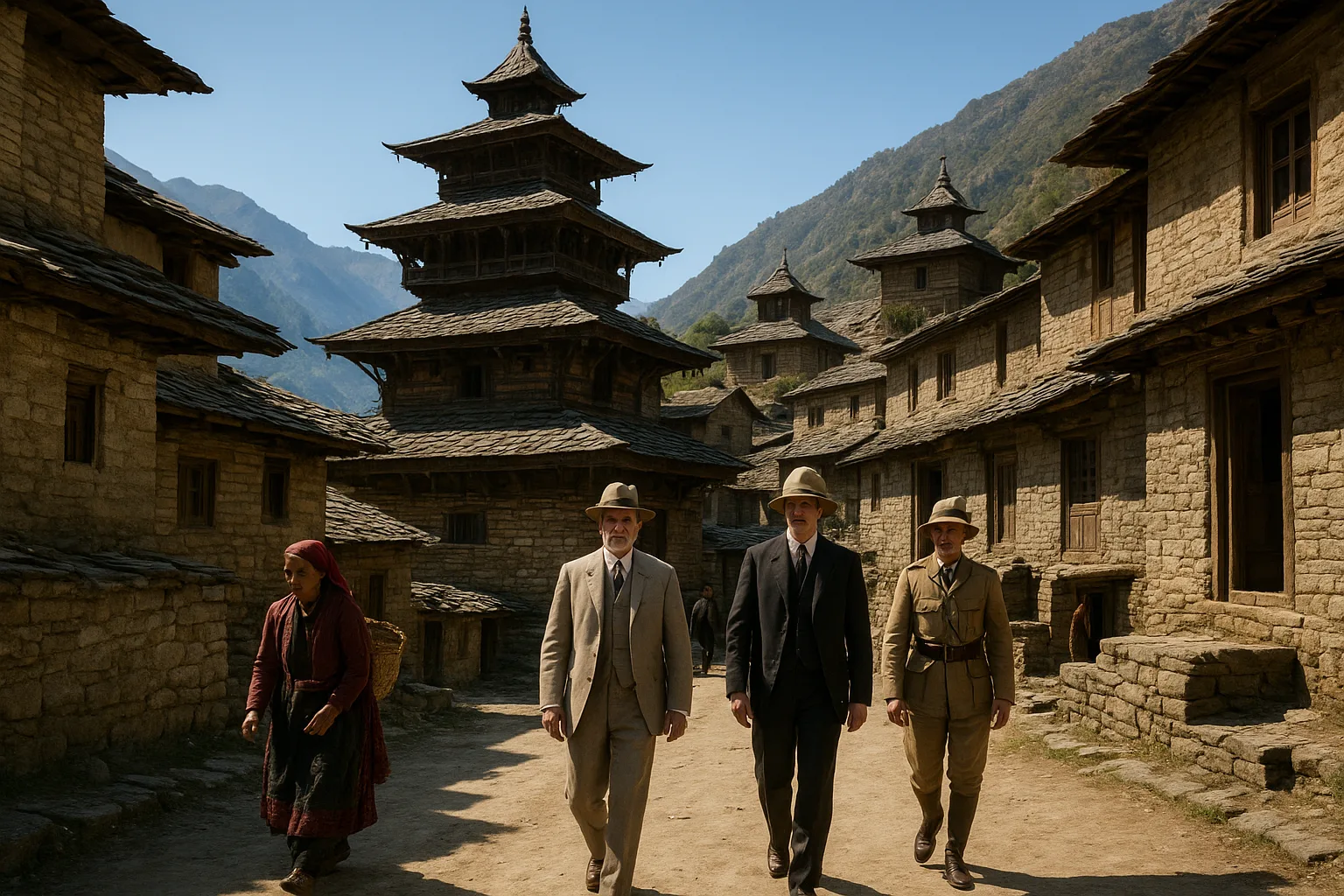
The autumn of 1947 settled with a brittle chill over the orchards and steep valleys of Kinnaur. Along the Sutlej, traders and villagers moved with quiet purpose, their daily routines both ancient and newly uncertain. In Chini (now Kalpa), a small cluster of houses and the stately residence of the local chieftain stood as silent witnesses to the coming of dawn on a new era. The British flag had been lowered across India, but in these mountains, change seeped slowly, like the meltwater from distant glaciers.
From Myths to Maharajas: Kinnaur’s Deep Roots
Long before colonial officials appeared, Kinnaur’s history was woven from a tapestry of oral traditions, local chronicles, and the shifting realities of Himalayan politics. The people of Kinnaur trace their origins to the legendary Kinners—semi-divine beings in Hindu and Buddhist mythology, said to inhabit the region’s high pastures and forests. While stories of Kinners and the Pandavas persist in folktales and festivals, historians rely on firmer ground: evidence of early agricultural settlements, Buddhist influences, and the rise of local rulers centuries before the British arrived.
By the early medieval period, Kinnaur had become a crossroads of trade and culture. Its communities—Kinnauras, Rajputs, and scheduled tribes—were shaped by ancient trade routes connecting Tibet, Ladakh, and the plains of India. Belief systems reflected this diversity, with Hindu and Tibetan Buddhist practices coexisting, often blending in village rituals and temple architecture. The valleys echoed with the recitations of lamas and the chimes of temple bells, as well as the chants of local bards who preserved genealogies and legends.
Princely States and Colonial Shadows
In the 19th century, political boundaries grew sharper. Kinnaur, then called Chini tehsil, was ruled by a patchwork of local chiefs (known as kanets or rânas), some tracing their authority to ancient times, others to the turbulent rise and fall of the Bushahr state—the dominant power in the region. The Gazetteer of the Simla District, published in the late 19th century, describes Chini as semi-autonomous, governed by hereditary chieftains who paid tribute to the Raja of Bushahr but maintained considerable independence over local affairs.
British colonial administration arrived in the hills as an afterthought to the empire’s ambitions elsewhere. After the Anglo-Gurkha War, the British annexed the broader region, but Kinnaur’s remoteness discouraged direct interference. Instead, the British preferred to govern through existing power structures, confirming the privileges of local rajas and rânas while extracting loyalty and revenue. The annual trade with Tibet, conducted over treacherous mountain passes, was closely watched—but also tolerated, as it brought wool, salt, and gold dust into British India.
Resistance, Accommodation, and Quiet Change
Despite their nominal subordination, Kinnauri chieftains skillfully negotiated their position. Official records and local memory recall episodes of resistance—refusals to pay tribute, minor insurrections, or disputes over forest and grazing rights. Yet, more often, the relationship was one of wary coexistence. The British built roads, appointed tehsildars, and introduced new taxes, but the rhythms of rural life—village council meetings, religious festivals, and seasonal migrations—remained largely intact.
Oral tradition preserves stories of cunning leaders who protected village autonomy by playing one overlord against another, or by invoking ancient customs in defiance of outside demands. In quieter ways, colonial presence shaped Kinnaur’s social fabric: English education arrived in select villages, and new administrative divisions slowly eroded the old order’s sanctity. Local chronicles, such as the Bushahr chronicles, record the gradual encroachment of colonial bureaucracy, but also the persistence of hereditary rights and social hierarchies well into the 20th century.
The Last Days of the Rajas
The world changed rapidly in the 1940s. The Second World War brought new urgency to strategic frontiers. The roads built to supply the Allied war effort transformed villages into bustling waypoints. Yet, the greatest transformation came with Indian independence. The princely states faced mounting pressure to accede to the Indian Union. In Bushahr, as in other Himalayan states, the old rulers saw their authority wane. Kinnaur’s rajas and rânas—once the unquestioned arbiters of justice and custom—found themselves negotiating not with British agents, but with representatives of a new, democratic India.
By 1948, the princely state of Bushahr was merged into the newly formed Himachal Pradesh. The hereditary privileges of local chiefs were abolished, and administrative reforms swept away the last vestiges of feudal control. The villages of Kinnaur, for the first time in living memory, were directly governed by Indian officials. The era of princely and colonial overlords had ended—almost quietly, without the violence that wracked other regions, but with profound consequences for local identity and governance.
Legacy of Transition: Memory and Identity
The rapid changes of the mid-20th century did not erase centuries of tradition overnight. In Kinnaur’s villages, elders still tell stories of the last rajas, of royal processions and courtly intrigues, and of the British officers who brought new laws to the high valleys. The landscape is dotted with reminders of the past—stone forts perched on crags, temples built by royal patronage, and the silent ruins of colonial outposts.
Yet, the political transition also unleashed new energies. Land reforms and the end of tribute freed communities from old obligations. Education and infrastructure brought new opportunities, while migration and trade continued to bind Kinnaur to the wider world. The region’s unique blend of Hindu and Buddhist traditions—shaped by centuries of princely autonomy—remains a defining feature of its cultural fabric. Today, festivals, language, and local governance reflect both ancient roots and the adaptive strategies learned during the colonial and princely eras.
Looking Ahead: From Past to Present
The end of princely and colonial control marked a watershed in Kinnaur’s history, closing one chapter and opening another. Even as the old order faded, the people of Kinnaur drew on deep reservoirs of resilience and tradition, shaping a future that honors both change and continuity. The memory of rajas, trade caravans, and British envoys lingers, not as mere nostalgia, but as vital threads in the fabric of modern Kinnauri identity.
The next part of this series will trace how Kinnaur navigated the first decades of independence—adapting to new political realities, forging a place within Himachal Pradesh, and redefining its relationship with the wider Indian nation. The echoes of the past remain, guiding the region through the challenges and promises of a rapidly changing world.
Previous: Restricted Access and Isolation During the Colonial Era
Next: Kinnaur’s Integration into Independent India