
Series: History of Mandi, Himachal Pradesh, India
Phase 4: Mughal, Sikh & British Period — Part 20 of 30
This article is part of a wider series tracing the transformation of the western Himalayas under colonial influence. As British authority extended into the hills, existing political systems were restructured through treaties, administration, and new forms of governance. This phase considers how colonial rule reshaped society, economy, and space while leaving lasting imprints on local identity.
The Dawn Breaks Over Colonial Mandi
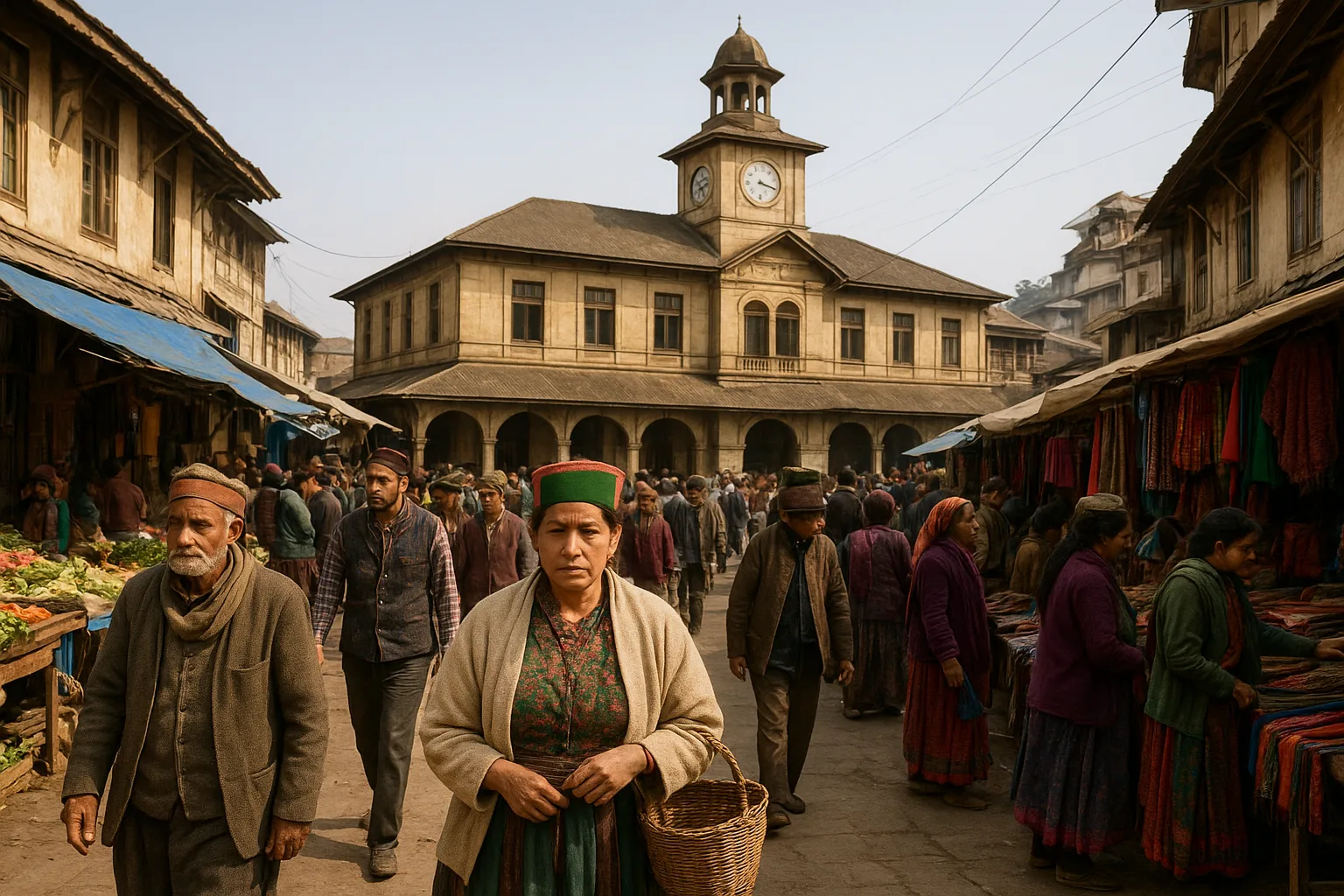
The clang of temple bells mingles with the thud of hooves on cobbled lanes, as the first rays of sun touch the gabled rooftops of Mandi. It is the late 19th century. From atop the Tarna Hill, the town unspools below—dense clusters of wooden houses, their carved balconies leaning over bazaars alive with traders, priests, and travelers. The Sutlej’s tributaries shimmer nearby, bearing the quiet promise of trade and sustenance. Yet beneath the daily rhythm, the town is changing. The British Raj, now entrenched in the hills, has begun to leave its mark on the ancient seat of the Mandi rajas.
A Hill State in the Shadow of Empire
Historically, Mandi’s roots stretch back to the 16th century, when it rose as a successor to the Suket state. The ruling dynasty traced its origins to the legendary Ajbar Sen, but by the mid-19th century, the political landscape was transformed. After the Anglo-Gurkha War and subsequent treaties, the British exerted suzerainty over Himachal’s hill principalities. Mandi, nominally autonomous, was now watched by the colonial Resident at Shimla and bound by treaties that dictated military support and diplomatic allegiance.
Unlike the bustling colonial centers of the plains, Mandi’s daily life retained a distinctly local character. Yet the arrival of British officers, surveyors, and the trickle of new laws would slowly recalibrate the rhythms of this Himalayan town.
Bazaars and Bazaarsis: The Heartbeat of Local Life
In the morning, Mandi’s central bazaar filled with sound and color. Shopkeepers displayed their wares—woolen shawls, salt from the Punjab, jaggery, and the famed local silver. Merchants from Kangra, Kullu, and the plains haggled in a patchwork of dialects. The bazaar’s layout, with its winding alleys and makeshift stalls, had been shaped by centuries of trade along the old salt and pashmina routes. Even under British suzerainty, these routes remained vital arteries, bringing news, goods, and a cosmopolitan edge to the town’s daily life.
British records, such as gazetteers from the 1880s, describe Mandi as a hub where traders and pilgrims mingled. The town’s festivals—Mahashivratri foremost among them—drew throngs to the temples and markets, their rituals unchanged even as British officers observed from a distance.
Communities, Castes, and Customs
Mandi’s social fabric was complex. Rajput clans, deeply entwined with the royal court, held sway in administration and ritual. Artisans, including the famed silversmiths and woodcarvers, clustered in distinct quarters. Brahmin families presided over temple rites, while the local Mahajan community controlled much of the trade and lending. Beneath these, the landless laborers—often from marginalized castes—formed the backbone of the agrarian economy.
Oral traditions recall how village life revolved around seasonal cycles—ploughing, sowing, and harvest punctuated by fairs and folk performances. These rhythms persisted even as British-imposed systems—like land revenue surveys and new administrative boundaries—began to reshape local hierarchies. Yet the weight of custom and collective memory anchored daily life more than colonial edicts, at least in the early decades of British presence.
Belief Systems: Temples, Rituals, and the Sacred Landscape
Religion remained the axis around which Mandi’s society turned. The town’s hundreds of shrines—dedicated to Shiva, Vishnu, and local deities—were not merely places of worship but centers of community decision-making and dispute resolution. The raja, still revered as the chief patron of the gods, presided over major festivals, his authority sanctified by tradition even as his political power waned under the Raj.
British gazetteers, while often dismissive of “native superstition,” noted the intensity of local devotion. Public processions, river ablutions, and the annual arrival of village gods from the surrounding valleys infused the town with a sense of sacred continuity. Rarely did colonial officers interfere in these rituals, wary of upsetting a delicate social balance.
Education, Aspirations, and the Whispers of Change
The first government school opened in Mandi in the 1860s, a modest institution by the standards of the plains. For local elites, English education became both a symbol of status and a gateway to new opportunities. Yet for most, traditional paths—apprenticeships, temple service, or agriculture—remained the norm. The arrival of the telegraph, postal services, and, eventually, road links to Shimla and Punjab, began to shrink distances, bringing fresh ideas and ambitions to the old hill town.
Some families sent their sons to study in Lahore or Delhi, returning home with stories of the wider world. Others watched with suspicion, fearing the erosion of custom and authority. Oral histories from the early 20th century hint at these tensions: the allure of modernity, the pull of tradition, and the quiet negotiations that shaped each family’s response to change.
Colonial Administration and Local Authority
While the British never ruled Mandi directly, their presence was keenly felt in courtly life. The raja’s court, once the seat of absolute authority, now operated within the framework of British oversight. Annual reports, legal codes, and stipends flowed between Mandi and the provincial authorities in Shimla. The Resident’s visits were occasions of both ceremony and subtle humiliation—a reminder of the shifting locus of power.
Yet, unlike in the plains, direct colonial intervention in daily life remained limited. The British relied on local notables and the raja to maintain order, collect taxes, and implement reforms. Political dissent was rare, but the memory of earlier resistance—such as the 1840s revolts after the Anglo-Gurkha War—lingered in local lore.
Echoes of the Past in Modern Mandi
Today, the streets of Mandi still pulse with the rhythms set centuries ago. The wooden facades, the crowded markets, and the swirl of ritual and festival all bear the imprint of a time when the town balanced tradition and transformation. The British era brought roads, schools, and new horizons, but it never fully dimmed the town’s ancient identity. Local customs, caste ties, and temple festivals continue to shape daily life, their roots entwined with the colonial experience.
As we move forward in this series, we will follow the final decades of the Raj and the dawn of independence—when Mandi, like much of India, faced the challenge of forging a new future from its layered past.
Previous: Colonial Rule and the Transformation of Trade in Mandi
Next: Integration of Mandi State into Himachal Pradesh