
Series: History of Solan, Himachal Pradesh, India
Phase 4: British Period — Part 17 of 30
This article is part of a wider series tracing the transformation of the western Himalayas under colonial influence. As British authority extended into the hills, existing political systems were restructured through treaties, administration, and new forms of governance. This phase considers how colonial rule reshaped society, economy, and space while leaving lasting imprints on local identity.
Steam and Stone in the Shivaliks
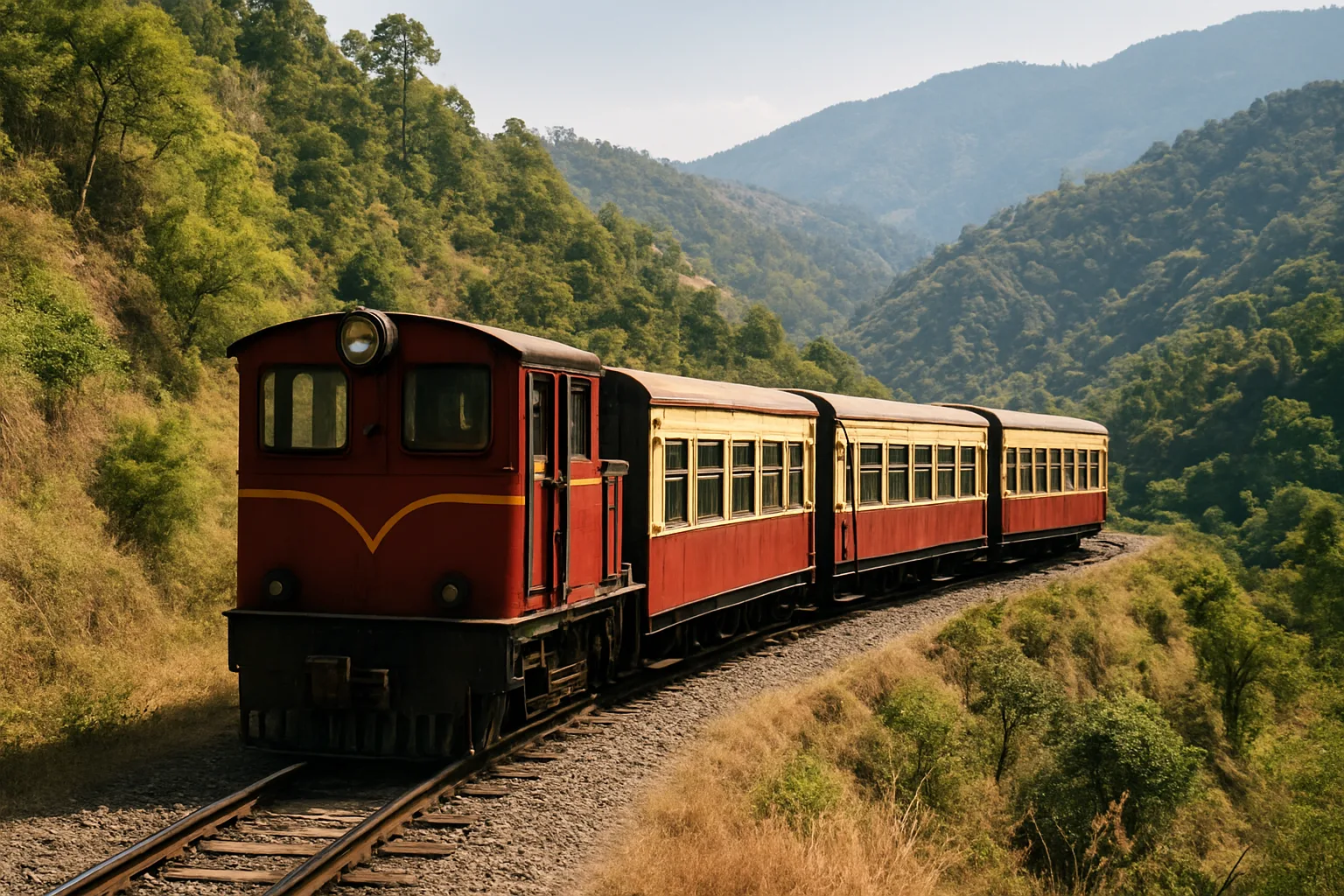
It is a misty morning in 1903. The air around Solan crackles with anticipation as an unfamiliar sound—part thunder, part music—rumbles through the hills. Villagers and British officials gather near a freshly laid track, eyes fixed on a black locomotive as it chugs around a bend, belching steam. The Kalka-Shimla Railway, weaving through the heart of Solan, has arrived. The ancient pine forests and winding footpaths that defined the region’s isolation are about to give way to an age of iron and stone. Solan will never look the same again.
From Footpaths to Thoroughfares: Solan Before the British
Before the 19th century, Solan was a quiet town nestled in the lower Himalayas, its slopes dotted with oak and deodar. The area’s strategic location on the route between Kalka and Shimla—though not yet marked by rails or metalled roads—had long drawn traders, pilgrims, and mule caravans. Still, journeys were arduous. Paths wound through ravines and forests, vulnerable to monsoon landslides and banditry. The Nawab of Baghat, Solan’s erstwhile ruler, maintained these tracks with limited resources; news and goods from the plains arrived slowly, shaping a rhythm of life in tune with the hills.
Imperial Designs: The British Arrive in the Hills
The 19th-century British advance into Himachal’s hills was driven by both strategic and political aims. After the Anglo-Gorkha war and the Treaty of Sugauli (1815), the British East India Company asserted control over the region, recognizing the value of the Shivalik hills as a buffer and summer refuge. Shimla emerged as the summer capital of British India, intensifying the need for reliable connections from the plains.
Solan, lying between Kalka and Shimla, quickly became a critical waypoint. British surveyors, led by figures like Colonel Barog and engineers from the Public Works Department, began mapping routes for all-weather roads and daring railway lines. Their ambition was to conquer the hills not only with soldiers, but with steel and stone.
The Kalka-Shimla Railway: Engineering a New Era
The Kalka-Shimla Railway stands as a marvel of colonial engineering. Sanctioned in 1898 and opened in 1903, the line cut through 96 kilometers of treacherous terrain. Solan’s landscape was forever altered as tunnels were bored through mountains and viaducts arched across valleys. The most famous, the Barog Tunnel—named after the ill-fated Colonel Barog—involved tragedy and perseverance, shaping local legend as much as landscape.
With the opening of the Solan railway station, the town was thrust into a new era. The journey from Kalka to Shimla, once a multi-day ordeal by pony or palanquin, was now a matter of hours. The train became a lifeline, carrying postal bags, government officials, and soon, tourists eager to escape the heat of the Punjab plains. British officers and Indian workers mingled on the platforms, exchanging news and gossip under tin roofs that echoed with the clatter of departing trains.
Economic and Social Ripples
The railway did more than move people—it transformed Solan’s economy. Agricultural produce, especially mushrooms and vegetables from the region’s fertile soils, could now reach distant markets. Breweries and distilleries, such as the famous Mohan Meakin brewery established in the 1850s in Kasauli, flourished thanks to easier transport. British cantonments and hill stations expanded, and new markets (bazaars) sprang up near the railway, drawing traders from Punjab, Rajasthan, and beyond.
Yet the transformation was not without challenges. Land for tracks was acquired, often forcibly, from local farmers and communities. The influx of migrant laborers—Nepali, Pahari, and Punjabi—changed the town’s demographic fabric. The railway, an emblem of modernity, also brought disruptions: diseases like cholera spread faster, and class divisions became etched into the geography of the town, with British bungalows and Indian quarters separated by more than just the railway line.
Roads to Opportunity: Metalled Highways and Motorcars
If the railway was Solan’s iron artery, the roads were its nerve network. The British, recognizing the limitations of rail in the rugged mountains, invested heavily in metalled roads. The famous Kalka-Shimla cart road, completed in the late 19th century, paralleled the railway, providing a vital alternative, especially in emergencies or for goods too bulky for the narrow-gauge wagons.
Horse-drawn carts, and later motorcars, became a common sight in Solan’s bazaars. British officers, Indian nobility, and traders traveled the winding hairpins with relative ease. The road network also enabled the British administration to project its power—police stations, post offices, and rest houses (dak bungalows) dotted the landscape, connecting Solan to the broader colonial grid.
Changing Rhythms of Daily Life
With new roads came new rhythms. Schoolchildren could travel to missionary and government schools more easily. Local farmers transported their goods to market towns, while festivals and fairs drew larger crowds as mobility increased. Solan’s annual Shoolini fair, once a purely local event, began to attract visitors from distant regions, drawn by the promise of spectacle and trade.
The British penchant for order and efficiency also left its mark: milestones, signposts, and toll gates appeared along the roads. Local craftspeople adapted their skills, making carriages and repairing wheels, while hotels and tea shops catered to the needs of weary travelers.
Key Figures and Forgotten Hands
While colonial records highlight British engineers and administrators—men like Colonel Barog, Chief Engineer H.S. Harrington, and Governor Lord Curzon—the story of Solan’s transformation is equally the story of countless unnamed workers. Coolies and masons, often drawn from neighboring hill states and Nepal, labored for months in harsh conditions to carve out tunnels and lay roads. Women carried stones and water, earning meager wages while sustaining families in makeshift camps.
Indian contractors, foremen, and local elites also played a role. Some, like the Nawab of Baghat, negotiated with British authorities to protect local interests or extract concessions. Others navigated the opportunities and upheavals that came with new forms of wealth and mobility. The interplay of power and resistance, ambition and adaptation, defined this era as much as any blueprint or decree.
The War Years: Strategic Infrastructure in the Spotlight
As World War I and later World War II gripped the globe, Solan’s strategic location gained new prominence. The railway and roads funneled troops, supplies, and wounded soldiers to and from the hill stations, now converted into convalescent homes and military headquarters. The Mohan Meakin brewery, for instance, supplied alcohol to British troops, while local workshops repaired military vehicles. The infrastructure built in peacetime became a vital asset in wartime, binding Solan’s fate to imperial fortunes far beyond its hills.
Legacy and Reflection: Solan’s Path to the Present
Standing on the platform at Solan station today, one can still glimpse the stonework and iron bridges that transformed a sleepy hill town into a crossroads of ideas, commerce, and cultures. The whistle of the narrow-gauge train echoes stories of ambition and upheaval, while the busy roads hum with the promise of new connections.
Solan’s modern identity—diverse, dynamic, and outward-looking—owes much to the transformations set in motion under British rule. The arrival of railways and roads knit the town into the fabric of Himachal Pradesh and beyond, shaping its economy, its society, and its sense of place. As Solan grows, the legacy of those first iron tracks and winding roads endures in every journey made across its storied hills.
Previous: British Entry into the Solan Hills
Next: Colonial Administration and Governance in Solan