
Series: The UK Allotment Year
Phase 1: The Allotment Year — Month by Month — Part 12 of 50
This phase walks through the UK allotment year month by month — from planning in January to reflecting in December. Perfect for beginners or seasoned growers who want a month-by-month checklist for thriving plots.
December Growing Guide: Planning, Mulching, and Reflection
December is often seen as a quiet month on the allotment, but it’s actually a key time to set yourself up for success in the coming year. With the soil resting under frost and shorter daylight hours, it’s the perfect chance to plan, protect, and reflect. Taking small, thoughtful actions now will save you time and effort when spring arrives and the growing season kicks off.
Why December Matters
While you might not be planting much outdoors this month, December allows you to:
- Develop a clear crop plan to avoid last-minute decisions.
- Apply mulch to improve soil health and protect roots from frost.
- Reflect on the past year’s successes and challenges to improve your growing techniques.
Embracing these tasks now means you’ll be ready to hit the ground running when the days start to lengthen.
Key December Tasks
1. Planning Your 2024 Allotment
Good planning is the backbone of a productive allotment. December’s quiet pace is ideal for mapping out your crop rotation and seed selection.
- Review last year’s plot: Consider which crops thrived and which struggled. Note pest or disease issues.
- Crop rotation: Plan to avoid planting the same families of vegetables in the same spot to prevent soil fatigue and disease build-up.
- Seed ordering: Make a list of seeds you’ll need, including vegetables, herbs, and flowers to attract pollinators.
- Succession planting: Schedule staggered sowing dates to ensure a steady supply of fresh produce throughout the year.
2. Mulching to Protect and Nourish
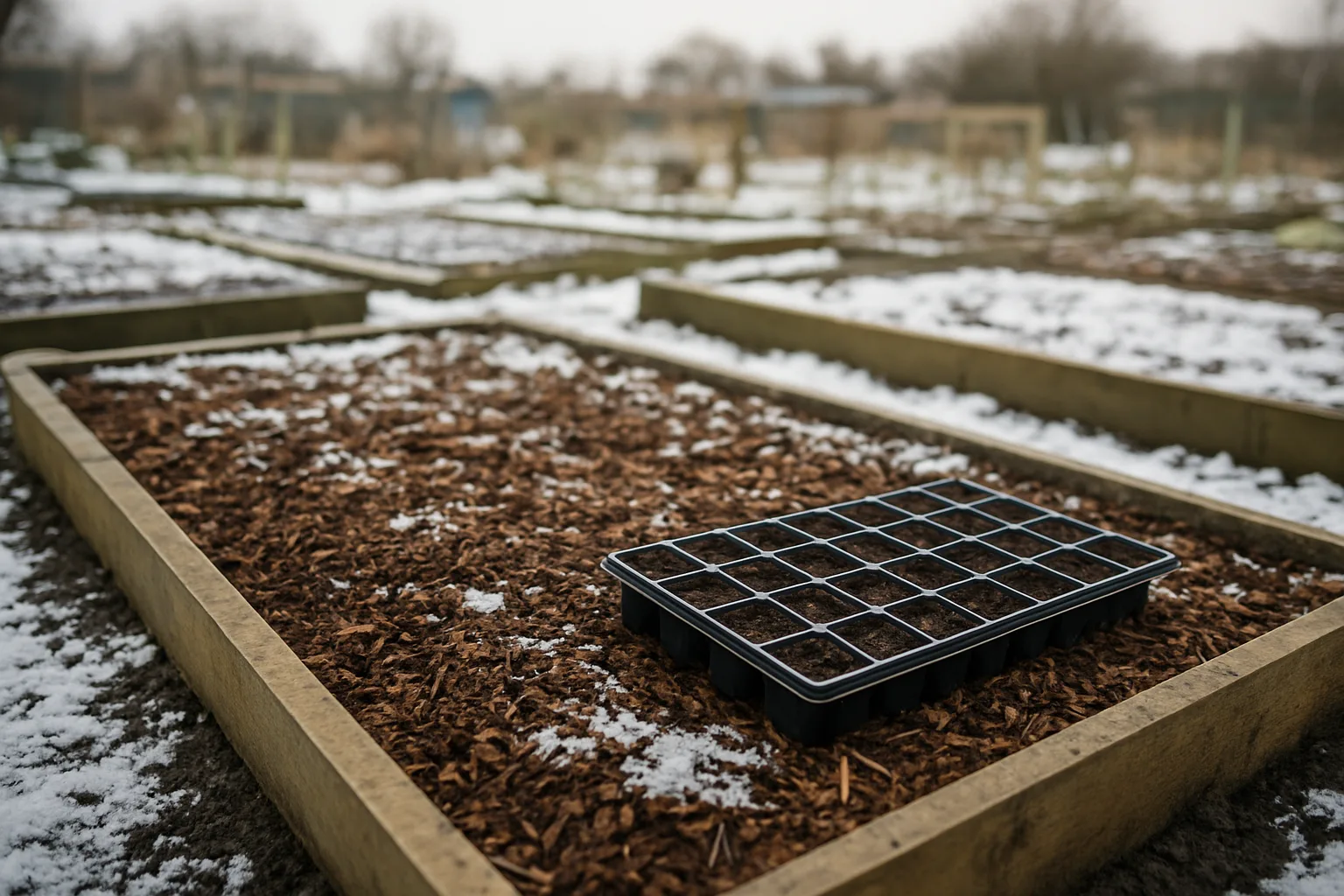
Mulching is one of the best things you can do in December to improve soil structure and protect plants and soil life during the coldest months.
- Choose organic mulches: Straw, well-rotted manure, leaf mould, or shredded bark are excellent and eco-friendly options.
- Apply a thick layer: Spread 5-10cm of mulch around perennial plants, brassicas, and vacant plots to prevent frost damage and weed growth.
- Mulch paths and bare soil: This stops erosion, keeps soil moisture stable, and adds organic matter as it breaks down.
3. Reflecting on the Past Year
Reflection is often overlooked but is vital for continuous improvement.
- Keep a garden journal: Note what worked well and what didn’t. Include weather patterns, pest problems, and harvest yields.
- Assess soil health: Consider getting a soil test if you haven’t done so recently to check pH and nutrient levels.
- Evaluate tools and equipment: Check for wear and tear, clean and store tools properly to extend their life.
December Checklist
- Draw or update your plot plan for 2024.
- Order seeds early to avoid shortages.
- Apply organic mulch to bare soil and around perennials.
- Clear up spent crops and add to compost heaps if disease-free.
- Review your garden journal and make notes for next year.
- Clean, sharpen, and oil tools before storing.
Common Mistakes to Avoid
- Waiting too long to plan: Delaying seed orders can mean missing out on popular or rare varieties.
- Skipping mulching: Leaving soil bare exposes it to erosion and nutrient loss over winter.
- Ignoring soil health: Not testing or amending soil can lead to poor crop performance.
- Leaving tools dirty: This can lead to rust and spread plant diseases next season.
- Overlooking pest remnants: Not clearing spent crops properly can harbour pests and diseases.
Tools and Materials for December Tasks
- Garden journal or notebook for planning and reflection.
- Plot plan maps or graph paper.
- Organic mulches: straw, well-rotted manure, leaf mould.
- Basic garden tools: fork, spade, rake for clearing and mulching.
- Tool cleaning supplies: wire brush, oil, sharpening stone.
- Seed catalogues or websites for ordering.
Next Steps for December and Early January
Once you’ve mulched and planned, keep an eye on the weather. If you have a greenhouse or cold frame, you can start sowing hardy crops like broad beans or early peas towards the end of the month or in early January.
Continue to reflect on your allotment journey, and use the quiet winter period to learn – read gardening books, join forums, or visit local allotments for inspiration.
December is your foundation month. With a little effort now, you’ll be rewarded with a well-prepared plot and a confident start to the 2024 growing season.
Previous: November in the Allotment: Garlic, Broad Beans, and Tidying Up
Next: How to Grow Potatoes in a Small UK Allotment