
Series: History of Sirmaur, Himachal Pradesh, India
Phase 3: Religion & Culture — Part 14 of 30
This article belongs to a historical series examining how expanding empires and regional powers reshaped life in the western Himalayan hills. As external influences pressed into the mountains, local rulers navigated diplomacy, resistance, and accommodation. This phase explores how wider political currents intersected with entrenched hill traditions, altering governance without entirely displacing older structures.
Before Dawn in the Foothills
A chill mist clings to the terraces above the Giri River. Somewhere between the whisper of pines and the distant clang of a temple bell, Sirmaur’s soul stirs awake. Here, in this ancient Himalayan district, festival mornings are not a spectacle for outsiders, but a renewal of collective memory—threaded through every household from Nahan to the remote villages by the Yamuna’s banks.
Long before Sirmaur’s emergence as an organized hill state, its valleys were cradles of ritual and story. The rites that color these hills today are echoes of a past both remembered and imagined, shaped by the ebb and flow of people, faiths, and power.
Myth and Memory: The Earliest Celebrations
Sirmaur’s oldest tales waver between the oral and the legendary. Local bards, or Jagaris, still recount the exploits of deities like Shirgul Maharaj and Bhangayani Devi, whose worship predates written record. These stories, passed down from generation to generation, reveal how ritual life bound scattered hamlets into a shared cultural fabric even when formal statehood was yet to materialize.
The Jagars—nightlong ceremonies of invocation—are among the region’s most distinctive traditions. Villagers gather to summon ancestral spirits, seeking guidance or redress. Such observances are rooted in beliefs possibly older than Sirmaur itself, reflecting the syncretic worldviews that thrived along the shifting frontiers of early Himalayan societies.
Factual Anchor: Sirmaur’s Early Settlements
By the 10th century CE, as recorded in the earliest gazetteers and regional chronicles, Sirmaur’s valleys were a mosaic of small, fortified villages. These communities, often perched atop defensible ridges, were linked by trade paths tracing the river valleys to the plains and to neighboring hill tracts. Belief systems were shaped as much by these routes as by the landscape: myth traveled with merchants and wandering ascetics, evolving as it went.
Seasonal Rounds: The Calendar of Rituals
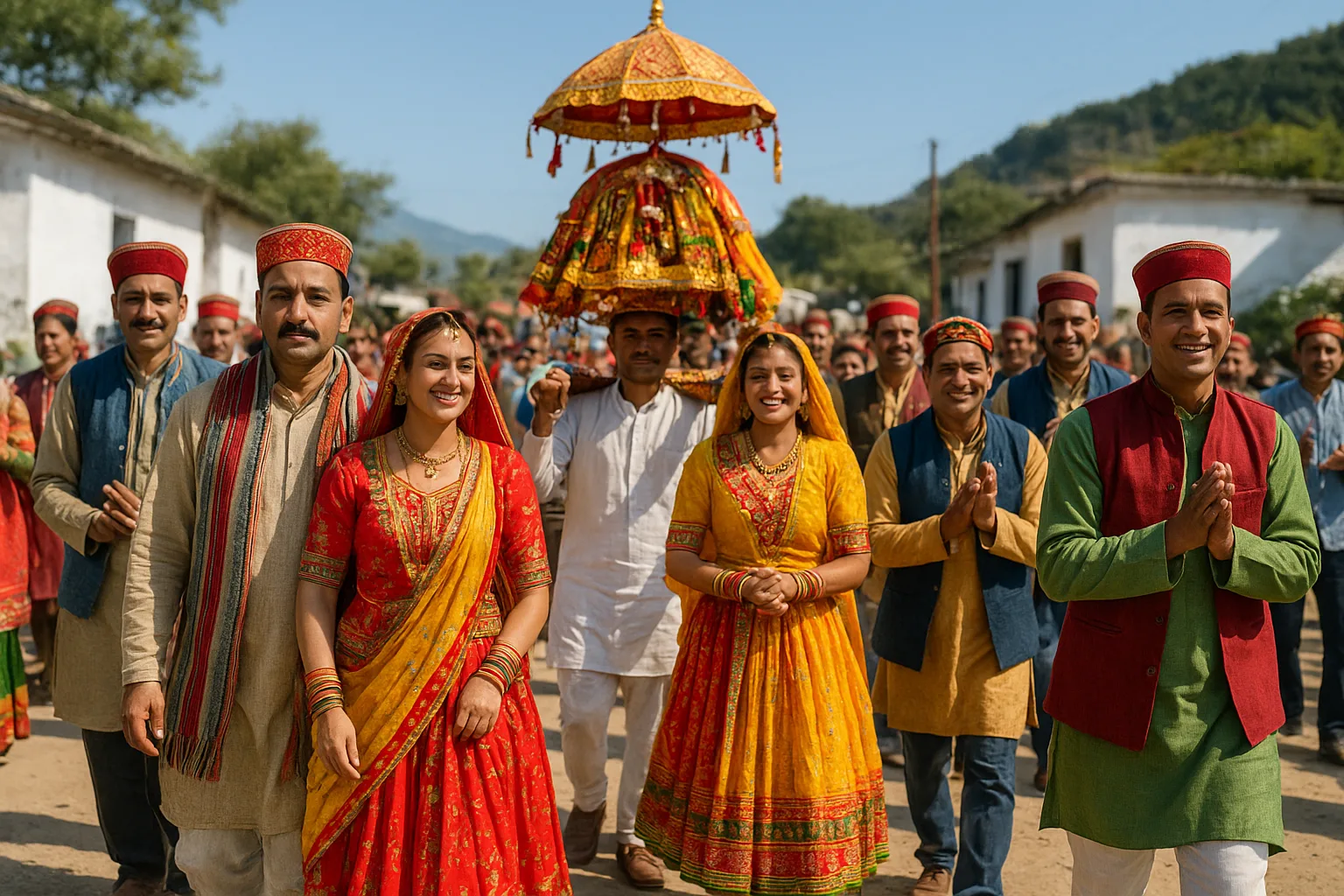
As Sirmaur’s polity coalesced—from tribal chieftaincies to a recognized princely state—the agricultural calendar became inseparable from ritual life. Spring’s Baisakhi festival was a celebration of new grain, marked by village fairs and temple offerings. At harvest, Dussehra and Diwali brought processions and the dramatic retelling of epic battles, blending pan-Indian traditions with local legend.
- Magh Mela: Held in the winter month of Magh, this festival drew villagers to riverbanks for ritual bathing, invoking both Hindu cosmology and indigenous water cults.
- Fagun Fair: In the lead-up to Holi, communities gathered at the shrines of local deities. Oral tradition holds these early spring rites as moments of social reconciliation and the public renewal of vows.
Historical inference suggests that such cycles of ritual were as much about asserting community identity as about devotion. Festival times were when dispersed villages forged alliances, negotiated marriages, and brokered disputes—functions as vital to survival as prayer itself.
Deities, Shrines, and the Politics of Ritual
The landscape of Sirmaur is marked with hundreds of shrines—from the ancient cave-temple at Maa Bhangayani to hilltop sanctuaries of Shirgul. Each has its story, often blending myth with the ambitions of local rulers. As Sirmaur’s Rajput dynasties consolidated power from the 11th century onward, they began to appropriate or patronize key cults, weaving ritual authority into political legitimacy.
Gazetteers from the colonial period note how rulers would sponsor temple festivals, using them as occasions to display royal largesse and reinforce their bond with the populace. Yet, local oral traditions often preserve a parallel narrative: of saints, shepherds, and women whose devotion, not royal decree, summoned the gods’ presence to these hills.
Ritual Specialists and the Social Order
Every festival in Sirmaur has its custodians. The Bajgi musicians, hereditary priests, and malis (gardeners) are as central to the ritual cycle as the deities themselves. Their songs and actions encode both religious and social memory, affirming caste boundaries while also offering moments for their negotiation and challenge.
It is here, in the details of who dances, who cooks, and who leads the procession, that the interplay of tradition and transformation is most vivid. While some roles are fixed by birth, others shift with circumstance, reflecting centuries of adaptation in the face of changing rulers, climate, and economy.
Contact Zones: Trade, Pilgrims, and Cultural Exchange
Sirmaur’s valleys have never been isolated. The old trade routes—linking the region to Yamuna valley, Jubbal, and the plains—brought with them new customs, crafts, and faiths. Pilgrims traveling to the great fairs at Haridwar or Paonta Sahib returned with stories and songs, gradually infusing local ritual life with broader influences.
Historical records from the Mughal period and later British gazetteers describe Sirmaur as a crossroads: a place where Hindu, Sikh, and animist practices blended, sometimes in harmony, sometimes in tension. The arrival of Sufi saints and Sikh Gurus, particularly Guru Gobind Singh’s legendary sojourn at Paonta, left enduring marks on festival calendars and ritual practice.
Festivals as Living History
Even as Sirmaur modernized—its forests logged, its villages connected by roads—festival life endured. The annual Renuka Fair, for instance, still draws thousands to the sacred lake, echoing myths of Parashurama and his mother Renuka, but also reflecting the anxieties and hopes of a changing region.
Oral traditions continue to evolve. Young people now perform folk dramas alongside traditional Jagars, and temple processions feature both smartphones and the old copper trumpets. Yet the essential rhythms—the gathering, the offering, the collective remembrance—remain much as they were centuries ago.
Reflections: Ancient Roots, Contemporary Resonance
Sirmaur’s festivals are more than seasonal celebrations; they are acts of historical memory, binding today’s communities to ancient landscapes and enduring myths. In every song and ritual, one hears the echoes of past migrations, forgotten dynasties, and the daily negotiation of faith and survival.
These rituals, though shaped by history, continue to adapt—reminding us that tradition is not a relic, but a living force. As we move forward in this series, we will turn next to the evolution of sacred architecture in Sirmaur, tracing how temples and shrines themselves became vessels of memory and community in the Himalayan hills.
Previous: Giripar Culture: Traditions of a Unique Himalayan Region
Next: Architecture of Forts, Temples, and Traditional Homes