
Series: History of Sirmaur, Himachal Pradesh, India
Phase 3: Religion & Culture — Part 13 of 30
This article belongs to a historical series examining how expanding empires and regional powers reshaped life in the western Himalayan hills. As external influences pressed into the mountains, local rulers navigated diplomacy, resistance, and accommodation. This phase explores how wider political currents intersected with entrenched hill traditions, altering governance without entirely displacing older structures.
Twilight in Giripar: A Living Tapestry
The last rays of sun slip behind the steep ridges of the Giripar region, casting long shadows across terraced fields and slate-roofed hamlets. Smoke rises from hearth fires, mingling with the crisp scent of pine. Here, in the southeastern corner of Sirmaur, Himachal Pradesh, daily rhythms echo patterns set centuries ago—woven from memory, myth, and mountain circumstance.
First Settlements: Between Rivers and Ridges
Giripar, literally “beyond the Giri River,” has long stood apart. Its villages—clustered along the upper reaches of the Giri and the Jalal rivers—bear traces of cultures old and layered. Archaeological finds are scarce, but oral traditions speak of aboriginal tribes, perhaps related to the Khasas or Kiratas, who once roamed these forests and meadows. By the early centuries CE, these hills saw the gradual arrival of Indo-Aryan settlers, their movement shaped by the terrain and the trade routes that threaded through the lower Shivaliks to the plains beyond.
Historical memory in Giripar is not written in stone but in story. Village elders recount lineages stretching back to mythical ancestors, blending local deities with echoes of the Puranic past. Yet, through the fog of legend, one discerns patterns: the emergence of clan-based communities, clustered for survival and worship, their lives defined by the land’s demands.
Myth, Memory, and Oral Tradition
In Giripar, history and mythology are deeply entwined. Tales of serpent gods—Nag Devtas—and mountain goddesses are still recited at seasonal festivals. The cult of Shillai Devi, for example, is rooted in both local veneration and the broader Himalayan tradition of sacred feminine power. These stories, passed from one generation to the next, contain kernels of historical truth: references to drought, migration, and even ancient conflicts.
The oral traditions of Giripar often preserve what written records do not. Songs—Jagar and Bhajan—commemorate victories, disasters, and the founding of settlements. These narratives, while not always chronologically precise, reveal the values and anxieties of a people who have learned to thrive in isolation and adversity.
Emergence of the Sirmaur Polity
It is only from the late first millennium CE that Giripar begins to appear in the documented political history of Sirmaur. The Gazetteer of the Sirmur State (late 19th century) and earlier chronicles record the rise of hill chieftains—thakurs and ranas—who asserted control over scattered villages, building fortlets on ridges and extracting tribute from trade passing through their domains.
The Sirmaur royal house, tracing its origins to the legendary Raja Rasalu, gradually extended its influence into the Giripar region. Yet, the relationship was never simple: local autonomy persisted, with villages governed by panchayats and temple councils, even as the Raja claimed suzerainty. Periods of war, alliance, and negotiation left their mark on the cultural landscape—fort ruins, stone shrines, and boundary stones still stand as silent witnesses.
Communities and Belief Systems
Giripar’s population has always been a mosaic. The dominant communities—the Rajputs, who traced their descent from warrior clans; the Brahmins, custodians of ritual; and the Kanets, cultivators and herders—lived in interdependence, each with distinct roles in society’s spiritual and economic life. The Gujjars, semi-nomadic pastoralists, brought new cultural inflections from the plains and the high pastures.
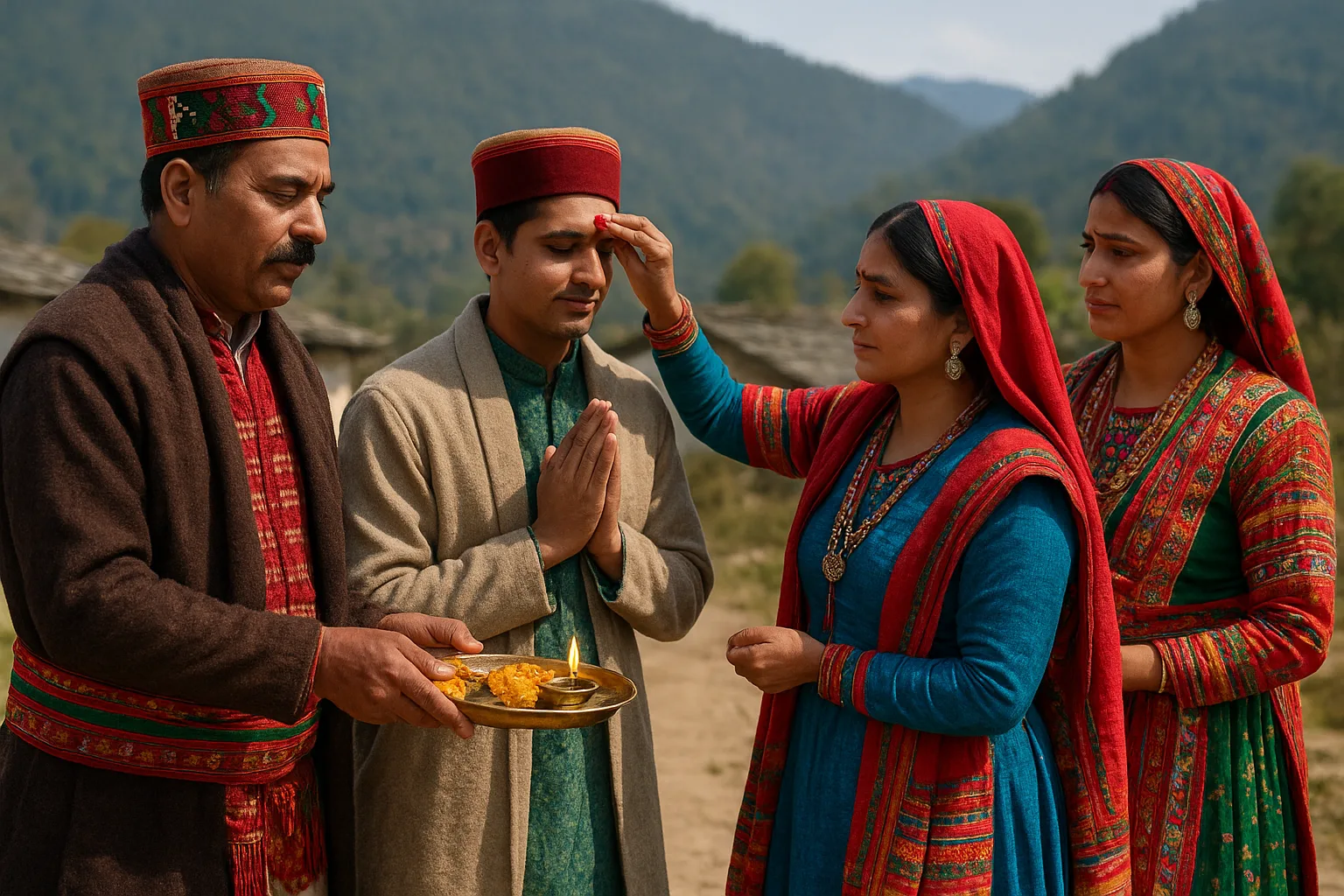
Religion here was both public and personal. Local deities—called gram devtas—were venerated with as much devotion as pan-Indian gods. Seasonal fairs, temple festivals, and the annual jatar processions displayed not only faith but also the social hierarchy and alliances among villages. These traditions, observed even today, reinforce bonds that outlast politics and dynastic change.
Trade, Travel, and Outside Influences
Though remote, Giripar was never entirely cut off. The region’s old tracks—following the Giri river valley and climbing over passes into Jaunsar and the plains of present-day Uttarakhand—carried salt, wool, and grain. Traders, mendicants, and soldiers moved along these routes, bringing news, religious ideas, and new technologies.
With the rise of the Sirmaur state, trade became more organized. Marketplaces like Paonta and Shillai grew into centers of exchange. Crafts such as weaving and woodcarving, enriched by contact with outside artisans, became markers of local identity. The language itself—Sirmauri, with its distinctive dialects—absorbed words and idioms from neighboring regions, yet preserved a cadence shaped by mountain isolation.
Continuity and Change: Giripar’s Living Heritage
Much of what defines Giripar today—its festivals, kinship networks, and rhythms of work and worship—can be traced to these formative centuries. The region’s distinctiveness persisted through Mughal incursions, Sikh influence, and British rule, as outlined in earlier posts of this series. Even in the twentieth century, Giripar’s customs remained resilient: marriages, land tenure, and ritual observances preserved an autonomy little seen elsewhere in Himachal.
To walk through a Giripar village at dusk is to sense the weight of tradition—and its adaptability. The past is never far away: old gods are still invoked at sowing and harvest, oral epics are sung on festival nights, and the boundaries between sacred and secular remain porous. Yet, new influences—education, migration, and technology—are subtly reshaping the region from within.
As we move forward in this series, the next chapter will delve into the evolution of religious institutions in Sirmaur: how temples, monasteries, and shrines became both centers of faith and instruments of social cohesion, carrying the legacy of Giripar into the present day.
Previous: Local Deities and Folk Worship in Sirmaur
Next: Festivals and Ritual Life in Traditional Sirmaur