
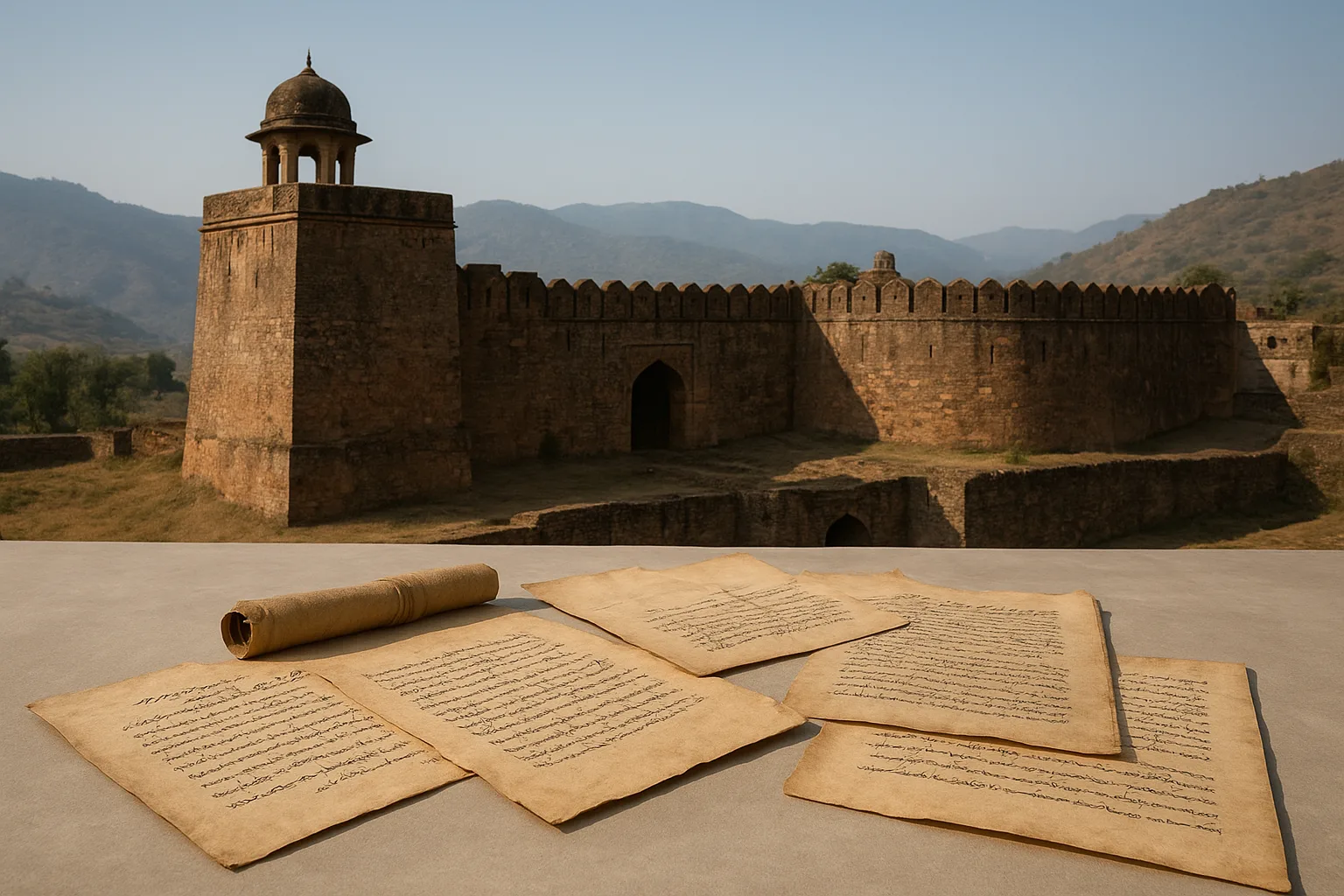
Series: History of Una, Himachal Pradesh, India
Phase 3: Sikh Period — Part 13 of 30
This article belongs to a historical series examining how expanding empires and regional powers reshaped life in the western Himalayan hills. As external influences pressed into the mountains, local rulers navigated diplomacy, resistance, and accommodation. This phase explores how wider political currents intersected with entrenched hill traditions, altering governance without entirely displacing older structures.
On the Edge of Change: Una in the Shadow of Sikh Banners
In the early 19th century, dawn in Una broke differently. The fog that rolled off the Sutlej River didn’t just hide the village fields; it also cloaked the approach of new rulers, their pennants emblazoned with the double-edged sword of the Sikh Khanda. Locals gathered anxiously at the marketplace, whispering rumors: the armies of Maharaja Ranjit Singh, the Lion of Punjab, were advancing. Change wasn’t just on the horizon—it was marching at Una’s gates, boots pounding the earth, discipline and reform in tow.
The Sikh Empire Advances: Una’s New Masters
By the early 1800s, the Sikh Empire, under the dynamic leadership of Maharaja Ranjit Singh, had expanded far beyond its Amritsar heartland. The rolling hills and fertile valleys of Una, once loosely controlled by Rajput chieftains, soon witnessed the disciplined columns of Sikh soldiery. The conquest was not abrupt—a patchwork of agreements, skirmishes, and alliances marked the transition. Still, the power dynamic shifted unmistakably.
In the shadow of Kangra Fort, the region’s most formidable stronghold, Sikh generals like Hari Singh Nalwa and Dewan Mokham Chand negotiated, threatened, and sometimes fought their way into local control. For Una’s populace, this meant a new administrative order—one that prized efficiency, obedience, and above all, loyalty to the Maharaja in Lahore.
Reshaping Power: Administrative Reforms in Una
The Sikh administration brought a new logic to governance. Gone were the patchwork fiefdoms and hereditary tax collectors that defined Mughal and Rajput rule. In their place stood appointed Sikh officials—thanedars and subedars—directly responsible to the Lahore court. The system was hierarchical and, for its time, surprisingly meritocratic: military prowess or administrative skill could vault even a commoner into positions of authority.
- Centralization: Local chieftains were expected to pay tribute directly to Sikh administrators, undercutting their independence and binding Una ever closer to the Sikh state.
- Revenue Collection: Land assessments were standardized, and records kept with a new rigor. While this systemized taxation, it also often increased burdens on peasants, especially in lean years.
- Justice: Sikh legal codes, blending traditional Sikh principles and regional customs, replaced patchwork Rajput and Mughal systems. Petitions and disputes now traveled up a chain of command, sometimes reaching the ears of the Maharaja himself.
For ordinary inhabitants of Una, the changes could be abrupt and disorienting. A farmer who once reported to a distant Rajput lord now found a turbaned Sikh officer standing in his fields, ledger in hand and an escort of soldiers close behind.
Military Presence: Forts, Garrisons, and Discipline
Una’s strategic location, perched near the borderlands of Punjab and the Himalayan foothills, made it a natural military corridor. The Sikh Empire was perpetually on guard—against Gorkha incursions from the east, against British ambitions from the plains, and against internal rebellions.
Military reforms were visible everywhere:
- Garrisons: Sikh troops established permanent outposts in key towns and at river crossings. The presence of these disciplined forces brought a degree of security, but also a sense of ever-present authority.
- Fortifications: Existing forts, including those at Amb and Bangana, were refitted or expanded. New watchtowers dotted hilltops, signaling alerts with smoke or signal drums.
- Conscription and Service: Locals, especially those from martial clans, were sometimes pressed into service. While this brought hardship, it also offered opportunity: a talented young man could rise in rank, earning land or prestige through valor.
The Sikh army’s reputation for strict discipline and martial prowess was well earned. Soldiers drilled daily, their distinctive blue and saffron uniforms a familiar sight along Una’s dusty roads. The region’s festivals and markets, once dominated by local customs, now echoed with the cadence of marching boots and the calls of commanding officers.
Local Resistance and Accommodation
Not all transitions unfolded smoothly. Some Rajput families, dispossessed or marginalized by Sikh reforms, attempted to resist—sometimes through open rebellion, sometimes through quiet subterfuge. In 1822, a minor uprising flared near Gagret, where local leaders bristled at new tax demands and the erosion of ancient privileges. The Sikh response was swift but measured: rebels were suppressed, but pardons followed for those who pledged loyalty.
For the broader population, adaptation became a way of life. Sikh rule, while strict, was not without its appeals. The emphasis on law and order—especially the suppression of banditry—made roads safer. Trade flourished, with merchants from Hoshiarpur and Lahore passing through Una’s markets. Sikh patronage saw the restoration of temples and the construction of new gurdwaras, sites that remain cultural landmarks to this day.
Figures Who Shaped Una’s Era of Sikh Rule
Several figures left an indelible mark on Una during this transformative period:
- Maharaja Ranjit Singh: Though he never visited Una personally, his administrative vision shaped every reform, every appointment, every military order.
- Hari Singh Nalwa: The legendary general, famed for his campaigns on the northwest frontier, was instrumental in consolidating Sikh authority in the hills. His mix of firmness and diplomacy set the tone for local governance.
- Local Sikh Thanedars: Often drawn from the ranks of the Khalsa, these officers became both the face of authority and, at times, advocates for Una’s people when negotiating with Lahore.
- Rajput and Brahmin Intermediaries: Some traditional elites reinvented themselves as indispensable go-betweens, easing friction and translating Sikh orders into local practice.
The interplay between these figures—each with their own ambitions and limitations—gave Una’s Sikh period its distinctive character: neither wholly imposed from above nor entirely organic, but a complex negotiation shaped by the region’s geography and the wider currents of Indian history.
Everyday Life Under Sikh Governance
Beneath the sweep of armies and edicts, life in Una continued—if not unchanged, then adapted. Fields still needed plowing, marriages required negotiation, and festivals marked the turning of seasons. The Sikh period introduced new rituals and holidays: the birth of Guru Nanak and the festival of Hola Mohalla joined the Hindu calendar, fostering a subtle syncretism.
Justice, while more standardized, remained imperfect. Petty officials sometimes abused their power, and rumors of favoritism or extortion circulated. Yet, for many, the Sikh era offered a respite from the chaos that had marked the late Mughal decline. The roads grew safer, and the certainty of rule—however strict—was preferable to the uncertainty of banditry or civil war.
Stories from Una’s oral tradition recall this period with complexity. Some elders remembered the Sikh officers as stern but fair, while others whispered about harsh tax collectors or the heartbreak of sons conscripted into distant wars. Memory, as always, is shaped by both pride and loss.
The End of Sikh Rule and Lasting Legacies
By the 1840s, the Sikh Empire itself stood on the brink. Internal divisions, British intrigue, and the strain of constant conflict weakened Lahore’s grip on its far-flung territories. The First Anglo-Sikh War of 1845–46 and its aftermath would see Una, like much of the hill country, drawn inexorably into the orbit of the British Raj. Yet the changes wrought during the Sikh era did not vanish overnight.
Administrative boundaries, legal codes, and even some garrisons remained. The memory of Sikh order and martial discipline lingered in local customs and the tales told at firesides. The Sikh period’s imprint—sometimes harsh, sometimes progressive—continued to shape Una’s identity long after the last Khalsa regiment marched away.
Echoes in Modern Una
Today, traces of Sikh administration and military culture are woven into Una’s fabric. The region’s reputation for orderliness, its historic gurdwaras, and even elements of its land revenue system bear the mark of this formative era. Families still recount legends of Sikh generals and local heroes; temples and gurdwaras stand side by side, testaments to the era’s cultural negotiation.
As Una navigates the challenges of the present, its memory of Sikh rule—marked by discipline, resilience, and adaptation—offers both lessons and inspiration. The story of administrative and military transformation in this hill district is not just a tale of the past, but a living force that continues to shape the rhythm of daily life.
Previous: Una Under Maharaja Ranjit Singh’s Rule
Next: Life of Ordinary People in Sikh-Era Una