
Series: History of Una, Himachal Pradesh, India
Phase 3: Sikh Period — Part 14 of 30
This article belongs to a historical series examining how expanding empires and regional powers reshaped life in the western Himalayan hills. As external influences pressed into the mountains, local rulers navigated diplomacy, resistance, and accommodation. This phase explores how wider political currents intersected with entrenched hill traditions, altering governance without entirely displacing older structures.
Before Dawn: The Village Awakens
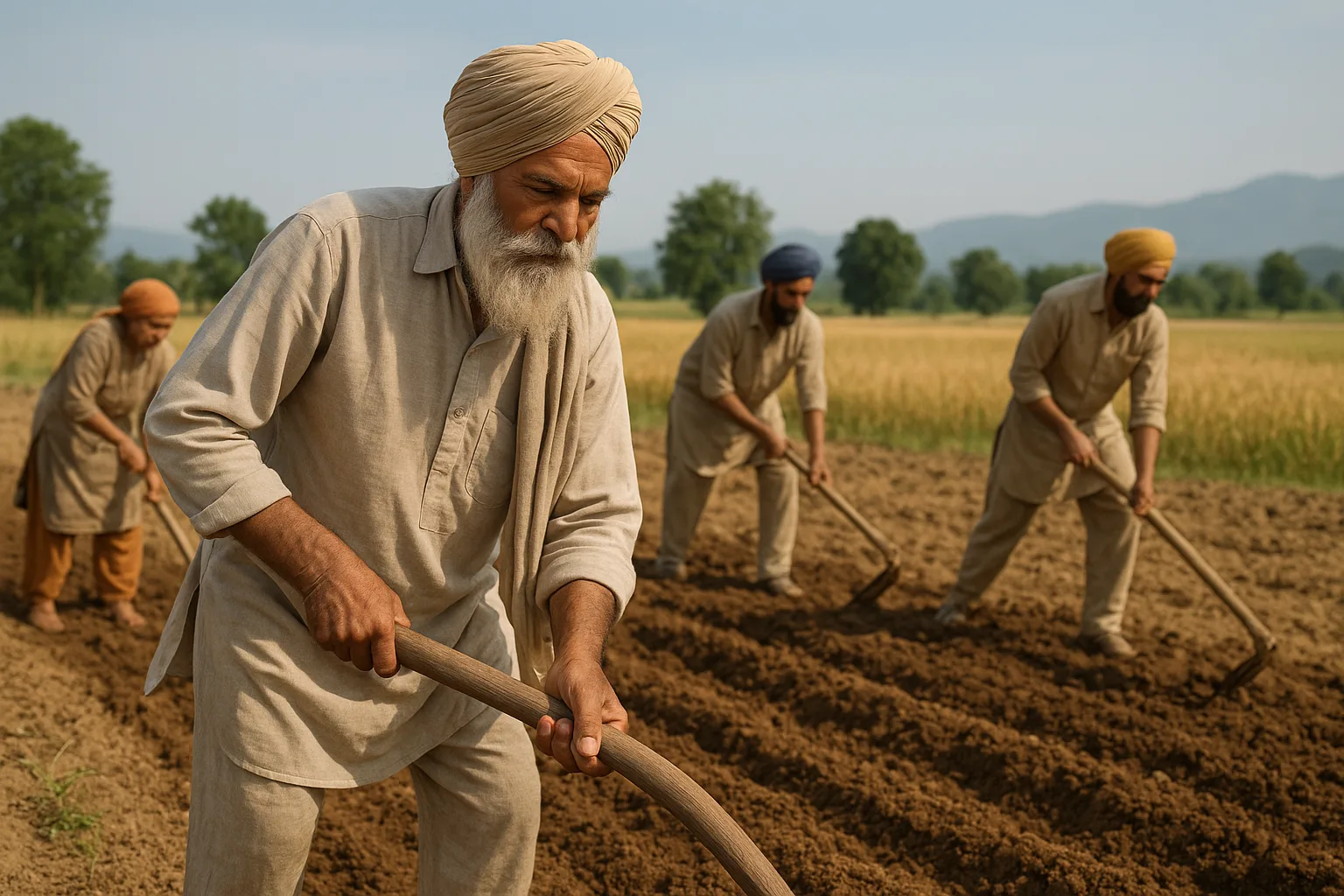
Imagine the first light of a spring morning in Una during the Sikh period, sometime in the early 19th century. The air is cool, the fields shimmer with dew, and a low hum rises as the village stirs to life. Wooden doors creak open. Women in vibrant phulkari shawls sweep courtyards, their rhythmic motions echoing the patterns of their ancestors. Men gather around wells, drawing water with practiced hands, exchanging news of the crops, the weather, and the latest edicts from their Sikh overlords. The distant clang of the village temple bell blends with the recitation of Japji Sahib from a nearby gurdwara, setting the spiritual pulse of the day.
Life in Una during the Sikh period was not lived in the grand halls of rajas or at the heart of military campaigns. Instead, it played out across mud-brick homes, bustling markets, and sacred shrines. The rhythms of ordinary life—family, faith, and harvest—intertwined with the larger currents of regional power, shaping a community both resilient and adaptive.
Between Empires: A Landscape in Flux
By the late 18th century, Una found itself caught between waning Mughal influence and the rising power of the Sikh misls. The area, lying at the crossroads of Punjab and the Himalayan foothills, became a patchwork of allegiances. Local chieftains—known as zamindars—negotiated their loyalties, sometimes paying tribute to distant rulers, sometimes asserting their own autonomy.
For ordinary people, these shifts could be felt most in the taxes they paid, the languages spoken in the chowk (market), and the soldiers who occasionally passed through. Young men might be conscripted for local militias, while elders recalled stories of raids and alliances. Yet, in the fields and bazaars, daily routines persisted. Wheat, barley, and pulses were sown and reaped. The river Sutlej, vital for irrigation, marked both a boundary and a lifeline.
Faith and Festivity: At the Heart of Community
Religious rhythms anchored daily life. Under the Sikh chiefs—such as Sardar Gulab Singh of the Dallewalia Misl, who held sway in the region for a time—new gurdwaras appeared alongside ancient Hindu temples. The coexistence of Sikh, Hindu, and Muslim traditions gave Una a cultural richness still visible in its festivals today.
The annual Baisakhi fair was a highlight. Villagers poured into Una’s central square, their laughter mingling with the scent of sweet jalebi and the beats of the dhol. Farmers sought blessings for the harvest, young people courted beneath the vibrant pennants, and traveling minstrels recited epics of Guru Gobind Singh’s battles. Faith was lived both privately and communally—a thread connecting ancestors to descendants, and the village to the wider Sikh world.
Women’s Work: The Quiet Backbone
Much of the real labor in Sikh-era Una was shouldered by women. Before dawn, they prepared loaves of roti, churned butter, and tended goats and chickens. In the afternoons, they gathered in shaded courtyards to spin cotton, embroider shawls, or share stories of saints and heroes. Though their names rarely entered the chronicles of kings, their work stitched the fabric of village life.
Marriage and kinship formed the social glue. Joint families shared hearths and harvests, pooling resources in times of famine or festivity. Women passed down folk songs and herbal remedies, their wisdom preserved in the rhythms of daily life. The Sikh ethos of equality resonated in many homes, where daughters learned to read the Guru Granth Sahib alongside their brothers—an echo of the reforms begun by Guru Nanak and carried forward by later Sikh leaders.
Markets and Mobility: The Pulse of Trade
Una’s markets were lively crossroads. Merchants from Kangra, Hoshiarpur, and beyond arrived with salt, jaggery, fine muslins, and sturdy iron tools. Local artisans—potters, weavers, and blacksmiths—displayed their wares in open stalls. Bargaining was an art, and stories of distant wars or new rulers often spread faster than the goods themselves.
Caravans brought more than trade—they brought news. It was through these travelers that Una’s people heard of Maharaja Ranjit Singh’s conquests, British advances in the plains, and the shifting fortunes of neighboring states. Change was a constant, but so too was the tenacity of local tradition.
Power and Protection: Living with Authority
For most villagers, the Sikh chiefs were distant figures, their power felt primarily through tax collectors and occasional patrols. The thanedar, or local police official, resolved disputes and enforced the law, though justice was often delivered through a blend of custom and command. Tribute was collected in kind—grain, ghee, or livestock—though the burdens varied year to year, depending on the chief’s ambitions or the harvest’s success.
Yet, the Sikh period brought a measure of stability after years of Mughal decline and Maratha raids. Local shrines and schools flourished, and the roads grew safer for travelers. The memory of Guru Gobind Singh’s visits to the broader region lent a sense of sacred protection, and many families could trace their lineage to soldiers or saints who had served in his retinue.
Resilience in the Face of Change
As the 19th century progressed, the shadow of the British East India Company lengthened over Una. Word of new laws, census officials, and changing borders trickled in, causing unease and speculation. But the heart of Una beat steadily—through shared meals, wedding songs, and the rituals of seed and harvest.
Ordinary people adapted, as they always had. They preserved folk tales of heroism and loss, celebrated the cycles of nature, and honored the memory of those who had shaped their land. The Sikh era, with its unique blend of faith, power, and pragmatism, left deep roots in Una’s soil.
Echoes in Modern Una
Today, the legacy of Sikh-era Una is woven into the region’s identity. The vibrant festivals, the coexistence of faiths, and the enduring spirit of resilience all bear traces of this formative period. In the bustling lanes and quiet fields, one can still sense the echo of those early mornings—a community rising to meet the day, shaped by its past yet always moving forward. The history of Una’s ordinary people invites reflection on how shared traditions, hard work, and adaptability continue to shape the region’s story, even as it navigates the challenges of the present.
Previous: Administrative and Military Changes During Sikh Rule
Next: Decline of Sikh Authority and Transition to British Control